

A heavyweight t-shirt runs 180 GSM (about 5.3 oz/yd²) or higher, with the practical sweet spot sitting at 180 to 220 GSM and premium options climbing past 220 GSM (7+ oz). Pick 180 to 220 GSM for durable retail basics, and go 220 GSM or higher for oversized, premium streetwear. Just know the finished shirt in your hands will always weigh more than the fabric’s listed GSM once you factor in size and trim.
TL;DR:
- Fabrics at 180 to 220 GSM are ideal for durable retail T-shirts, while heavier 220 GSM and above suits premium streetwear and oversized styles.
- Conversion between GSM and ounces per yard squared is straightforward: divide GSM by 33.9; finishing treatments can affect the actual garment weight.
- The final weight of a shirt exceeds fabric GSM due to size, trims, and prints, making sample weighing essential before bulk ordering.
- Fiber type and knit construction significantly influence the shirt’s feel and durability, not just the GSM number alone.
- Heavier fabrics (above 180 GSM) are better suited for screen printing and embroidery, but may reduce breathability and increase production complications.
Table of Contents
- What Counts as a Heavyweight T-Shirt Weight Guide Number?
- How T-Shirt Fabric Weight Is Measured (GSM vs Oz)
- T-Shirt Fabric Weight Chart by Category
- Estimated Finished T-Shirt Weight by Size
- What Changes T-Shirt Weight Beyond GSM
- How Fabric Weight Affects Printing and Durability
- How to Choose a Heavyweight Blank for Production
- How Shay’s Print Shop Handles Heavyweight Blanks
- Our Take: Stop Guessing and Start Weighing
- Ready to Sample or Order Your Heavyweight Tees?
- Sources
- FAQ
What Counts as a Heavyweight T-Shirt Weight Guide Number?
That 180 GSM threshold is not arbitrary. It is the point where fabric gets dense enough to hold a print without ghosting through, drape with real structure, and survive repeated washes without going thin at the shoulders. Below that line, you are in midweight territory, which is fine for basics but starts to feel flimsy once you add a heavy screen print or an appliqué.
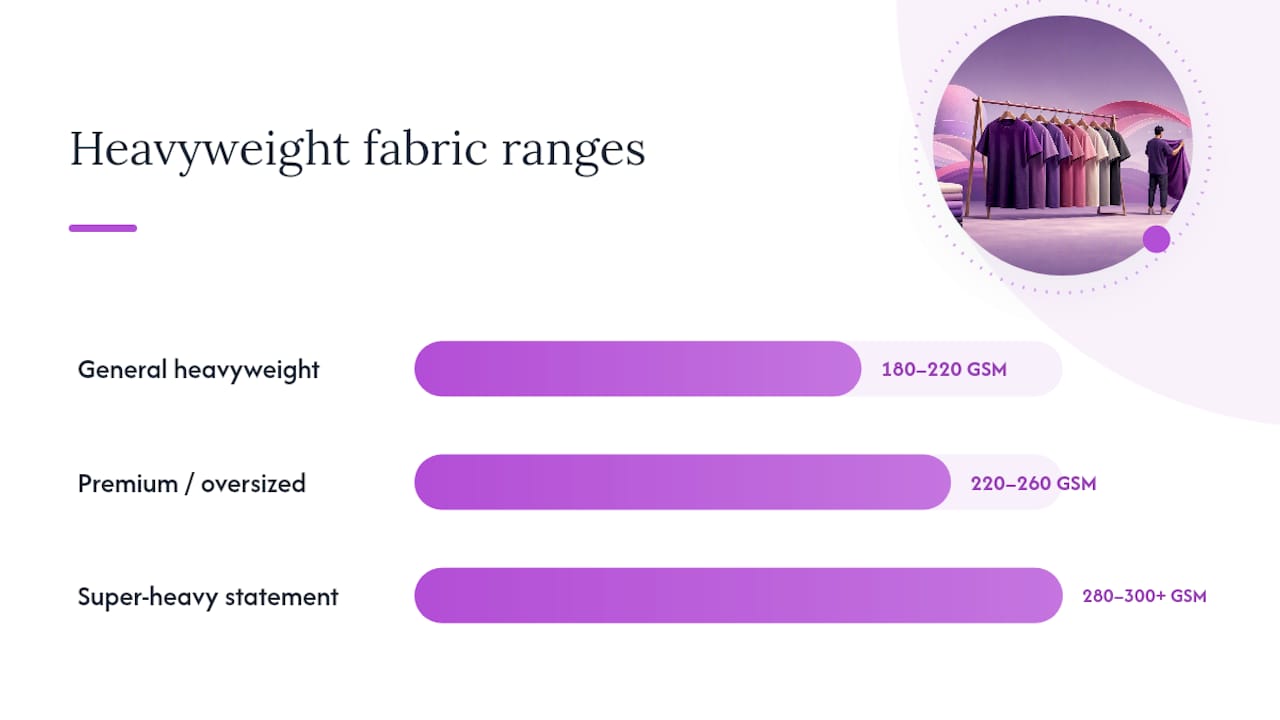
Manufacturer guidance places heavyweight tees at 180 to 220 GSM for general use, 220 to 260 GSM for premium and oversized streetwear builds, and 280 to 300+ GSM for the rare super-heavy statement piece. Fabric datasheets and brand references also describe heavyweight fabric landing in a 6 to 9 oz range, with finished garments pushing past 8 oz once you factor in larger sizes. Both framings point to the same conclusion: 180 GSM is the floor, and everything above it is heavyweight by definition, not marketing.
How T-Shirt Fabric Weight Is Measured (GSM vs Oz)
GSM stands for grams per square meter, the international standard for fabric density. Oz/yd² (ounces per square yard) is the US manufacturing standard you’ll see on most domestic wholesale spec sheets. Neither number tells you the whole story on its own, so you need to know how to move between them.
The conversion is simple: divide GSM by 33.9 to get oz/yd². A 180 GSM fabric works out to roughly 5.3 oz. A 220 GSM fabric lands around 6.5 oz. Keep that math in your back pocket any time a supplier quotes one unit and your spec sheet uses the other.
Pro Tip: Always ask suppliers whether their GSM number is measured on greige (unfinished) fabric or finished fabric. Finishing treatments like enzyme washing or garment dyeing can shift the listed weight by several grams per square meter, which is enough to bump a shirt from midweight into heavyweight territory on paper without changing how it actually feels.
A few things to keep straight before you place an order:
- GSM measures fabric density, not the weight of the finished shirt on a scale.
- Tolerances of plus or minus 5% on quoted GSM are common across mills, so a “200 GSM” batch might test anywhere from 190 to 210.
- The fabric stage (greige vs. finished) changes the number, since GSM shifts during washing, dyeing, and finishing.
Typical lightweight fabric runs 3 to 4.5 oz/yd², midweight sits around 5 to 5.5 oz, and heavyweight starts at 6 oz/yd² and climbs from there. Those numbers describe the fabric, not what lands on a bathroom scale once the shirt is sewn.
T-Shirt Fabric Weight Chart by Category
Here is how the categories break down in both units, along with what each band is actually good for.
A few practical notes on each band:
- Lightweight fabric prints fine for simple one-color jobs but shows every seam and shadow on darker inks.
- Midweight is where a lot of fast-fashion brands live, since it’s cheap to produce but doesn’t hold structure well after a few washes.
- Heavyweight (180 to 220 GSM) is the manufacturer-recommended default for brands that want printability, comfort, and cost to balance out.
- Naming varies by supplier. One mill’s “midweight” is another’s “heavyweight,” so always confirm actual GSM rather than trusting the label alone.
- When in doubt between two adjacent bands, round up. A slightly heavier blank costs a little more per unit but saves you from returns over thin fabric.
Estimated Finished T-Shirt Weight by Size
Fabric GSM tells you density per square meter. It doesn’t tell you what the actual shirt weighs once it’s cut, sewn, and shipped. Size matters here as much as fabric weight does, since a larger garment uses more square inches of fabric even at identical GSM.
These are estimates built off standard tee patterns, and your actual results will move depending on a few variables:
Pockets, sewn-in care labels, seam tape, and large prints all add measurable grams. A heavy screen print across the full chest can add 5 to 10 grams on its own. A 6 oz fabric never produces a 6 oz finished shirt because trim and print weight stack on top of the base fabric.
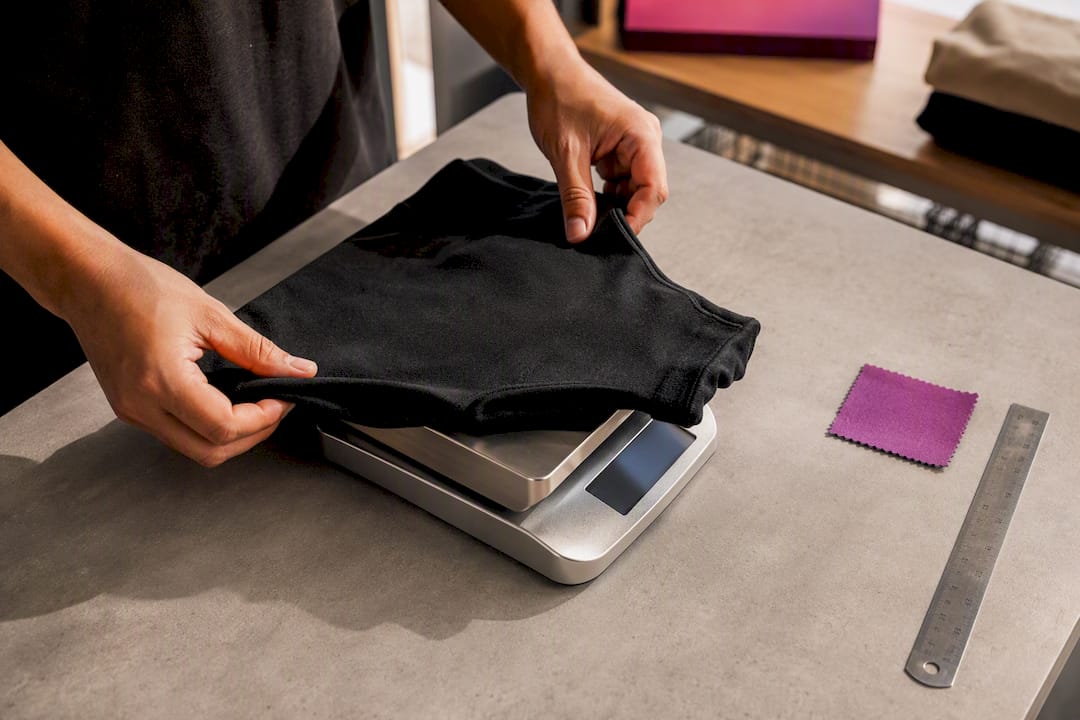
Before committing to a bulk order, weigh a sample garment on a gram scale. It takes thirty seconds and it’s the only way to know whether your supplier’s quoted GSM matches what actually shipped.
What Changes T-Shirt Weight Beyond GSM
Two shirts can share the exact same GSM and still feel like completely different products in your hands. The difference usually comes down to fiber and construction, not the number on the spec sheet.
Fiber type matters more than most buyers expect. Ring-spun cotton twists fibers tighter during spinning, producing a smoother, softer surface that takes prints cleanly. Combed cotton goes a step further, removing short fibers before spinning for an even finer hand-feel. Open-end cotton is coarser and cheaper, and it can feel noticeably rougher even at identical GSM. Fiber type can matter as much as GSM for how “premium” a shirt actually feels once it’s on someone’s back. If you’re weighing cotton against synthetic blends for a specific use case, it’s worth reading how cotton and polyester compare at the fiber level before locking in a fabric choice.
Knit construction is the other lever. Single jersey knits are standard for most tees. Compact-spun yarns pack tighter, reducing pilling and improving print surface. Higher stitch and needle counts per inch produce a denser, more substantial hand-feel even when the raw GSM stays flat.
Finishing treatments shift both weight and texture. Garment dyeing (dyeing the finished shirt instead of the fabric) can add a slightly heavier, softer finish. Enzyme washing softens the hand-feel but can strip a small amount of weight in the process.
A short list of what physically adds grams to a finished shirt:
- Chest or hip pockets
- Heavier woven labels versus printed tags
- Sewn-in care tags versus heat-transfer labels
- Large prints, appliqués, or embroidered patches
None of these show up in a fabric GSM spec. All of them show up on your shipping invoice.
How Fabric Weight Affects Printing and Durability
The GSM you choose determines what decoration methods will actually look good, and that decision matters more than most first-time buyers realize.
For DTG printing, stick to 180 to 220 GSM. Lighter fabrics let ink bleed through to the back; anything much heavier than 220 GSM can make the surface too dense for ink to properly saturate the fibers, leading to a stiff, plasticky finish.
For screen printing, the workable range widens to 180 to 260 GSM. Heavier fabric holds thick ink deposits without the print stretching out of shape when the shirt moves, which is part of why screen printing pairs well with heavier blanks for multi-color logos and streetwear graphics.
For heavy embroidery, you want 180 GSM minimum, paired with stable backing so the stitches don’t pucker the fabric.
A few tradeoffs worth knowing before you commit to a heavier blank:
- Combed ringspun cotton at moderate GSM often outperforms heavier open-end fabric for fine DTG detail, since surface smoothness matters more than raw density for photo-realistic prints.
- Heavier fabric cures ink more slowly under heat presses, so factor extra dwell time into your production schedule.
- Opacity and structure go up with GSM, but breathability goes down, meaning summer collections may need to stay in the 180 to 200 GSM zone even if you like a heavier hand-feel.
- Oversized and boxy cuts pair naturally with heavier fabric since the added weight helps the garment hold its shape instead of clinging.
If you’re planning a print run and want to compare DTG against DTF specifically, our breakdown on DTG versus DTF covers which method suits which fabric weight in more depth. And if you’re building out a full streetwear drop, the production notes in our streetwear printing guide walk through method selection for heavier blanks specifically.
How to Choose a Heavyweight Blank for Production
Before you commit to a bulk order, run through this checklist:
- Set your target GSM. Pick 180 to 220 GSM for general retail, 220 to 260 GSM for oversized or premium lines.
- Confirm fiber spec. Ask whether the blank is ring-spun, combed, or open-end cotton, and request the mill’s own datasheet if possible.
- Check knit type and stitch density. Compact-spun single jersey is the safest all-around choice for printability and durability.
- Verify finish. Garment-dyed or enzyme-washed fabric will feel different from raw finished fabric at the same GSM.
- Test colorfastness and shrinkage. Wash a sample three to five times and remeasure it. Cotton can shrink 3 to 5% if not pre-shrunk properly.
- Weigh a finished sample. Confirm the actual garment weight against the supplier’s quoted GSM before placing a bulk order.
- Price against your margin target. Heavier ringspun blanks wholesale higher than open-end fabric, so model your retail price before locking in inventory depth.
For your sampling matrix, order at least three to five units per GSM you’re testing, run your actual print method (DTF, screen, or DTG) on each, and put one through a repeated wash cycle before signing off on a full order. Our bulk ordering guide covers how to structure sample requests for teams and events specifically.
Pro Tip: Order one size up from your usual mid-run size when testing a new heavyweight blank. Heavier fabric drapes differently, and a shirt that fits true-to-size in midweight cotton can feel noticeably tighter across the shoulders at 220+ GSM.
If you’re sourcing for outdoor or physically demanding use cases rather than retail, it’s also worth reviewing how breathable fabric choices factor into weight decisions, since heavyweight and breathability pull in opposite directions.
How Shay’s Print Shop Handles Heavyweight Blanks
When a new blank comes in, we run it through the same basics covered above: a printability check on the actual fabric, a wash test to catch shrinkage before it becomes your customer’s problem, and a scale check to confirm the finished weight matches what we expect.
That process is part of why our bulk shirt packages, including our 10 for $99 offer, hold up across event orders, team gear, and family reunion runs where consistency across dozens of shirts actually matters.
Our Take: Stop Guessing and Start Weighing
If you’re building a core lineup, 180 to 220 GSM is the right default. It prints cleanly, wears well, and doesn’t box you into a niche. Save 220+ GSM for lines where the heavier hand-feel is the point, like oversized streetwear drops.
The mistake we see most often isn’t picking the wrong GSM. It’s skipping the wash test and print test before placing a bulk order, then discovering shrinkage or ink bleed after the shirts are already boxed. Test first. Order second.
— Jon Will
Ready to Sample or Order Your Heavyweight Tees?
Once you know your target GSM, the next step is getting fabric in your hands, and that’s exactly where Shaysprintshop fits in. Instead of guessing from a supplier spec sheet, you can request a real sample, test your artwork on it, and confirm the GSM yourself before committing to a bulk run.
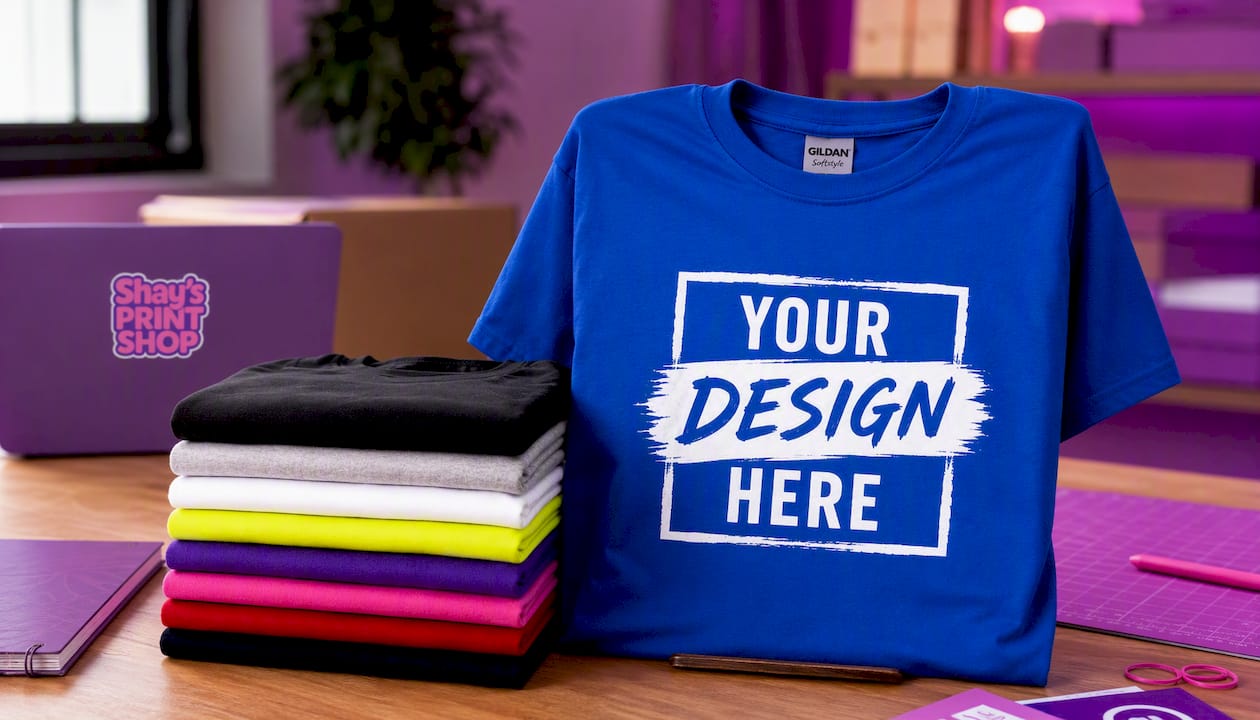
Our Custom T-Shirts – 10 for $99 package uses 100% cotton with DTF printing, making it a straightforward way to test a heavier blank across a small run before you scale up for an event, a team, or a family reunion. If you want to browse fabric and print options first, our custom shirt lineup breaks down what’s available, and our pricing page covers costs across our other product lines if you’re bundling shirts with custom mugs or vinyl stickers for an event.
Ready to move forward? Request a sample, upload your artwork, and ask us directly for the GSM and fabric spec on the blank you’re considering. We’ll confirm it before your order ships.
Sources
- How Much Does a Shirt Weigh? Guide for Small Businesses (2026) - Shopify
- T-Shirt GSM Guide 2026: 140 300 GSM Weight Map
FAQ
How much should a heavyweight t-shirt weigh?
A heavyweight t-shirt’s fabric typically weighs 180 GSM or higher, roughly 5.3 oz/yd² and up. The finished garment will weigh more than that once you account for size, seams, and trim, varying by shirt size.
What is considered a heavyweight tee shirt?
Fabric at 6 oz/yd² or higher is generally considered heavyweight, with the practical range sitting at 180 to 220 GSM for everyday use and 220 GSM plus for premium or oversized styles. Anything below that falls into midweight or lightweight categories.
What size t-shirt should a 200 lb man wear?
Sizing depends on the specific brand’s fit chart more than fabric weight, since heavyweight fabric can run slightly truer to size than thin midweight cotton. Most people around 200 pounds land in a Large to XL depending on height and the brand’s cut, so checking the specific size chart before ordering is the safest approach.
Is 7.5 oz heavy for a shirt?
Yes, that weight suits oversized streetwear and structured drops better than everyday retail basics, where 180 to 220 GSM balances comfort and printability more evenly.
0 comments