

Pick DTF when you need full-color prints on mixed fabrics, dark garments, or a product line that jumps between t-shirts, hats, and bags. Pick sublimation when you’re printing all-over designs on polyester or coated hard goods like mugs and tumblers. The short version: DTF prints on a film first, then presses onto almost anything; sublimation turns dye into gas and bonds it directly into the material itself.
TL;DR:
- DTF offers full-color printing on a wide range of fabrics, including dark and mixed materials, thanks to its white underbase layering process.
- Sublimation is limited to polyester or coated hard goods and provides a soft, no-texture feel because the dye bonds inside the material without a white ink option.
- DTF’s workflow allows printing and curing transfers in bulk ahead of time, enabling quick on-demand production and better order flexibility.
- Sublimation’s high-temperature process makes it ideal for hard goods like mugs and tumblers but unsuitable for dark fabrics or cotton apparel.
- Maintenance costs and equipment needs differ: DTF requires managing powders and curing ovens, while sublimation risks clogged printheads if the machine is unused for a while.
Table of Contents
- DTF vs Sublimation: What DTF Printing Actually Involves
- DTF vs Sublimation: How Sublimation Printing Works
- DTF Printing Comparison: Fabric, Color, Feel, and Cost Side by Side
- How to Choose Between DTF and Sublimation for Your Business
- Why Shay’s Print Shop Leans Into DTF for Cotton Apparel
- Long-Term Print Business Strategy: When to Invest, When to Outsource
- Order DTF Tees and Custom Tumblers Without the Equipment Headache
- Sources
DTF vs Sublimation: What DTF Printing Actually Involves
DTF stands for “direct to film,” and once you see the workflow, the name makes sense. Your design prints onto a PET film using specialty inks, gets a white underbase layer laid down first (this is what lets DTF work on dark shirts), then gets dusted with a hot melt adhesive powder while it’s still wet. From there, the film goes into a curing oven or a heat tunnel to melt that powder into the ink layer. Only after all of that is the design pressed onto the actual garment with a heat press, usually somewhere around 300°F for 10 to 15 seconds depending on the fabric.
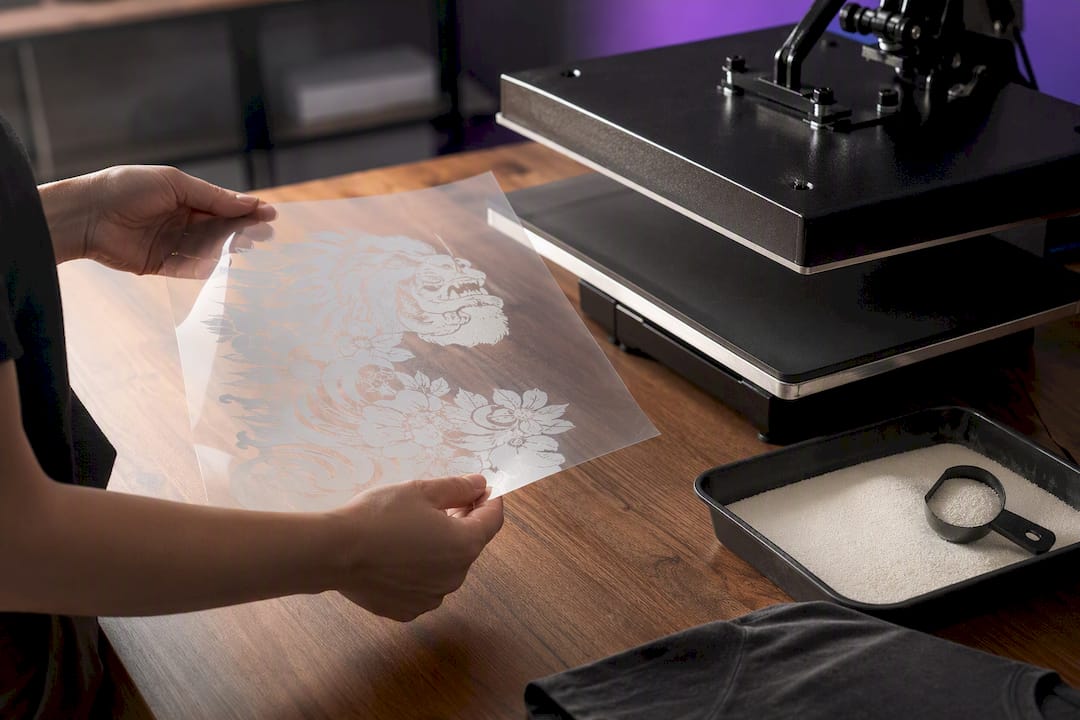
That white underbase is the whole story here. Because DTF prints its own base layer onto the film rather than relying on the shirt color to show through, it works on nearly any fabric or color, from black cotton hoodies to red polyester jerseys, as Printful’s comparison of the two methods points out.
Running a DTF setup means keeping a specific stack of equipment on hand:
- A dedicated DTF printer (or a converted inkjet running DTF inks)
- Rolls of PET transfer film
- Hot melt adhesive powder and a shaker or applicator
- A curing oven or heat tunnel, sometimes built into the printer setup
- A heat press for the final application
The part small shop owners tend to underestimate is how much this workflow decouples printing from selling. You can print, powder, and cure a stack of transfers on a slow Tuesday, then press them onto shirts the moment orders come in, which is a real advantage during market season or a busy holiday run. HowToGeek’s breakdown of sublimation versus DTF calls this exact flexibility one of DTF’s biggest operational wins for small shops juggling mixed orders.
Pro Tip: Batch-print your best-selling designs onto transfers ahead of a craft fair or pop-up event. You’ll spend the morning pressing shirts on demand instead of babysitting a printer between customers.
Maintenance runs differently than you might expect, too. You’re not fighting clogged printheads the way sublimation owners sometimes do, but you are managing adhesive powder mess and making sure your curing temperature stays consistent, since under-cured transfers are the number one cause of cracking down the road.
DTF vs Sublimation: How Sublimation Printing Works
Sublimation skips the film step entirely and works through a chemical trick: solid dye gets heated until it turns into a gas, skipping the liquid phase altogether, and that gas bonds directly with polyester fibers or a polymer coating. Castle Ink’s explainer on sublimation chemistry describes this gas-to-solid bond as the reason sublimated prints have zero raised texture. The ink isn’t sitting on top of anything. It becomes part of the material.
The practical setup looks like this:
- A sublimation printer loaded with sublimation ink
- Sublimation transfer paper
- A heat press set typically around 380 to 400°F for 45 to 60 seconds, though exact settings vary by substrate
- Polyester garments (ideally light colored) or polymer-coated blanks like mugs, tumblers, and metal signs
Here’s the catch that trips up a lot of first-time buyers: sublimation has no white ink. None. Because the dye needs to bond with a light-colored or white substrate to show true color, you simply cannot print on black cotton or navy polyester and expect the design to show up. This is why sublimation printers are the default for polymer-coated hard goods such as mugs and tumblers, where the dye bonds permanently with the coating, but it rules out a huge chunk of the dark-garment apparel market outright.
Maintenance reality check: Sublimation printers can develop clogged printheads if left idle for even a short stretch, and HowToGeek notes that hobbyists sometimes get hit with unexpected printhead replacement costs simply because they didn’t run the machine often enough. It’s not a “set it and forget it” appliance.
Because there’s no film, no powder, and no separate underbase layer, sublimated shirts and hard goods feel noticeably lighter and softer to the touch than a DTF transfer. That soft hand feel is sublimation’s biggest selling point on polyester athletic wear, where a stiff design would feel wrong against skin during a workout.
DTF Printing Comparison: Fabric, Color, Feel, and Cost Side by Side
Here’s where the rubber meets the road for anyone trying to build a product catalog. The two methods aren’t competing for the same jobs most of the time. They split the market by material.
Fabric compatibility is the clearest dividing line. DTF works on cotton, polyester, blends, nylon, and even some leather and canvas goods, which is why it shows up on hats, tote bags, and mixed-fiber apparel as easily as it does on tees. Sublimation needs polyester content of roughly 65% or higher on fabric, or a polymer coating on hard goods; try it on 100% cotton and the dye has nothing to bond with, so the print washes out almost immediately.
Color and dark-garment printing favor DTF without much argument. Because DTF prints its own white underbase onto the film, it handles black hoodies and navy tees the same way it handles white ones. Sublimation’s lack of white ink means dark garments are off the table entirely, full stop, and even mid-tone colors can mute your artwork.
Hand feel and durability tell a more nuanced story. Sublimated prints have no texture at all since the dye is inside the fiber, not on top of it, which makes it the more comfortable option for all-over athletic prints. DTF sits as a thin layer on the fabric surface, giving it a soft-but-present texture that most customers don’t mind on a graphic tee. On durability, Shopify’s comparison of the two methods notes that sublimation prints are generally more permanent because the dye becomes part of the substrate, while DTF, though durable when properly cured, can be prone to cracking or peeling if the curing or washing process is neglected.
Wash care matters more for DTF. Turn garments inside out, wash cold, skip the dryer heat when possible, and avoid ironing directly over the design. Sublimated hard goods need almost no special care since the print can’t peel off a mug the way ink can peel off fabric.
Production workflow is where DTF pulls ahead for order flexibility. You can print, cure, and store transfers weeks before pressing them, which matters enormously for seasonal spikes, market vendors, or anyone running pre-orders. Sublimation is closer to a straight-through process: print, press, done, with less room to decouple the steps.
For a rough sense of where the two methods land on the decisions that matter most:
- Fabric range: DTF covers cotton, polyester, blends, and hard goods with a coating; sublimation is polyester and coated substrates only.
- Dark garments: DTF handles them natively; sublimation cannot print white or hold color on dark fabric.
- Texture: Sublimation is texture-free; DTF has a light, thin-film feel.
- Print-ahead flexibility: DTF transfers store and press later; sublimation is largely print-and-press in one pass.
- Best hard-good use: Sublimation dominates mugs and tumblers; DTF isn’t typically used on rigid, coated surfaces at all.
Equipment and maintenance costs run in different directions depending on how you use the machine. Printful’s cost breakdown points out that entry-level DTF systems and combo machines vary widely in price, and the real cost driver is consumables and curing equipment, not just the printer’s sticker price. Sublimation printers tend to have a lower entry cost but carry the hidden risk of printhead clogs if the machine sits idle, which can turn into a costly repair for a shop that only prints occasionally.
On raw per-unit math, DTF transfers typically cost more per print than sublimation paper and ink, since you’re paying for film, powder, and a curing step sublimation skips. But DTF’s ability to batch-print and store transfers ahead of time often offsets that per-unit cost with labor savings during peak order windows.
How to Choose Between DTF and Sublimation for Your Business
The fastest way to decide is to look at your product catalog before you look at either machine. As Shopify’s guide puts it, the primary decision rule is simple: choose sublimation if your catalog leans heavily on polyester athletic wear or polymer-coated hard goods, and choose DTF if you need full-color prints across mixed materials and dark garments.
Run through this checklist before you commit to equipment or an outsourced print partner:
- What’s your fabric mix? Mostly cotton or blends means DTF. Mostly polyester or hard goods means sublimation.
- How many dark garments are in your lineup? Any meaningful volume of black or navy shirts rules out sublimation outright.
- What’s your hand-feel priority? All-over athletic prints benefit from sublimation’s texture-free finish; graphic tees do fine with DTF’s thin layer.
- What’s your order size and turnaround window? DTF’s print-ahead flexibility helps with rush orders and events; sublimation suits steady, predictable runs.
- How much maintenance can you tolerate? Adhesive powder and curing ovens (DTF) versus printhead clog risk on idle machines (sublimation) are different headaches, not a clear winner either way.
- What’s your budget for consumables, not just the printer? Factor in film, powder, and curing gear for DTF, or paper and ink replacement cycles for sublimation.
A few real-world scenarios make this concrete. A market vendor selling mixed apparel, from tank tops to hoodies in every color, needs DTF’s fabric range and dark-garment coverage. An athletic wear shop selling polyester jerseys and all-over leggings should lean sublimation for the soft feel and permanence. A seller building a mug and tumbler line has no real choice; sublimation is the only method built for polymer-coated hard goods.
Pro Tip: Before placing a bulk order with any print partner, ask about their minimum order quantity, whether they offer a proof or sample before full production, their recommended curing settings, and their required artwork file specs. A shop that can’t answer those clearly isn’t one you want handling your inventory.
Why Shay’s Print Shop Leans Into DTF for Cotton Apparel
Shay’s Print Shop built its production around DTF for a reason: most of the custom orders coming through, family reunion shirts, event merchandise, small business swag, land on 100% cotton tees, and DTF is the method that handles that fabric with full color and durability on any garment shade. That’s also why the bulk pricing works the way it does: ten tees for $99 keeps a full-color, any-color print run affordable for groups that don’t need thousands of units.
Not every product on the site runs through DTF, though. Hard goods like a Custom Tumbler call for sublimation instead, since the dye needs to bond with the coating for a print that survives daily use and dishwasher cycles.
If you’re weighing formats for your own order, a few resources help before you commit:
- Review file format requirements so your artwork prints clean the first time
- Compare DTG vs DTF trade-offs if you’re still deciding between apparel printing methods
- Test the waters with a 10-shirt sample order before committing to a bigger run
Long-Term Print Business Strategy: When to Invest, When to Outsource
Buying a DTF or sublimation setup before you know your product mix is one of the fastest ways to burn cash on equipment you’ll outgrow or resent. Start by outsourcing mixed-product orders and testing demand with small sample runs. Many shops standardize on outsourced DTF production early precisely to dodge the curing-oven and printhead-maintenance overhead, only bringing machines in-house once volume justifies the investment.
Pre-made transfers change your fulfillment math too. If you’re selling at markets or seasonal events, having transfers cured and ready ahead of time means you’re pressing on demand instead of printing under pressure. The trade-off is always the same: sublimation buys you softer feel and better permanence on the right substrate, DTF buys you flexibility across fabrics and colors. Neither wins outright. Match the tool to the job, not the other way around.
— Jon Will
Order DTF Tees and Custom Tumblers Without the Equipment Headache
Skip the curing ovens, adhesive powder, and printhead maintenance entirely. Shaysprintshop runs DTF production on 100% cotton tees at bulk pricing, ten shirts for $99, so you get full-color prints on any garment color without owning a single piece of print equipment. Need hard goods instead? A Custom Tumbler order goes through sublimation for a permanent, dishwasher-safe finish.
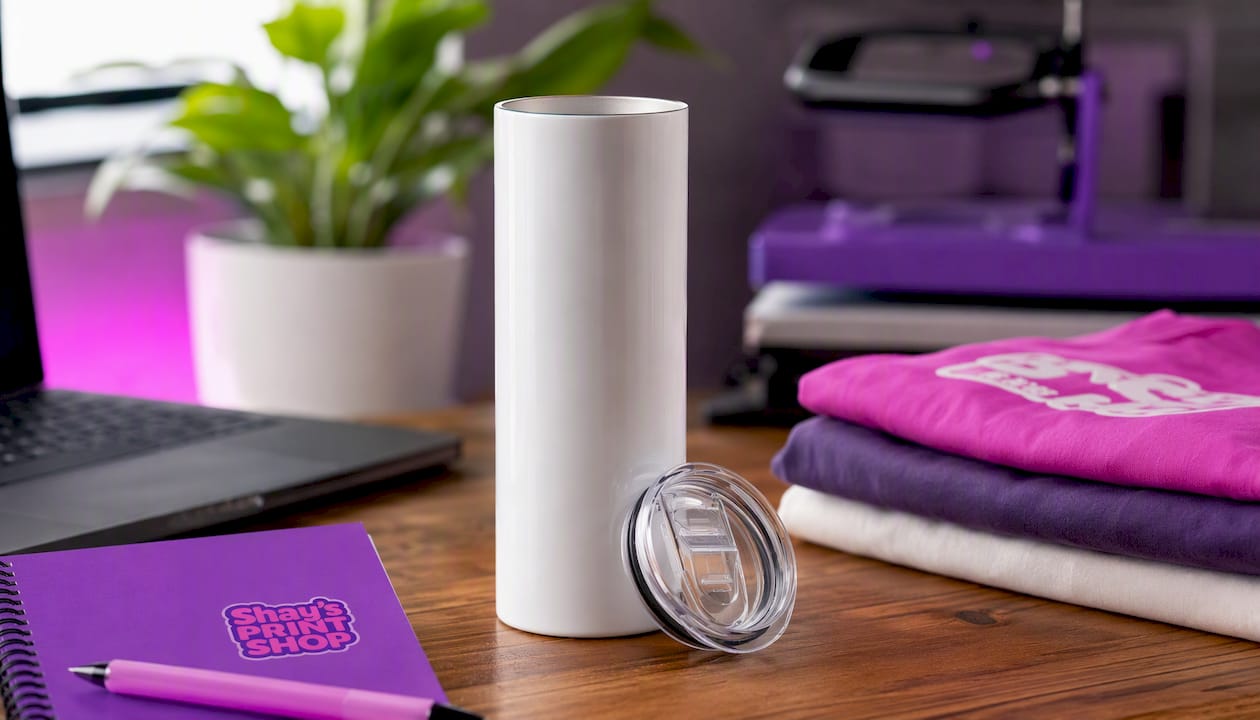
Getting started is simple: upload your artwork, choose your product and quantity, request a proof if you want to see it before production, then check out with your bulk discount applied. Fast turnaround and US-based fulfillment mean your reunion shirts, team gear, or event tumblers show up when you actually need them, not weeks later. Start your order with a bulk tee package or send over your design to get a proof back before you commit to a full run.
Sources
For deeper technical detail, Shopify’s comparison covers durability and permanence differences. Printful’s guide breaks down fabric compatibility and cost factors. HowToGeek’s craft-room breakdown addresses maintenance realities for hobbyists. Castle Ink’s explainer unpacks the sublimation chemistry itself. For supplier-side perspective, Transfer Kingz’s DTF vs sublimation guide and SubliBlanks’ rundown of DTF advantages add independent supplier context worth comparing against your own testing.
- Sublimation printing explained and comparison with DTF - Shopify
- DTF Printing vs. Sublimation: Which Method Should You Go For? - Printful
- Sublimation vs DTF: Which is better for your craft room? - HowToGeek
- Sublimation printing explained: What it is and how it works - Castle Ink
0 comments