

Ringspun cotton wins on softness and durability almost every time, since the tighter fiber alignment resists pilling and holds its shape through repeated washes. Regular cotton (open-end or carded) costs less upfront and still gets the job done for single-color, high-volume promo runs where budget matters more than hand feel. If you’re ordering shirts people will actually want to wear again, ringspun is worth the extra cost. If you’re printing 500 giveaway shirts for a 5K, regular cotton does the job just fine.
TL;DR:
- Ringspun cotton offers superior durability and softness, with a finer yarn fineness usually in the 30s to 40s range, compared to open-end’s 18s to 20s.
- Regular cotton blanks cost 15 to 20% less per shirt but tend to pill after about five washes, whereas ringspun maintains appearance and softness through at least 20 industrial wash cycles.
- Combed ringspun combines fiber cleaning and tight ring spinning, making it the best choice for retail-quality shirts that need repeated washing and wear.
- For single-use promotional shirts, regular cotton remains a cost-effective option, since longevity is less critical.
- Choosing pre-shrunk ringspun fabric minimizes shrinkage and improves fit for shirts that will be washed multiple times.
Table of Contents
- How Ringspun Cotton Is Made vs Regular Cotton
- Softness, Durability, Printability, Shrinkage, and Cost Compared
- Which Cotton to Choose for Your Project
- What Shay’s Print Shop Has Learned From Printing Thousands of Shirts
- Our Take on Ringspun vs Regular Cotton
- Get 100% Cotton Shirts Without the Guesswork
- Sources
- FAQ
How Ringspun Cotton Is Made vs Regular Cotton
The difference between ringspun and regular cotton comes down to how the yarn gets twisted, and that mechanical step changes everything downstream, from how a shirt feels on day one to how it looks after twenty washes.
Ring spinning works by continuously twisting and thinning cotton fibers around a ring-and-traveler mechanism. That process pulls the fibers into tight, parallel alignment, which is what gives ringspun cotton its smooth, strong yarn structure. Regular cotton, often called open-end or carded cotton, gets spun differently. A rotor or air-jet system joins loose fiber clusters together, and the result is a coarser, fuzzier yarn with fibers pointing in every direction instead of one.
There’s also a distinction between combed and carded cotton that matters just as much as the spinning method itself:
- Carded cotton skips fiber cleaning, leaving short fibers and small debris mixed into the yarn.
- Combed cotton runs fibers through a comb that removes the short bits before spinning, leaving only longer, uniform fibers.
- Combed ringspun stacks both processes, combing for purity and ring spinning for alignment, which is why it’s the top tier for retail-quality shirts.
One number worth knowing when you’re shopping for blanks: yarn fineness, measured in “singles.” Ringspun yarn typically lands in the 30s to 40s range, while open-end yarn usually sits around 18s to 20s, which shows how stretch fabrics transform everyday wear by affecting drape and comfort. Higher singles numbers mean a finer, more consistent yarn, and that fineness is a big part of why ringspun cotton feels softer against skin than regular cotton does.
Softness, Durability, Printability, Shrinkage, and Cost Compared
Choosing between ringspun and regular cotton usually boils down to five things you can actually feel or measure: how it feels, how it holds up, how it prints, how much it shrinks, and what it costs. Here’s how they stack up attribute by attribute.
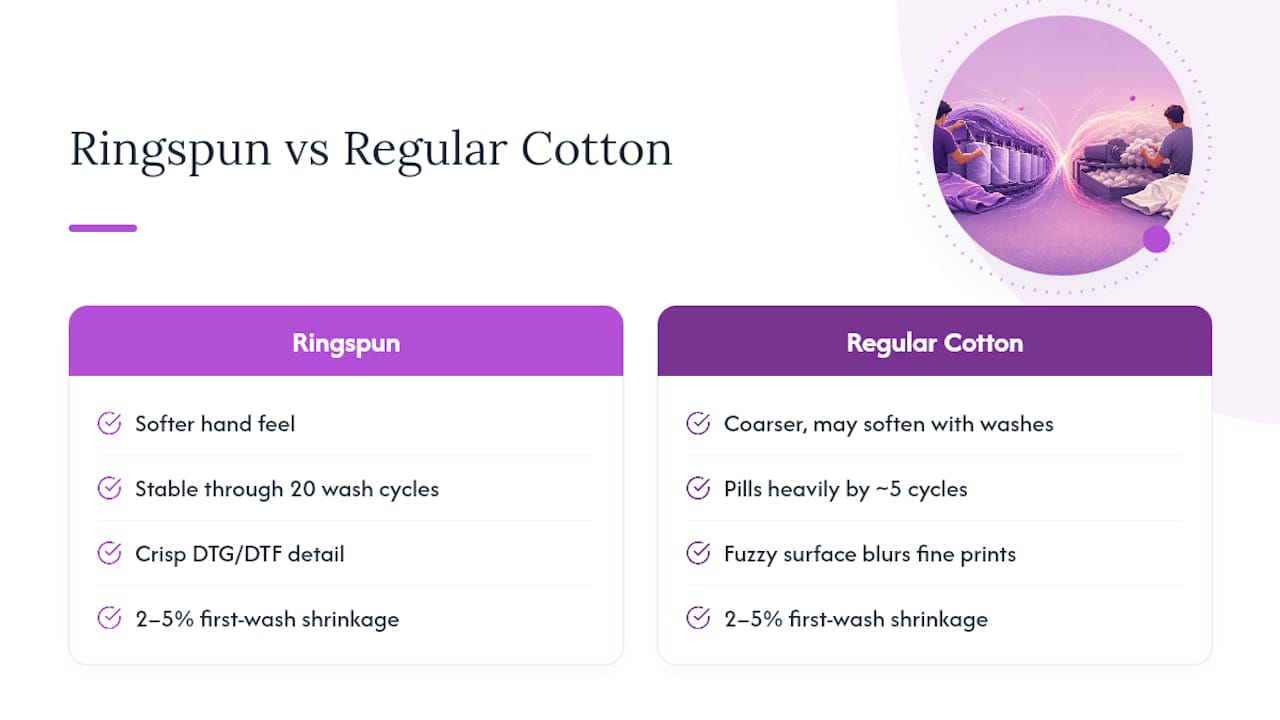
Softness is the most obvious difference. Because ring-spun fibers run parallel and tightly twisted, the yarn surface is smooth rather than fuzzy, and that translates directly to a softer hand feel right off the shelf. Regular cotton can soften some with washing, but it starts rougher and stays coarser overall. If you’re shopping online and can’t touch the fabric, look for product descriptions that specify “ringspun” or “combed ringspun.” Vague labels like “100% cotton” with no spinning method mentioned are usually regular open-end cotton.
Durability and pilling is where the gap becomes hard to ignore. Industry wash testing that put both fabrics through a 20-cycle industrial wash comparison found that regular open-end cotton started showing heavy pilling and visible degradation after only about five cycles. Ringspun cotton held its softness and structural shape through all 20 cycles. That’s the difference between a shirt that looks tired after a month of regular wear and one that still looks new after a year of it.
Wash-test reality check: Twenty industrial wash cycles is roughly equivalent to a year or more of normal home laundering. A shirt that pills by cycle five is going to look rough well before its first birthday.
Printability depends heavily on how smooth the fabric surface is to begin with. Ringspun cotton’s tighter, flatter fiber structure holds DTG and DTF inks cleaner, with less bleed into surrounding fibers. That matters most for fine text, small logos, and multi-color designs, where a fuzzy surface on regular cotton can blur detail that would otherwise print crisp. Decorators generally treat combed ringspun as the baseline for anything beyond a single-color screen print.
Shrinkage and care apply to both fabric types, not just one. Expect 2 to 5% shrinkage on the first wash for most 100% cotton tees, ringspun or regular, unless the blank has been pre-shrunk at the factory. Cold water and a low or medium dryer heat setting minimize shrinkage and help either fabric type keep its shape longer.
Cost is the one place regular cotton pulls ahead, at least on paper. Ringspun blanks typically run 15 to 20% more per shirt than open-end cotton. For a one-time order of a few dozen shirts, that premium is small change. For thousands of promo shirts handed out once and never washed twice, that price gap adds up fast, and it’s often money better spent elsewhere.
Which Cotton to Choose for Your Project
Matching the fabric to the job saves you money on projects that don’t need premium blanks, and saves you disappointment on ones that do.
- Retail and brand merch: Choose combed ringspun. Customers who pay for a shirt and wear it repeatedly will notice softness and pilling resistance, and a shirt that looks worn out after five washes reflects poorly on your brand.
- Promo giveaways and one-time events: Regular open-end cotton works fine here. Conference swag, race day shirts, and one-off giveaways rarely get more than a handful of washes before they end up in a drawer.
- Towels and heavyweight streetwear: Look at GSM (grams per square meter) alongside spinning method. Heavier fabrics benefit from ringspun’s strength, but a dense open-end weave can still work for casual, budget-driven streetwear lines.
- Family reunion and team orders: Combed ringspun holds up better through repeated group washing and multiple wears across a season, which matters when the same shirt gets worn to every gathering.
Before placing a custom shirt order, ask your supplier four questions: What’s the spinning method? Is it combed or carded? What’s the singles count? Is the blank pre-shrunk? Those four answers tell you almost everything about how the shirt will feel and wear.
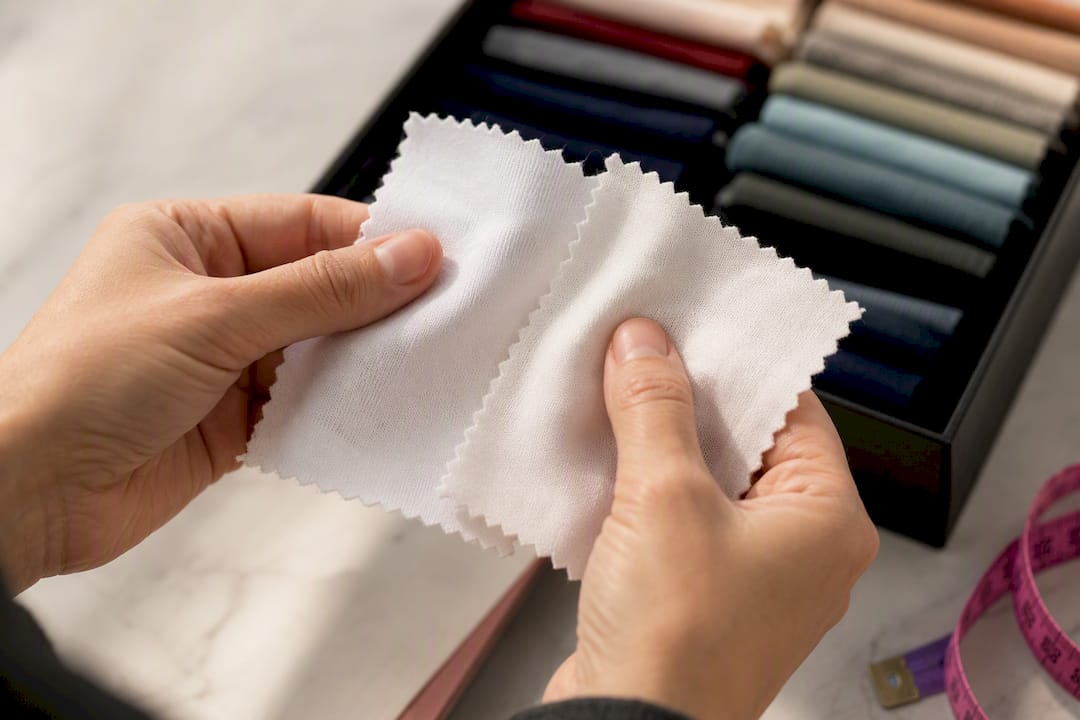
Pro Tip: Ask for a fabric swatch or sample shirt before committing to a bulk order. A five-minute hand check tells you more about softness than any product description ever will.
What Shay’s Print Shop Has Learned From Printing Thousands of Shirts
Fabric choice changes print outcomes more than most customers expect. Combed ringspun blanks absorb DTF and DTG ink more evenly, which means fewer pretreatment adjustments and more consistent color from shirt to shirt across a bulk order.
A few things Shay’s Print Shop watches for on every production run:
- Ringspun and combed ringspun blanks reduce ink bleed on fine detail, logos, and small text.
- Consistent proven DTF settings matter as much as fabric choice for repeatable results across a large order.
- Pre-shrunk blanks reduce customer complaints about fit after the first wash.
- Bulk pricing and fast turnaround only stay reliable when the blank supply is consistent, which is why fabric specs get checked before every large order ships.
Customers ordering shirts for events or reunions get more mileage out of ringspun blanks precisely because those shirts get washed and worn again and again.
Our Take on Ringspun vs Regular Cotton
For most custom retail orders, family reunions, and team apparel, ringspun cotton is the better default. The extra cost per shirt is small compared to how much longer the fabric holds its shape and softness through repeated wear. Regular cotton still earns its place for single-use promo runs where budget outweighs longevity. Check the product spec sheet before you order, or reach out directly if you want help picking the right blank for your project.
*— Jon Will
Get 100% Cotton Shirts Without the Guesswork
Shay’s Print Shop makes the ringspun-versus-regular decision simple: every order in the 10 for $99 custom t-shirt package uses 100% cotton blanks chosen for softness and durability, at a flat price that beats piecing together a bulk order elsewhere.
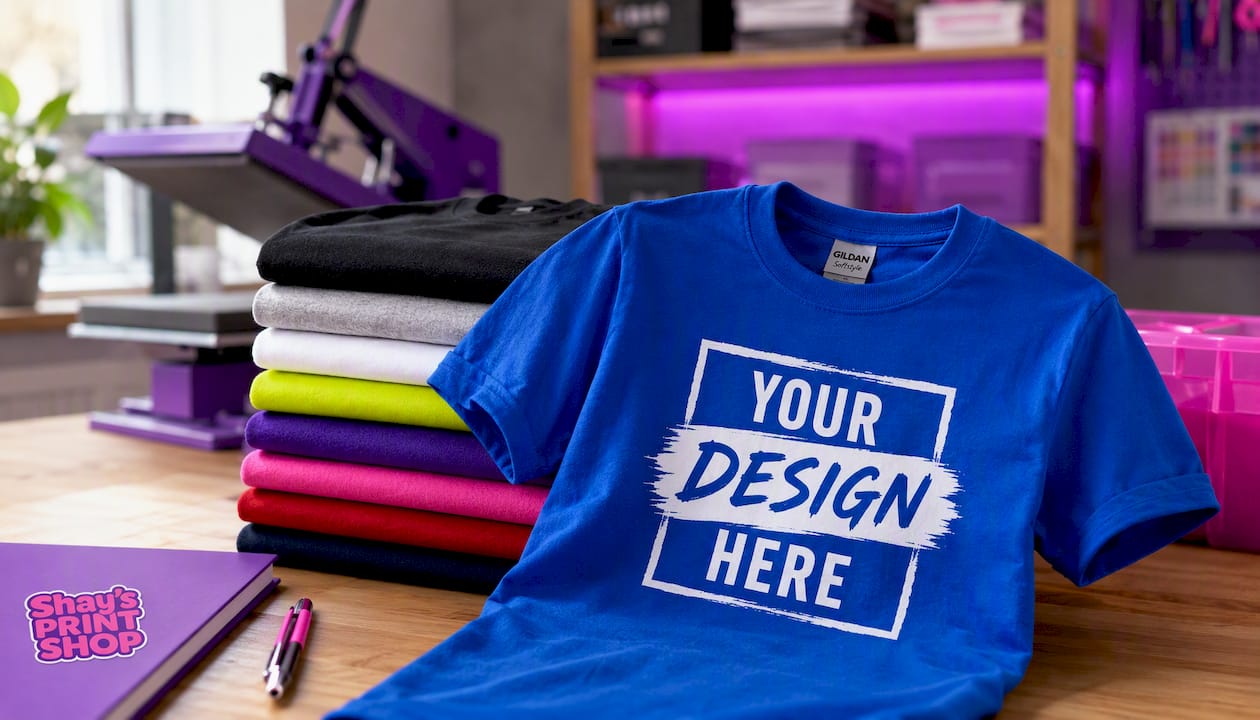
That package is intended to fit families planning a reunion, small businesses outfitting a team, and event planners who need shirts that still look good after the event is over. Customers upload their logo, photo, or design, choose sizes and colors, and printing with turnaround is handled by the provider. If you’re weighing cotton against other fabric options for your event, the same production team can walk you through which blank fits your print method and budget. Start your order today and get shirts your group will actually want to wear more than once.
Sources
FAQ
Will 100% ringspun cotton shrink?
Yes. Expect 2 to 5% shrinkage on the first wash unless the blank is pre-shrunk, and washing in cold water with low dryer heat minimizes further shrinkage.
Is ringspun cotton stretchy?
Ringspun cotton on its own has minimal stretch since it’s a natural fiber spun tightly for strength, not elasticity; stretch comes from blending in spandex or elastane, not from the spinning method itself.
What is ringspun cotton?
Ringspun cotton is yarn produced by continuously twisting and thinning fibers on a ring-and-traveler mechanism, which aligns the fibers tightly and produces a finer, smoother, stronger yarn than open-end cotton.
What’s the healthiest fabric to wear?
100% cotton, especially combed ringspun varieties, is widely considered breathable and gentle on skin because it’s a natural fiber with no synthetic coating, though people with cotton sensitivities should always check garment tags for blend content.
What’s the difference between combed and ringspun cotton?
Combing removes short fibers before spinning for a cleaner base material, while ring spinning is the twisting method that aligns and strengthens the yarn; the two are often combined as combed ringspun for premium apparel.
0 comments