

Cotton wins for natural comfort and breathability. Polyester wins for durability and easy care. Knowing which one fits your needs comes down to how you plan to wear it, where you live, and how much upkeep you want.
Here’s a quick look at how they stack up:
Cotton strengths:
- Naturally breathable and soft against skin
- Absorbs moisture readily, helping your body cool down
- Comfortable for all-day wear in warm weather
- Biodegradable and made from a renewable plant source
Polyester strengths:
- Resists wrinkles and holds its shape wash after wash
- Dries quickly and repels surface moisture
- Lasts longer under heavy use and repeated washing
- Generally costs less per garment
If you’re in Florida, that choice gets even more pointed. Heat and humidity are constants here, and the fabric on your back makes a real difference by noon.
Table of Contents
- What makes cotton such a popular fabric for clothing?
- What is polyester and why do so many brands use it?
- How do cotton and polyester compare for breathability and moisture?
- Durability, care, and maintenance: what you need to know
- Which fabric works best in Florida’s heat and humidity?
- How to choose between cotton and polyester: a step-by-step guide
- Shaysprintshop: custom 100% cotton shirts made for Florida
- Environmental impact: cotton vs polyester
- Key Takeaways
What makes cotton such a popular fabric for clothing?
Cotton is a natural fiber harvested from the seed pods of cotton plants, and people have been wearing it for thousands of years for good reason. It’s soft, breathable, and genuinely comfortable against skin, especially in warm weather. The fiber absorbs and releases moisture naturally, which helps your body regulate temperature without trapping heat.
Not all cotton is created equal, though. Standard cotton uses a process called open-end spinning, which produces a slightly rougher, fuzzier yarn. Ring spun cotton takes longer to make because the fibers are continuously twisted and thinned on a ring frame, producing a finer, smoother, and stronger yarn. Combed ring spun cotton goes one step further: short fibers and impurities are combed out before spinning, leaving only long, aligned strands. The result is the softest, most durable cotton fabric available, which is why premium apparel brands reach for it first.
Cotton pros:
- Breathable and naturally temperature-regulating
- Soft feel, especially in ring spun and combed ring spun versions
- Absorbs sweat well, keeping you comfortable during light activity
- Easy to dye, print on, and customize
Cotton cons:
- Wrinkles easily and may shrink in the dryer
- Holds moisture longer after heavy sweating, which can feel clammy
- Requires more care than synthetic fabrics
- Ring spun and combed versions cost more than standard cotton
What is polyester and why do so many brands use it?
Polyester is a synthetic polymer fiber created through a chemical reaction between an organic alcohol and a carboxylic acid. The result is a fully man-made material engineered for performance. Brands use it because it resists wrinkles, holds its shape, and dries fast, traits that natural fibers simply can’t match without chemical treatment.
The fabric’s quick-drying and wrinkle-resistant properties come from its dimensional stability. Polyester fibers don’t absorb water the way cotton does, so moisture sits on the surface and evaporates quickly. That’s useful for athletic wear and outdoor gear, but it also means polyester can feel warmer and less breathable in humid conditions.
Polyester pros:
- Wrinkle-resistant and shape-retaining through many wash cycles
- Dries fast, making it practical for activewear
- Highly durable and resistant to stretching or shrinking
- Lower cost per garment at most price points
Polyester cons:
- Traps heat and can feel sticky in high humidity
- Less comfortable against bare skin for extended wear
- Made from petroleum-based materials, raising sustainability concerns
- Holds odors more than natural fibers over time
How do cotton and polyester compare for breathability and moisture?
Breathability isn’t just about fiber type. Fabric construction, knit weight, and finishing treatments all play a role. That said, cotton and polyester behave very differently at the fiber level when it comes to moisture.
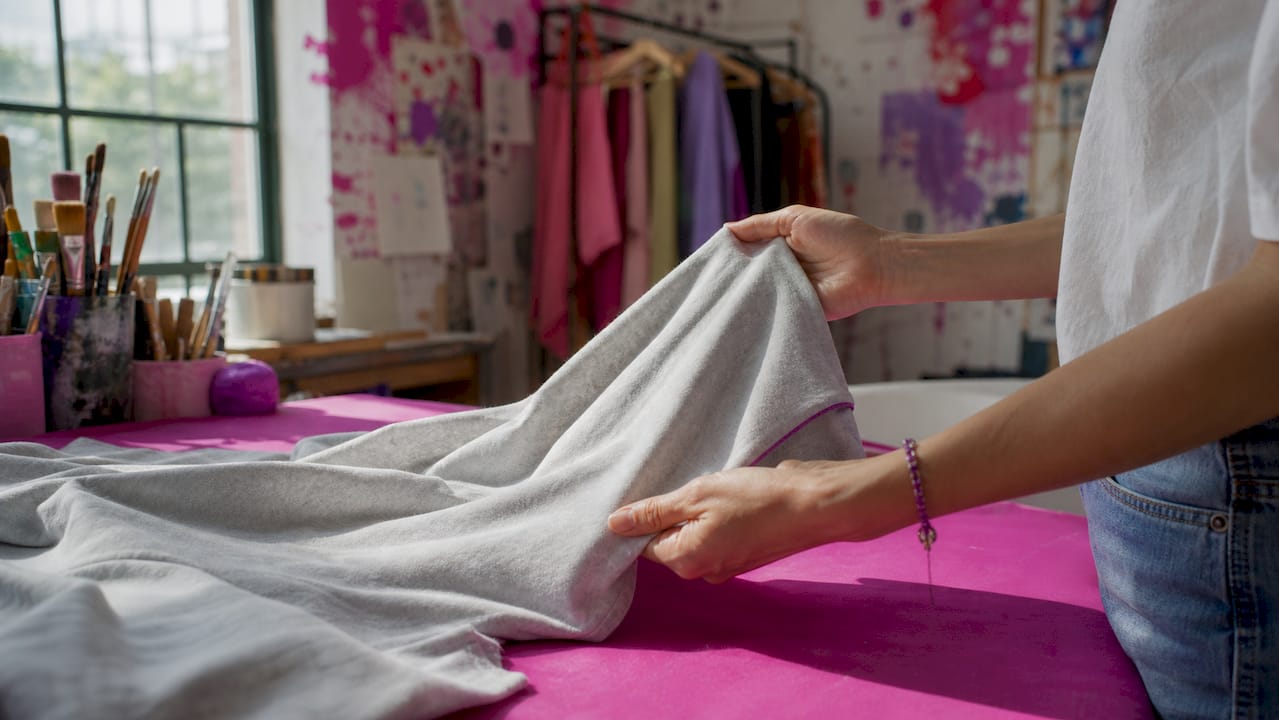
Cotton’s moisture regain is significantly higher than many synthetic fibers, meaning it actively pulls sweat away from your skin and holds it within the fiber. Polyester’s moisture regain is very low, so it stays nearly dry at the fiber level but relies on engineered fabric structures to move moisture across the surface.
| Feature | Cotton | Polyester |
|---|---|---|
| Breathability | High, natural airflow | Moderate, depends on fabric design |
| Moisture absorption | 7% moisture regain | very low moisture regain |
| Moisture wicking | Absorbs into fiber, slower to release | Surface wicking, faster drying |
| Feel in humidity | Cool initially, can feel damp after heavy sweat | Stays drier but can trap body heat |
| Best for | Casual wear, hot climates | Athletic wear, outdoor activity |
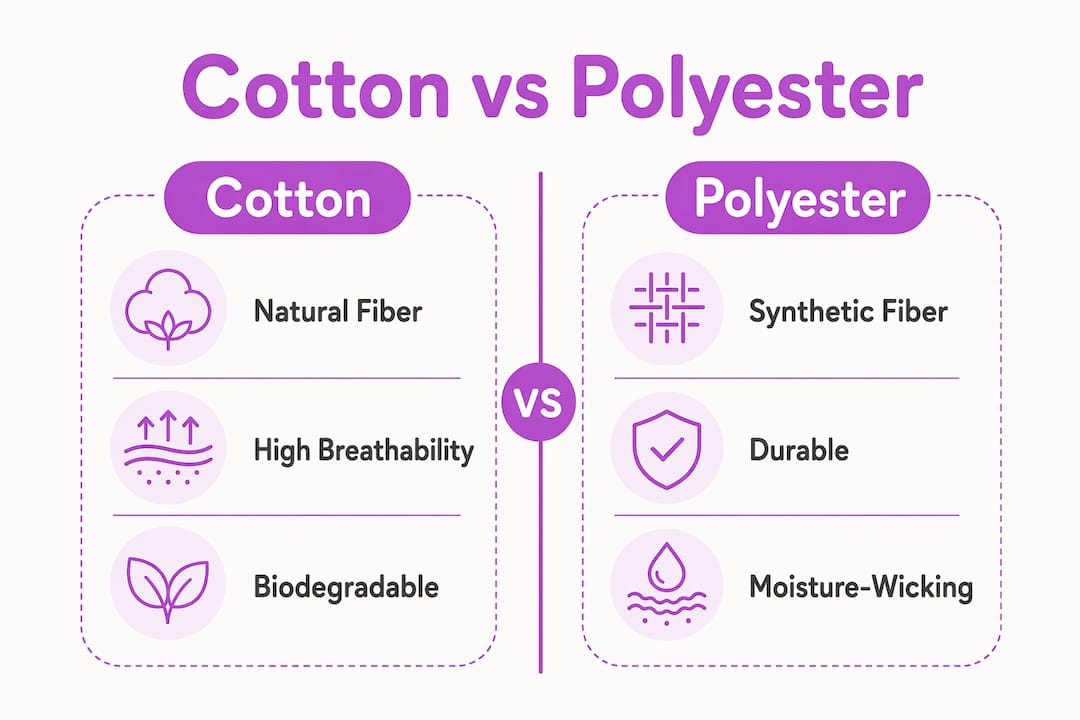
In Florida’s heat, cotton tends to feel more comfortable for everyday wear. But if you’re running, working outdoors, or doing anything that produces heavy sweat, a well-engineered polyester fabric can outperform cotton by keeping the surface drier. The key phrase there is “well-engineered.” A cheap polyester tee in August humidity is not a pleasant experience.
Durability, care, and maintenance: what you need to know
Polyester outlasts cotton in most durability tests. Its synthetic fibers resist stretching, shrinking, and pilling better than cotton, and it holds color longer under repeated washing. Cotton, particularly standard open-end spun cotton, can shrink noticeably in the first few washes and wrinkles with almost any handling.
Caring for cotton:
- Wash in cold water to reduce shrinkage
- Tumble dry on low or hang dry to preserve shape
- Iron on medium-high heat when needed
- Pre-treat stains quickly since cotton absorbs them fast
Caring for polyester:
- Machine wash in warm or cold water
- Tumble dry on low; high heat can damage fibers
- Rarely needs ironing
- Avoid fabric softeners, which can coat fibers and reduce moisture-wicking performance
Ring spun cotton, while softer, is also more durable than standard cotton because the tightly twisted yarn holds together better under stress. If you’re buying custom shirts for an event or a business, ring spun fabric will hold up through more washes before showing wear.
Which fabric works best in Florida’s heat and humidity?
Florida’s climate makes fabric choice genuinely consequential. Most days run hot and humid, and the wrong shirt can make a casual afternoon feel miserable. Cotton is the go-to for everyday comfort here, especially for casual wear, family events, and anything where you’re not pushing your heart rate.

For shoppers who want to explore fabric options before committing to a project, local stores offer a solid range. Rex Fabrics in Miami carries luxury fabrics including synthetics and specialty materials. Mood Fabrics stocks designer fabrics for everything from athleisure to casual wear. Fabrics Universe serves cosplayers, DIY artists, and fashion designers with specialty apparel fabrics. Sew Yours focuses on bag-making and sewing supplies, while Fabrics World rounds out the local options for general apparel projects.
Fabric use-case guide for Florida:
- Everyday casual wear: cotton or combed ring spun cotton
- Outdoor events and festivals: lightweight cotton or moisture-wicking polyester
- Athletic and workout wear: engineered polyester
- Custom branded shirts for businesses or reunions: 100% cotton for comfort and print quality
- High-humidity outdoor labor: polyester or cotton-polyester blend
For high-performance golf and sport apparel in warm, humid conditions, fabric selection follows similar logic: prioritize breathability and moisture management over aesthetics alone.
How to choose between cotton and polyester: a step-by-step guide
-
Define your primary use. Casual daily wear, athletic activity, and custom event shirts each call for different priorities. Cotton suits comfort-first use cases; polyester suits performance-first ones.
-
Consider your climate. Florida heat and humidity favor breathable fabrics. Cotton wins for comfort in everyday conditions; polyester works better when sweat volume is high.
-
Check the yarn construction. For cotton, look for ring spun or combed ring spun labels. They cost more but feel noticeably better and last longer.
-
Think about care. If you want low-maintenance fabric, polyester is easier. If you don’t mind occasional ironing and cold-water washing, cotton is worth it.
-
Factor in print quality. Cotton absorbs dye and ink more deeply, making it the preferred base for custom printing. DTF printing on 100% cotton produces vivid, lasting results.
-
Set your budget. Standard cotton and polyester are comparably priced at the entry level. Ring spun and combed ring spun cotton cost more. Blends can offer a middle ground.
-
Decide on sustainability. Cotton is biodegradable and plant-based. Polyester is petroleum-derived and sheds microplastics in the wash. If environmental impact matters to you, cotton is the cleaner choice.
Shaysprintshop: custom 100% cotton shirts made for Florida
Shaysprintshop specializes in custom 100% cotton apparel built for comfort in Florida’s climate. The shop prints personalized shirts for events, small businesses, family reunions, and group orders, with bulk pricing that keeps costs manageable.

Here’s what you get when you order through Shaysprintshop:
- 10 custom shirts for $99, with your logo, photo, or design printed on 100% cotton
- Fast turnaround times built for event deadlines
- Full color and size options to fit your whole group
- DTF printing that holds up wash after wash on natural cotton fabric
- US-based fulfillment with straightforward ordering
Cotton’s natural fiber surface takes DTF ink exceptionally well, producing sharp, vibrant prints that stay bright longer than on synthetic fabrics. For anyone planning a Florida event, a business uniform order, or a family reunion, bulk cotton shirts are the practical, comfortable, and crowd-pleasing choice.
Environmental impact: cotton vs polyester
Cotton is biodegradable and comes from a renewable plant source, but growing it conventionally requires significant water and pesticide use. Organic cotton addresses those concerns but typically costs more. Polyester is made from petroleum, a non-renewable resource, and sheds tiny plastic particles called microplastics during washing. Those particles pass through water treatment systems and accumulate in waterways.
From a lifecycle perspective, cotton generally has a lower long-term environmental footprint, especially when it’s durable enough to last many years. Ring spun and combed ring spun cotton, because of their strength, tend to outlast cheaper alternatives, reducing how often garments need replacing. Polyester recycled from plastic bottles (rPET) is a growing option that cuts virgin petroleum use, but it still sheds microplastics. For buyers who prioritize sustainability, high-quality cotton remains the more straightforward choice.
Key Takeaways
Cotton is the better choice for everyday comfort in Florida’s heat, while polyester suits performance and durability needs best.
| Point | Details |
|---|---|
| Moisture absorption | Cotton absorbs moisture readily; polyester absorbs very little moisture and dries faster. |
| Best for Florida heat | Cotton breathes naturally and feels cooler for casual, everyday wear in humid climates. |
| Durability and care | Polyester resists shrinking and wrinkles better; cotton needs more careful washing. |
| Premium cotton options | Ring spun and combed ring spun cotton are softer, stronger, and better for custom printing. |
| Sustainability | Cotton is biodegradable and plant-based; polyester sheds microplastics and uses petroleum. |
Recommended
- Custom T-Shirts – 10 for $99 | 100% Cotton Personalized Shirts for Eve – Shay’s Print Shop
- (White) Custom T-Shirts – 10 for $99 | 100% Cotton Personalized Shirts – Shay’s Print Shop
- Custom 100% Cotton T-Shirt – Shay’s Print Shop
- (Heather Grey) Custom T-Shirts – 10 for $99 | 100% Cotton Personalized – Shay’s Print Shop
0 comments