

Choose heat transfer (including DTF) for one-off gifts, photo-detailed art, and orders under roughly 24 shirts. Choose screen printing once you clear that ~24 to 36 shirt range and the design uses simple spot colors. Order size, fabric, and design complexity decide the winner every time.
TL;DR:
- Small orders under 24 shirts are usually more cost-effective with heat transfer methods like DTF, while screen printing benefits larger volumes over 36 shirts.
- Full-color gradients and photo designs are better suited for transfers, whereas simple spot-color artwork is more efficiently produced by screen printing.
- Durability of screen prints generally exceeds 50 washes if properly cured, while high-quality transfers can approach that lifespan with proper care.
- The setup cost for screen printing makes it more economical for high-volume orders, with the break-even point around 24 to 36 shirts depending on design complexity.
- Fabric choice influences method selection, with polyester and synthetic blends favoring transfers, while cotton favors screen printing for better color fidelity and longevity.
Table of Contents
- Heat Transfer vs Screen Printing: A Side-by-Side Look
- How Durable Are Screen Prints vs Heat Transfers?
- Screen Printing vs Heat Transfer: Cost Per Shirt Breakdown
- Which Method Handles Detailed Designs Better?
- Does Fabric Type Change Which Method You Should Use?
- Which Method Gets Your Order Out Faster?
- How Do You Decide Between the Two Methods?
- How Shay’s Print Shop Applies This to Real Orders
- An Editorial Take on Choosing Between These Two Methods
- Ready to Order? Here’s How Shay’s Print Shop Fits In
- Sources
Heat Transfer vs Screen Printing: A Side-by-Side Look
Screen printing pushes ink through a mesh stencil, one screen per color, and cures it into the fabric fibers. Heat transfer covers a family of methods (HTV, DTF, digital transfers) that print or cut a design, then bond it to the shirt with heat and pressure. One builds up cost with colors and comes down in cost with volume. The other flips that math.
Here’s how the two stack up across the factors that actually decide your order:
- Best for: Screen printing suits bulk, repeat, simple-color jobs. Heat transfer suits small batches, gradients, and one-off names or numbers.
- Cost curve: Screen printing has high setup, low per-unit cost at volume. Heat transfer has low setup, flatter per-unit cost regardless of quantity.
- Durability: Screen printing holds up longest when cured right. Quality transfers come close but vary by supplier and material.
- Colors: Screen printing charges per spot color. Heat transfer prints full-color photos and gradients in one pass.
- Feel: Screen printing sits thinner on the fabric. Vinyl transfers add more texture; DTF and soft-hand transfers feel closer to screen print.
- Fabric fit: Screen printing favors cotton and blends. Certain transfer types handle polyester and performance fabric better.
If your project falls between these lanes, such as a mid-run order with a photo logo, the checklist later in this guide walks through how to break the tie.
How Durable Are Screen Prints vs Heat Transfers?
Screen printing embeds ink directly into the fabric weave instead of laying a layer on top of it. That’s why properly cured plastisol screen prints commonly survive 50 or more washes without cracking. Heat transfers rely on adhesive bonding a film or ink layer to the surface, and that bond is only as good as the material and the press settings behind it.
Vinyl (HTV) transfers often start showing cracking or peeling earlier than screen print, though wash life still lands in a 30 to 50 wash range with proper care. Newer DTF and soft-hand transfers close that gap, but quality depends heavily on the supplier and the curing process behind the film.
- Wash inside out in cold water to protect the printed surface.
- Skip the dryer’s high heat setting whenever possible.
- Avoid ironing directly over a printed design.
Pro Tip: Always ask for a wash-tested sample before committing to a large order. A five-wash test at home tells you more than any spec sheet.
Screen Printing vs Heat Transfer: Cost Per Shirt Breakdown
Screen printing charges you for setup before the first shirt even runs. Each color needs its own screen, and that fixed cost gets divided across your total quantity, so a 200-shirt order absorbs setup fees far better than a 12-shirt order does. Heat transfer skips most of that setup. You pay closer to the same amount per shirt whether you order 5 or 50.
That’s why the break-even point sits around 24 to 36 shirts for straightforward, few-color designs. Push past that range and screen printing usually wins on cost. Stay under it, especially with a photo-heavy design, and transfer methods keep more money in your pocket.
A few variables shift that crossover point:
- More spot colors on a screen job raise setup costs and push the break-even higher.
- Specialty inks (metallic, puff, glow) add cost to both methods, but hit screen printing setup harder.
- Higher-priced blank garments shrink the percentage gap between methods, making the choice less urgent either way.
Shops built around bulk orders, like a 10-shirt package priced at $99, often use transfer methods below that crossover and shift to screen printing above it.
Which Method Handles Detailed Designs Better?
Photos, gradients, and multi-tone artwork favor heat transfer, hands down. Digital and DTF transfers print full-color images in a single pass with no extra screens or setup, so a sunset gradient costs the same as a simple logo.
Screen printing shines with spot-color art, think two or three flat colors, bold shapes, no blending. Every additional color means another screen, another registration step, and another chance for misalignment on a busy shop floor. Fine hairline text, tiny halftones, and subtle gradients push the limits of screen mesh count and registration tolerance, often forcing a simplified design or a switch to a transfer approach entirely.
For screen work, send vector files (AI, EPS, high-res PDF). For digital transfers, high-resolution PNG or PDF files with clean layers work best.
Does Fabric Type Change Which Method You Should Use?
Screen printing performs reliably on cotton and cotton-blend shirts, and a white underbase layer lets bold colors show up clean on dark garments. Polyester and performance fabrics behave differently. Sublimation and DTF transfers handle synthetic blends better than traditional plastisol, which can suffer dye migration on darker polyester, where dye bleeds through the ink over time. Comparing cotton vs polyester options before you finalize a design saves you from a reprint later.
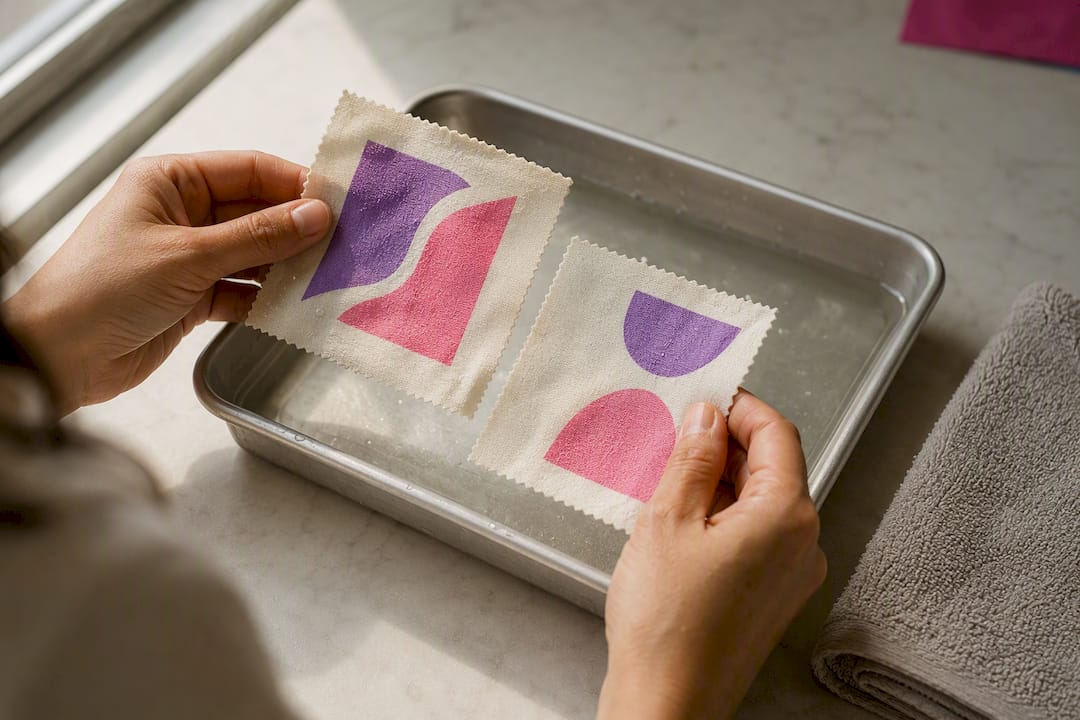
Before committing to a full order, press or print a single swatch, wash it, and check for bleeding, peeling, or shifted colors. That five-minute test catches most fabric mismatches before they become a 100-shirt problem.
Which Method Gets Your Order Out Faster?
Heat transfer wins the sprint. There’s no screen setup, so small runs can ship same day or next day. Screen printing needs more prep time upfront, burning screens and registering colors, but once that’s done, a shop presses shirts far faster per hour than a one-at-a-time transfer press can match. Multi-head presses and automatic dryers push that throughput even higher for bulk orders. Small shops often quote transfer jobs in a day or two and screen jobs in three to five days once setup is factored in.
How Do You Decide Between the Two Methods?
Work through this order before you request a quote:
- Confirm your exact quantity, since that number alone often settles the decision.
- Run a fabric swatch test if you’re unsure about the material.
- Pick your transfer type (HTV, DTF, sublimation) or ink type (plastisol, water-based) based on that fabric.
- Request a wash test sample from your vendor before the full run ships.
- Compare quotes with setup fees included, not just the per-shirt price.
Ask any vendor about cure temperature, how many washes they test to, and their exact file requirements. Watch for quotes with no setup fee listed separately. Hidden setup costs baked into a “flat rate” often mean you’re overpaying on small orders and underpaying attention on large ones.
Pro Tip: Get every quote broken into “setup” and “per-unit” costs. If a vendor won’t separate them, ask twice, then ask a different vendor.
How Shay’s Print Shop Applies This to Real Orders
Shay’s Print Shop runs on 100% cotton shirts with DTF, bulk pricing (10 shirts for $99), and fast turnaround. For a 20-shirt family reunion with everyone’s face on the design, DTF transfer is the obvious call. For a 200-unit uniform order with a two-color logo, screen printing brings the per-shirt cost down where it counts.
An Editorial Take on Choosing Between These Two Methods
The break-even number gets treated like gospel, but it’s a starting point, not a rule. A 20-shirt order with a five-color screen design can flip the math entirely, because setup costs scale with colors, not just quantity. Anyone quoting you a flat break-even without asking about your artwork is skipping half the equation.
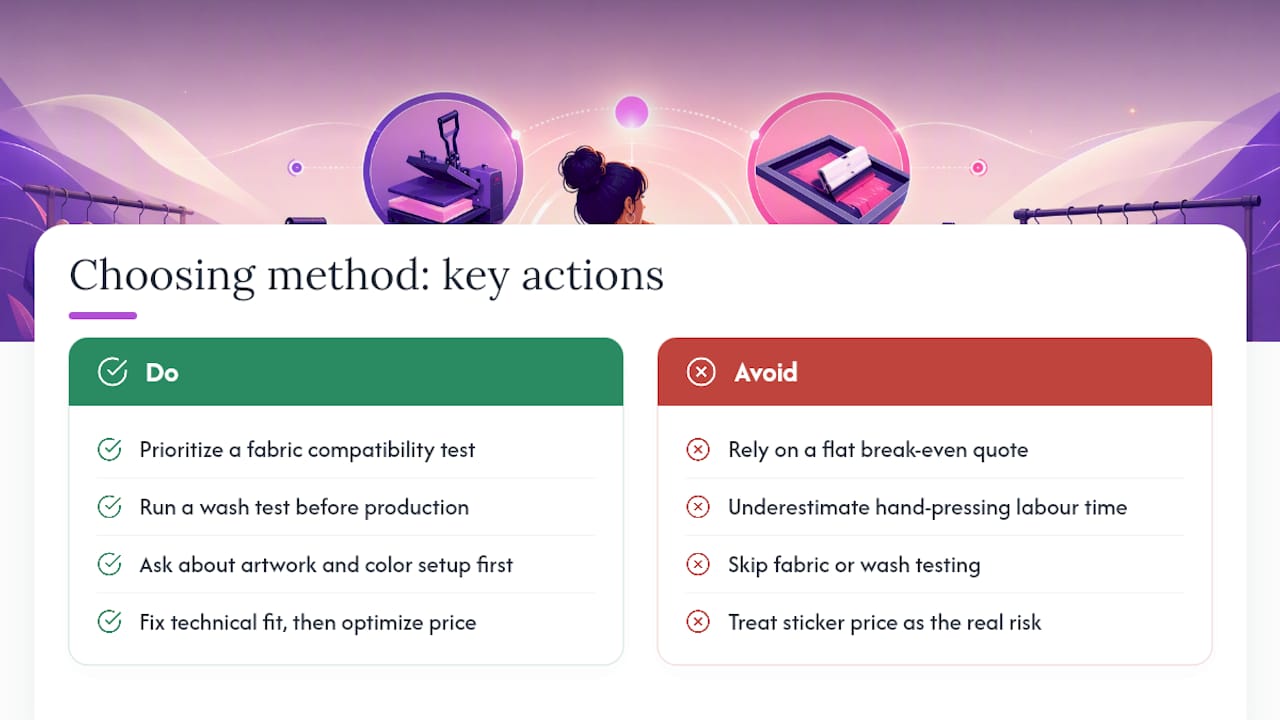
The bigger blind spot is labor. Pressing 40 transfers by hand, one at a time, costs more in time than most small business owners budget for, and a single failed wash test on a bulk order wipes out whatever you saved on equipment. That’s the real risk, not the sticker price difference between methods.
Prioritize the fabric test and the wash test before you touch the cost spreadsheet. A method that’s cheap on paper and fails on a customer’s shirt costs you a customer, not just a reprint. Get the technical fit right first, then optimize for price.
— Jon Will
Ready to Order? Here’s How Shay’s Print Shop Fits In
Shay’s Print Shop offers DTF setups for photo-detailed, small-batch orders and bulk pricing that keeps larger runs affordable.
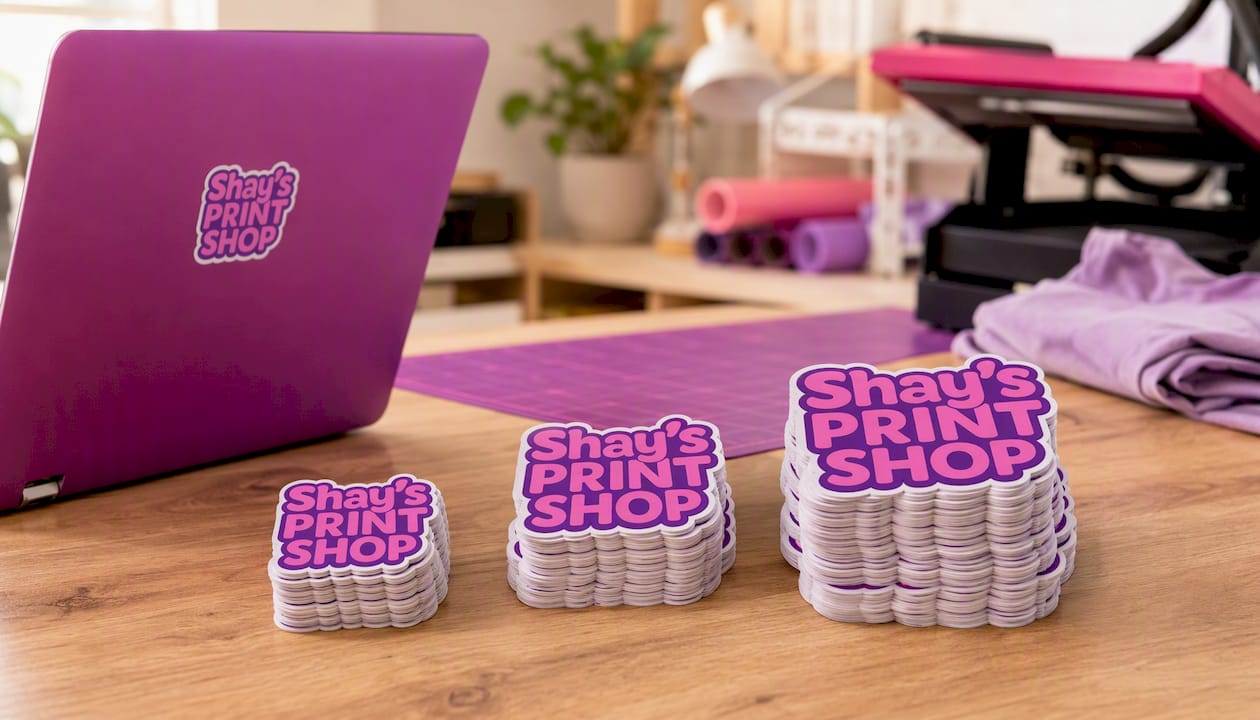
If you’re planning an event shirt run, a team uniform order, or need matching promotional gear beyond t-shirts, our catalog covers more than apparel. Browse custom die-cut stickers in 2 inch sizing, 3 inch options, and 4 inch versions for packaging, merch drops, or event swag alongside your shirt order. If your run sits below that 24 shirt crossover point or your art has gradients and photos, request a quote for a DTF run today. If you’re planning a uniform order past 100 units, mention that upfront so we can quote the right method from the start.
Sources
- Heat Press vs. Screen Print: Which Is Right for Your Business? — Shopify
- Screen Printing vs Heat Transfer Vinyl: Which Is Better for Custom T-Shirts — Printable Press
- Screenprinting
0 comments