

Yes, you can order a single custom t-shirt today. No-minimum custom shirts are widely available through print-on-demand and small-run services using DTG (direct-to-garment) or DTF (direct-to-film) printing. You don’t need to commit to a large batch to get your design on a quality tee.
Here’s what small buyers need to know right away:
- Print-on-demand (DTG/DTF): No minimum order quantity. Order one shirt or ten.
- Traditional screen printing: Minimums typically start at 12–24 pieces per design because of setup and screen costs.
- Low-quantity packages: Shaysprintshop’s 10-for-$99 custom t-shirt package gives you 100% cotton personalized shirts at $9.90 per shirt, a practical entry point for small events, businesses, or family reunions.
- Best first step: Place a small test order to confirm color accuracy and print placement before scaling up.
If you need shirts fast and don’t want to commit to dozens of units, a no-minimum or low-minimum service is your answer. Read on for pricing math, size-split rules, and how to pick the right printer.
Table of Contents
- What do t-shirt order minimums actually mean for small buyers?
- What does per-shirt pricing actually look like for small orders?
- How does ordering a custom t-shirt actually work, step by step?
- Which shirt brands and printing methods work best for small runs?
- How do you evaluate no-minimum printers before you commit?
- What Shaysprintshop offers for small and no-minimum buyers
- Shaysprintshop makes small-batch ordering straightforward
What do t-shirt order minimums actually mean for small buyers?
“No minimum” means the printer will produce a single shirt without requiring you to order a set quantity first. Most print-on-demand services operate this way because they print each shirt individually as orders come in, using DTG or DTF technology. There’s no screen to set up, no ink to mix in bulk, and no wasted inventory.
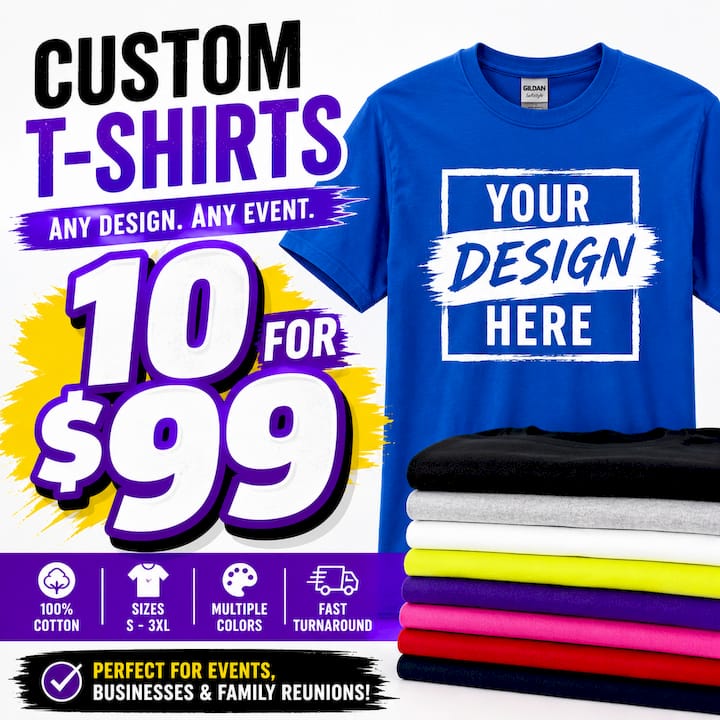
A “low minimum” is different. It’s a small required quantity, often 6, 10, or 12 shirts, that a shop sets to make a run economically worthwhile. Shaysprintshop’s 10-for-$99 package is a good example: you commit to 10 shirts, but the per-unit price drops to $9.90, which is real savings over ordering one at a time.
The trade-off is straightforward. No-minimum orders cost more per shirt. A single DTG-printed tee from a print-on-demand service can run a higher total cost once you add the blank, printing, and shipping. Low-minimum packages close that gap fast. The more shirts you add, the lower your per-unit cost.
A few other practical trade-offs worth knowing:
- Design complexity: DTG and DTF handle full-color artwork and photos well. Screen printing can deliver sharper results on simple designs at scale, but the setup cost makes it impractical for small runs.
- Customization options: Some finishes (embroidery, specialty inks) may require higher minimums regardless of the printing method.
- Lead times: Print-on-demand can be slower per unit than a batch run, though many services offer expedited shipping.
No-minimum ordering makes the most sense for single gifts, design prototypes, or small teams of five or fewer. Once your group hits 10 or more, a low-minimum package almost always wins on cost.
Pro Tip: Order one sample shirt before committing to a larger quantity. Check the color against your original file and confirm print placement. A $20 sample can save you from a costly reprint on 50 shirts.
What does per-shirt pricing actually look like for small orders?
Custom cotton shirts often start around $7–$10 per blank garment before printing and shipping. Add DTG or DTF printing, and your total per-shirt cost climbs. Here’s how the math works across three common scenarios.
The 10-for-$99 package at Shaysprintshop brings your cost to $9.90 per shirt for 100% cotton personalized shirts, with no separate blank or printing line items to calculate. That’s a clean, predictable number for budgeting an event or testing a new design.
For a single print-on-demand shirt, expect to pay roughly $20–$30 all-in depending on the service, blank brand, and shipping speed. At six shirts with DTF, your per-shirt cost decreases noticeably compared to a single shirt. The jump from one shirt to ten cuts your cost nearly in half, which is why low-minimum packages are worth considering even when you don’t technically need a minimum.
Pro Tip: When comparing quotes, always ask for the all-in price: blank + printing + shipping + any setup fee. A $6 base price with a $15 setup fee is more expensive than a $12 base with no setup for small runs.
How does ordering a custom t-shirt actually work, step by step?
The process is simpler than most first-time buyers expect. Here’s the standard workflow for a no-minimum or low-minimum order:
- Prepare your design file. Use a PNG or PDF with a transparent background, at least 300 DPI. DTG and DTF both handle full-color artwork. Screen printing requires separated color files, which is one reason it’s less common for small runs.
- Choose your blank. Pick the shirt style, color, and size range. For 100% cotton, you’ll get better color saturation with DTF. Tri-blends print well with DTG but cost more per blank.
- Upload your artwork. Most services let you position the design on a digital mockup. Confirm placement (chest, back, sleeve) before moving forward.
- Review the proof. A digital proof shows your design on the chosen shirt. Approve it carefully. Check that colors look right and text is readable at the printed size.
- Select your sizes and quantities. For a 10-shirt order, decide how many of each size you need. (See the size-split section below for guidance.)
- Confirm printing method. For small runs, DTF or DTG are the practical choices. Both work without minimums or with low minimums.
- Pay and place the order. Review the total, confirm shipping address and speed, and check out.
- Track and receive. Most small-run orders ship within a few business days of proof approval.
Before you start, have these ready: your finalized art file, a color reference (Pantone or hex code if color matching matters), and your size breakdown. Waiting until checkout to figure out sizes slows the process down.
Which shirt brands and printing methods work best for small runs?
Not every blank or printing method is a good fit for small quantities. Here’s a practical breakdown.
Blank categories for small orders
- Basic 100% cotton: The most affordable option. Holds DTF ink well and washes durably. Best for events, giveaways, and everyday wear.
- Premium ringspun cotton: Softer feel, slightly higher cost per blank. Good for retail-quality results or gifts.
- Tri-blend (cotton/poly/rayon): Lightweight and comfortable, but the heathered texture can affect color vibrancy with DTG. Works better for vintage-style or muted designs.
Printing methods compared
| Feature | DTG | DTF | Screen print |
|---|---|---|---|
| Minimum order | None (1+) | None to low | Typically 12–24+ |
| Cost per shirt (single) | Higher | Moderate | High (setup cost) |
| Color fidelity | Excellent for photos | Excellent, vibrant | Best for spot colors |
| Best for | Detailed artwork, photos | Most designs, dark shirts | Simple designs, large runs |
| Typical turnaround | 3–7 days | 3–7 days | several business days |
DTF tends to be the stronger choice for small runs on dark-colored shirts because it lays ink on top of the fabric rather than into it, producing vivid results regardless of shirt color. DTG works best on light or white shirts and handles photographic detail well. Screen printing’s setup costs make it hard to justify under 24 shirts unless you’re getting a very simple one-color design.
Blends are fine for comfort-first applications, but confirm with your printer how the blend affects ink adhesion before ordering.
How many shirts to order in each size for small runs
Size splits trip up a lot of small-run buyers. Order too many smalls and you’ll have leftovers. Order too few larges and someone gets left out.
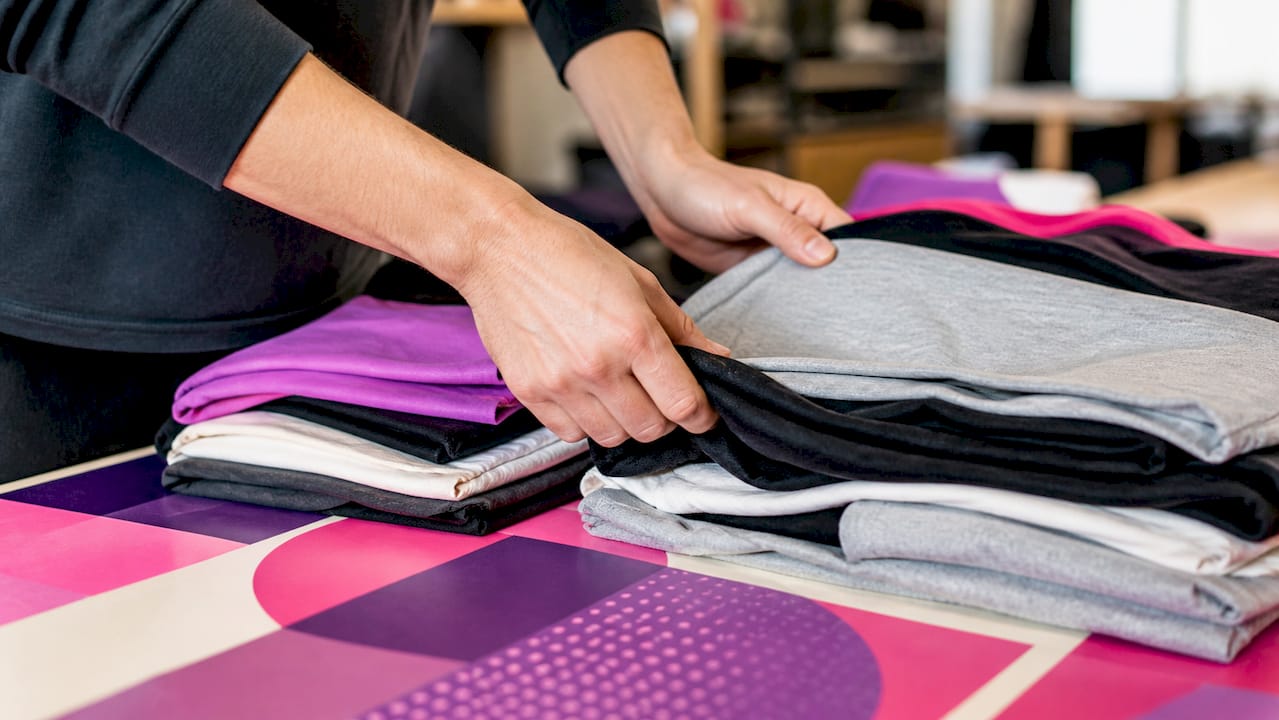
Order history data shows that Large typically accounts for around 32% of orders and Medium around 28%, making them the two most common sizes across general adult groups.
For a 10-shirt order, a practical starting split looks like this:
- Small: 1 shirt (10%)
- Medium: 3 shirts (30%)
- Large: 3 shirts (30%)
- XL: 2 shirts (20%)
- 2XL: 1 shirt (10%)
Adjust based on what you know about your group. A youth sports team skews smaller. A corporate event often skews toward L and XL. If you’re ordering for a mixed group you don’t know well, lean toward L and XL.
One practical note: most custom shirt orders are non-returnable once printed. Order one extra in the most common size rather than trying to exchange after the fact. A spare shirt is far less painful than a gap.
How do you evaluate no-minimum printers before you commit?
The lowest advertised price is rarely the most important factor for small runs. Reliability and clear policies matter more when you’re ordering 10 shirts for an event that happens on a fixed date.
Ask these questions before placing an order:
- What’s your proof policy? Do you send a digital proof before printing? Can you request a physical sample?
- What are your file requirements? PNG, PDF, minimum DPI? Knowing this upfront prevents delays.
- What’s your turnaround time, and does it include weekends? “3–5 business days” and “3–5 days” are not the same.
- What’s your return or reprint policy if the print doesn’t match the proof?
- Are there setup fees for small orders? Some services charge a one-time fee per design that isn’t visible in the per-shirt price.
- What customer service channels do you offer? Chat and phone support matter when you have a deadline.
Red flags to watch for: no digital proof before printing, vague turnaround language, pricing that changes at checkout, and no clear reprint policy. Check independent review platforms to verify that a printer’s fulfillment quality matches its marketing claims. Vendor reliability varies widely, and a low price from an unreliable printer costs more in the end.
If a vendor offers local pickup, confirm availability and hours directly before counting on it for a tight deadline.
Pro Tip: Prioritize printers that offer a digital proof and a clear reprint policy. For small runs, a misprint with no recourse is a total loss. A printer that stands behind its work is worth paying a few dollars more per shirt.
What Shaysprintshop offers for small and no-minimum buyers
Shaysprintshop is built for exactly this kind of buyer. Whether you’re an individual testing a design, a small business outfitting a team, or a family planning a reunion, the shop’s low-quantity custom shirt packages give you a clear, affordable entry point.
The flagship offer is 10 custom shirts for $99, printed on 100% cotton blanks using DTF. That’s $9.90 per shirt, all-in on the garment and print. US-based fulfillment means faster shipping and easier communication if you have questions.
Who it’s for: Individuals ordering a small gift batch, event planners handling gatherings of 10–50 people, small businesses testing a branded design before committing to a larger run, and families putting together reunion shirts without the pressure of a large bulk order minimum.
Shaysprintshop also covers bulk ordering policies for customers who grow into larger quantities, so you’re not locked into the small-batch tier forever. Start small, validate your design, and scale when you’re ready.
When no-minimum orders make sense versus going bulk
Small runs and no-minimum orders are the right call more often than people think, but bulk still wins in specific situations.
Order small (1–12 shirts) when you’re testing a new design, serving a group you can count on one hand, or buying a personalized gift. The higher per-unit cost is the price of flexibility, and it’s usually worth it. Ordering 50 shirts of a design you haven’t validated is a much bigger risk than paying $5 more per shirt on a 10-piece test run.
Go bulk when you know the design works, the event is confirmed, and the group is large enough that per-unit savings add up to real money. At 50 shirts or more, the math shifts decisively toward bulk pricing. For fundraising or resale, bulk is almost always the better model because your margin depends on keeping per-unit cost low.
The decision rule is simple: if you’re not certain about the design, the fit, or the demand, order small first. Certainty earns bulk pricing.
Shaysprintshop makes small-batch ordering straightforward
Ten custom shirts for $99 is a hard price to argue with for a first order.
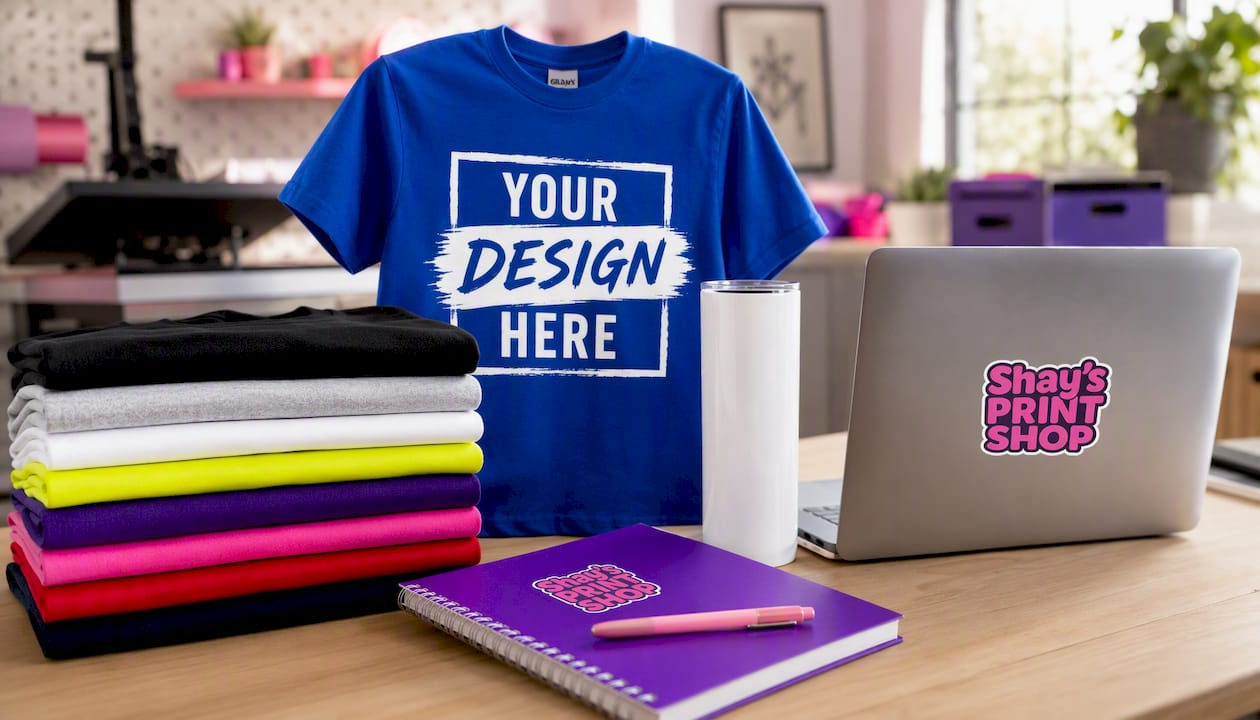
Here’s how to place your order:
- Upload your artwork (PNG or PDF, 300 DPI minimum).
- Choose your shirt colors and size breakdown.
- Review and approve your digital proof.
- Check out and confirm your shipping details.
You can also add a custom tumbler to round out an event bundle or gift set. Start your order at the 10-for-$99 custom shirts page and have your design on quality cotton shirts without committing to a large bulk minimum.
Key Takeaways
No-minimum and low-minimum custom t-shirt printing is widely available through DTG and DTF services, with Shaysprintshop’s 10-for-$99 package offering the clearest value for small buyers at $9.90 per shirt.
| Point | Details |
|---|---|
| Screen print minimums | Traditional screen printing typically requires 12–24 shirts minimum due to setup costs. |
| No-minimum cost trade-off | Single DTG/DTF shirts cost roughly $20–$30 all-in; low-minimum packages cut that significantly. |
| Best size split for 10 shirts | Favor M and L (roughly 30% each), then XL, S, and 2XL to cover most adult groups. |
| Evaluate printers carefully | Prioritize proof policy and reprint guarantees over lowest advertised price for small runs. |
| Shaysprintshop’s offer | The 10-for-$99 package delivers 100% cotton DTF-printed shirts at $9.90 each with US fulfillment. |
Useful sources and further reading
- Shaysprintshop bulk ordering guide — policies for small-batch and bulk orders, customer use cases
Recommended
- Custom T-Shirts – 10 for $99 | 100% Cotton Personalized Shirts for Eve – Shay’s Print Shop
- 10 for $99 Custom T-Shirts – Shay’s Print Shop
- Bulk T-Shirt Ordering for Events, Teams & Businesses – Shay’s Print Shop
- (White) Custom T-Shirts – 10 for $99 | 100% Cotton Personalized Shirts – Shay’s Print Shop
0 comments