

Yes. Properly made cotton canvas totes hold up to years of daily use if you pick the right fabric weight and construction. The catch is that “cotton tote” covers everything from a flimsy conference freebie to a bag that can carry groceries for half a decade, so cotton tote durability comes down to three quick checks before you buy:
- Fabric weight: look for 10 oz or higher (roughly 339 g/m² and up) on the product description.
- Reinforced seams and handles: double-stitching or bartacking at the stress points, not a single loose line of thread.
- Intended load: match the bag to what you’ll actually carry. A tote built for magazines won’t survive canned goods.
How you wash it, load it, and how often you actually use it changes both its lifespan and whether it beats plastic environmentally.
Key Takeaways
Cotton tote durability depends on measurable specs, not marketing language: fabric weight, weave density, and seam reinforcement determine whether a bag lasts one season or five years.
| Point | Details |
|---|---|
| Check the ounce weight first | Look for 10 to 12 oz canvas for daily use, 14 to 16 oz for heavy-duty jobs. |
| Inspect the handle root | Bartacked or double-stitched handles prevent the most common failure point in tote bags. |
| Wash cold, dry without heat | This preserves tensile strength and protects prints and zippers over hundreds of wash cycles. |
| Buy for daily use, not novelty | A tote needs thousands of reuses to offset a plastic bag’s footprint, so use it constantly. |
| Order construction you can verify | Shay’s Print Shop builds custom cotton totes with reinforced seams suited to daily carrying, alongside its custom t-shirt bulk packages. |
Table of Contents
- What Fabric Specs Predict Cotton Tote Durability
- How Construction Details Affect Cotton Tote Bag Strength
- How Much Weight Can a Cotton Tote Carry, and How Long Does It Last?
- Washing and Repair Tips to Extend Your Tote’s Life
- How Many Times Do You Need to Reuse a Cotton Tote to Beat Plastic?
- How to Choose the Right Cotton Tote for Your Use
- What the Durability Numbers Actually Tell You
- Get a Cotton Tote Built to Last, Not Just Look Good
- Frequently Asked Questions
- Sources
What Fabric Specs Predict Cotton Tote Durability
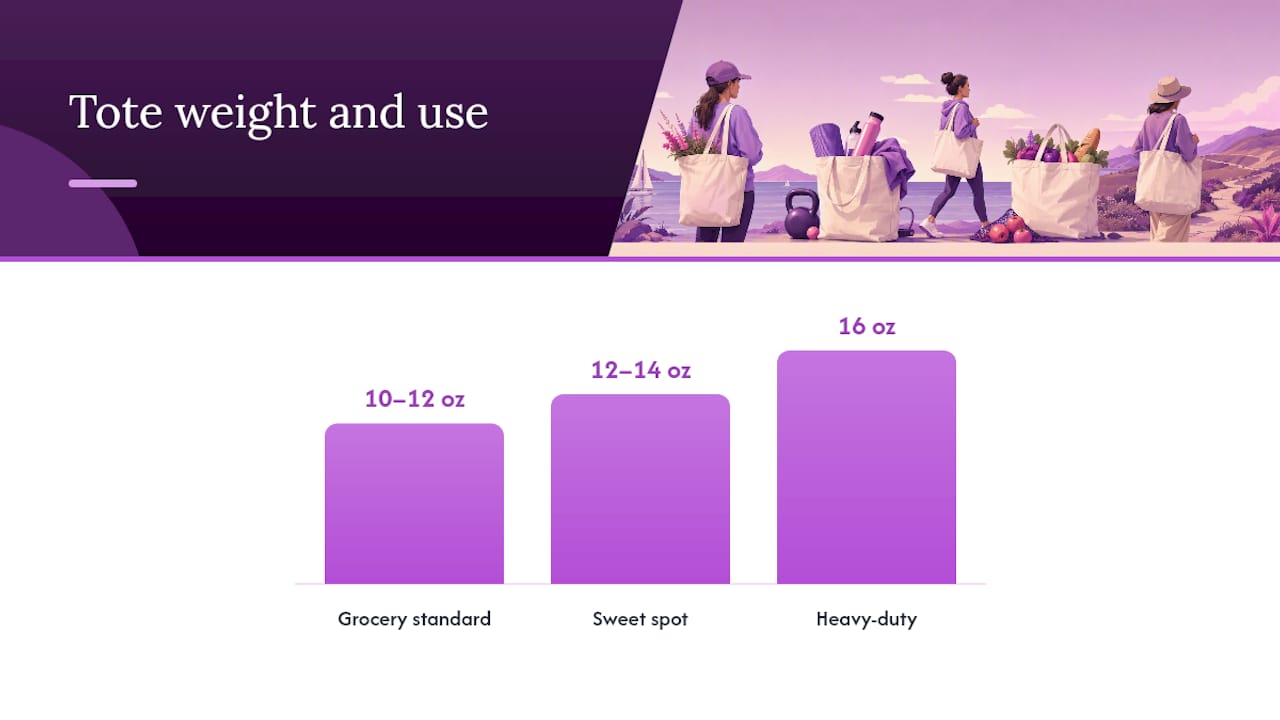
Two numbers tell you almost everything about how long a tote will last: ounces per square yard and grams per square meter (GSM). They measure the same thing in different units, and the conversion matters because listings mix both. A 10 to 12 oz cotton canvas (roughly 339 to 407 g/m²) is the practical standard for daily grocery use, balancing strength against a bag you can actually fold into a purse.

Weight isn’t the whole story. Weave matters just as much.
A tightly woven plain-weave canvas resists stretching and tearing far better than the loose knit used in T-shirt cotton, even at a similar weight. Canvas consistently outperforms jute and non-woven polypropylene for grocery loads specifically because of that weave density combined with washability.
Fiber quality is the third variable shoppers skip. Long-staple cotton fibers spin into stronger, less pill-prone yarn than the short-staple fibers common in some recycled cotton blends. That doesn’t mean skip recycled cotton. It means check whether the seller mentions fiber length or blend ratio, because a 12 oz recycled-cotton tote with short fibers can wear faster than an 11 oz virgin-cotton bag.
Statistic to remember: 12 to 14 oz canvas is the practical sweet spot for most daily users, with 16 oz reserved for heavy-duty jobs. Every ounce you add for strength also adds empty-bag weight you’ll feel on your shoulder.
How Construction Details Affect Cotton Tote Bag Strength
Fabric strength means nothing if the seams give out first, and seams almost always give out first. Handle roots (where the strap meets the body) take the most stress on every trip, followed by side seams and base corners where weight concentrates in the corners like water pooling in a bowl.
Here’s what separates a tote that survives five years from one that rips in five weeks:
- Double-stitched seams. A single row of stitching is a fault line waiting to open. Two parallel rows distribute the load.
- Bartack or box stitch at the handle root. Industry testing on static load, dynamic load, and handle pull consistently identifies handle-root failure as the most common catastrophic failure mode in tote bags, and bartacking spreads that stress into the panel instead of concentrating it on a few threads.
- Webbed or reinforced handles. Cotton webbing straps outlast rolled-fabric straps of the same material because the weave runs the length of the strap rather than folding over itself.
- Reinforced or boxed base. A flat-bottom construction with extra stitching at the corners stops the classic “sagging bag” problem that comes from carrying anything heavier than a paperback.
- Metal zipper teeth over coil zippers, if the tote has a zipper. Coil zippers jam and split under repeated abrasion; metal teeth handle grit better over hundreds of open-close cycles.
Pro Tip: Flip a tote inside out before buying and run a finger along the handle seam. If you can feel loose threads or a single stitch line, that bag is a short-term purchase no matter how heavy the fabric feels.
Print method matters here too. Water-based and DTF prints that cure properly hold their color through repeated washing far better than screen prints applied with cheap ink, which crack and flake within a season.
How Much Weight Can a Cotton Tote Carry, and How Long Does It Last?
A well-built 400 GSM (about 12 oz) cotton canvas tote with double-stitched seams can carry roughly 12 to 15 kilograms without base distortion, which covers a full grocery run or a stack of event merchandise. Lighter shells, the kind you get free at a trade show, top out well below that before the handles start pulling loose.
Lifespan follows the same weight logic:
- Well-made 10 to 16 oz canvas, daily use: 3 to 5 years before visible wear affects function.
- Lightweight promotional totes (under 8 oz): 1 to 2 years, often less with regular heavy loads.
- Occasional or event use: can stretch well past 5 years regardless of weight, simply because stress accumulates slower.
Three habits shorten that window faster than anything else: consistently overloading past the bag’s rated capacity, running it through a hot dryer (heat breaks down cotton fiber and any elastic in printed graphics), and repeated abrasion against rough surfaces like concrete or a car trunk liner. Manufacturers who publish handle pull and abrasion test results typically build in a safety margin below the load that actually snaps a seam, so a bag “rated” for 12 kg often survives occasional heavier trips without immediate failure. Occasional isn’t the same as routine.
Washing and Repair Tips to Extend Your Tote’s Life
Cotton tote maintenance is where most of the lifespan gets won or lost, and the rules are simpler than people expect. A 400 GSM cotton tote retains roughly 95% of its original tensile strength after 50 cold washes, which tells you the fabric isn’t the weak link. Your washing habits are.
- Wash cold, on a gentle cycle. Hot water accelerates fiber breakdown and fades prints faster than any other single factor.
- Turn printed totes inside out. This protects the graphic from direct agitation against the drum.
- Skip the dryer’s heat setting. Air-drying preserves both fabric structure and zipper function; high heat is one of the fastest ways to warp a zipper track.
- Treat stains before washing, not after. A stain that sets through a hot wash cycle becomes permanent.
Rotating between two or three totes instead of hammering one bag daily gives stress points time to “rest,” which sounds unscientific but genuinely reduces fatigue at the handle root.
Pro Tip: If a handle seam starts to fray, reinforce it with a box stitch in matching thread before it fully separates. A five-minute repair at the first loose thread beats replacing the whole bag six months later.
Know when to retire a bag: once a seam has torn through the panel fabric itself, rather than just the thread, patching rarely holds under real load. For guidance on print methods and the care each one needs, Shay’s Print Shop breaks down tote bag printing methods and how they hold up over repeated washing.
How Many Times Do You Need to Reuse a Cotton Tote to Beat Plastic?
More than you’d think, and this is where a lot of “eco-friendly” marketing gets uncomfortable. Lifecycle assessments commonly cited in sustainability research put the reuse threshold for a conventional cotton tote at roughly 7,100 uses to offset the production footprint of a single-use plastic bag. Organic cotton estimates run even higher, since organic farming methods currently require more land and water per unit of fiber.
Hundreds of uses don’t cut it. Thousands do, which in practical terms means using one tote almost daily for years, not stacking up five totes you rotate occasionally.
- Buy one bag you’ll actually carry every day, not a drawer full of conference giveaways.
- A durable, well-constructed tote is the sustainable choice precisely because it survives long enough to hit that reuse count.
- Recycled cotton reduces raw material demand but may trade off some tensile strength versus virgin long-staple fiber, so check construction quality rather than assuming “recycled” always means “as durable.”
The eco-friendly tote longevity math only works if the bag itself doesn’t fall apart at use number 400. For more on weighing this against other fabric choices, see how cotton compares to polyester on durability and footprint, and this guide on breaking the single-use plastic habit covers the broader reuse math in more detail.
How to Choose the Right Cotton Tote for Your Use
Match the bag to the job, not the other way around. Here’s how to shop by use case:
- Daily groceries or commuting: 10 to 12 oz canvas with double-stitched handles and a reinforced base. This is the sturdiness-to-weight ratio that holds up to daily abuse without feeling like carrying a brick.
- Events, gifts, or light retail merchandising: 8 to 10 oz canvas is fine since loads stay light and turnover matters more than decade-long durability.
- Tool-like or heavy-duty carrying (books, produce hauls, market vending): step up to 14 to 16 oz canvas and confirm bartacked handles.
- Anything with a zipper or valuables inside: prioritize metal-tooth zippers and a reinforced zipper seam over coil zippers, which wear faster.
Whatever weight you land on, the care routine above (cold wash, air dry, inside-out for prints) is what gets you to the 3 to 5 year mark instead of replacing the bag after one busy season. Browse Shay’s Print Shop’s custom tote bags to compare weight and construction options directly, or check out tote bag design ideas if you’re outfitting a team or event.
What the Durability Numbers Actually Tell You
Most advice on cotton tote bag strength stops at “buy canvas,” which is a little like telling someone to “buy a good car” without mentioning mileage or engine size. The specs matter more than the material category. A cheap 6 oz cotton bag and a well-built 12 oz canvas tote are both technically cotton, and they are not remotely the same purchase.
The conventional wisdom also undersells how much washing habits determine outcomes. A bag rated for 95% strength retention after 50 washes loses most of that advantage if someone runs it through a hot dryer weekly. Fabric spec is the ceiling; care is what determines whether you actually reach it.
If there’s one thing readers should prioritize first, it’s construction over marketing claims. Reinforced handles and a boxed base cost the manufacturer more, and that cost usually shows up in the price. That’s also why Shay’s Print Shop builds its custom totes around the same reinforcement principles used in its bulk apparel work: sturdy stitching isn’t an upsell, it’s the baseline for anything meant to be used, not just handed out.
Get a Cotton Tote Built to Last, Not Just Look Good
Most tote bags on the market are made to be handed out at a booth, not carried every day for years. Shay’s Print Shop takes the opposite approach: totes built with the same fabric-weight and stitching standards used across its custom apparel line, so the bag you order for a business, event, or family reunion actually survives daily use instead of becoming a one-season giveaway.

That matters most if you’re outfitting a team, a store launch, or a reunion where everyone gets a matching bag and you don’t want complaints six months later about a torn handle. Shay’s Print Shop pairs custom tote production with its bulk apparel pricing model, including 10 custom t-shirts for $99 for groups that want matching shirts alongside their totes. Check the full tote bag lineup to compare weights and construction, upload your design, and get a bag built for the load you’ll actually put on it.
Frequently Asked Questions
How long do cotton totes last with regular use? A well-built 10 to 16 oz canvas tote typically lasts 3 to 5 years under daily use. Lightweight promotional totes under 8 oz often wear out within 1 to 2 years, especially if loaded with groceries regularly.
What GSM is best for a durable cotton tote? Look for 339 to 407 g/m² (10 to 12 oz), which balances strength, weight, and washability for daily carrying. Heavier 407 to 542 g/m² (14 to 16 oz) suits tool-like or heavy-duty use but adds noticeable empty-bag weight.
Are washable tote bags actually machine washable? Yes, most cotton canvas totes handle cold, gentle machine washes well. Air-dry instead of using a hot dryer, and turn printed totes inside out to protect the graphic.
How many times do I need to reuse a cotton tote to make it eco-friendly? Lifecycle assessments cited in sustainability research put the threshold around 7,100 uses for conventional cotton to offset a single-use plastic bag’s production footprint. That means daily use over several years, not occasional use.
What’s the most common way a cotton tote fails? Handle-root failure, where the strap meets the bag body, is the most common catastrophic failure mode identified in industry load testing. Bartacked or box-stitched handles significantly reduce this risk.
Sources
- Benefits of using Cotton Tote bags: What Makes Them Good
- Canvas Tote Bag Durability: How Long Do They Last? (Testing & Results) - AussieBulk Supplies: Wholesale Towels & Bags Australia
- The Canvas Tote Bag with Zipper and Pockets: The Best Guide to Choosing,
- How to Choose the Most Durable Fabric for Daily Grocery Shopping Totes
0 comments