

For custom tote bags in the U.S., Shaysprintshop is the top pick. You get U.S.-based fulfillment, bulk pricing that actually saves you money, and print expertise that covers everything from giveaway runs to premium retail merchandise.
Why Shaysprintshop stands out:
- U.S. fulfillment means faster communication, shorter lead times, and fewer shipping surprises
- Bulk pricing packages keep per-unit costs low for events, teams, and retail runs
- DTF and heat-transfer printing deliver sharp, full-color results on cotton and canvas
- Design upload workflow makes it easy to go from logo file to finished bag
Pro Tip: Order a digital proof before committing to a full run. Catching a color or placement issue at the proof stage costs nothing. Catching it after production costs everything.
Table of Contents
- Why Shaysprintshop is the best pick for custom tote bags
- How do you choose the right custom tote bag for your event or brand?
- Which materials and printing methods work best for your bags?
- What upgrades can you add to a custom tote bag?
- What should you expect for turnaround times and pricing?
- What files do you need to send your printer?
- How do you place an order and manage fulfillment?
- How long do custom tote bags last, and how do you care for them?
- What are the return and satisfaction guarantee policies?
- Key Takeaways
- Why U.S. manufacturing makes a real difference
- Ready to order your custom tote bags from Shaysprintshop?
- Useful sources and further reading
Why Shaysprintshop is the best pick for custom tote bags
Shaysprintshop handles the full production cycle in-house, which means you talk directly to the people printing your bags. No middlemen, no guessing games about lead times. For event planners in Florida ordering 50 to several hundred bags, that direct line matters.
The bulk pricing model is built for volume. Just as Shaysprintshop offers 10 custom shirts for $99, the same volume-friendly logic applies to tote orders. Per-unit cost drops as quantity goes up, which is exactly what you need when you’re outfitting a trade show booth or stocking a retail shelf.
Sourcing directly from a U.S. manufacturer reduces intermediaries and often improves budget efficiency for mid-size to large orders.
Print capabilities include DTF, heat transfer, and screen printing. That range matters because a 25-piece giveaway bag and a 500-piece retail run need different methods. Shaysprintshop can handle both without sending you to a second vendor.
What customers use Shaysprintshop totes for:
- Corporate events and trade show giveaways
- Retail merchandise and branded packaging
- Nonprofit fundraisers and community events
- Personalized gifts for weddings, reunions, and parties
How do you choose the right custom tote bag for your event or brand?
Start with your use case. A giveaway bag at a Florida outdoor festival needs different specs than a premium retail tote sitting on a boutique shelf.
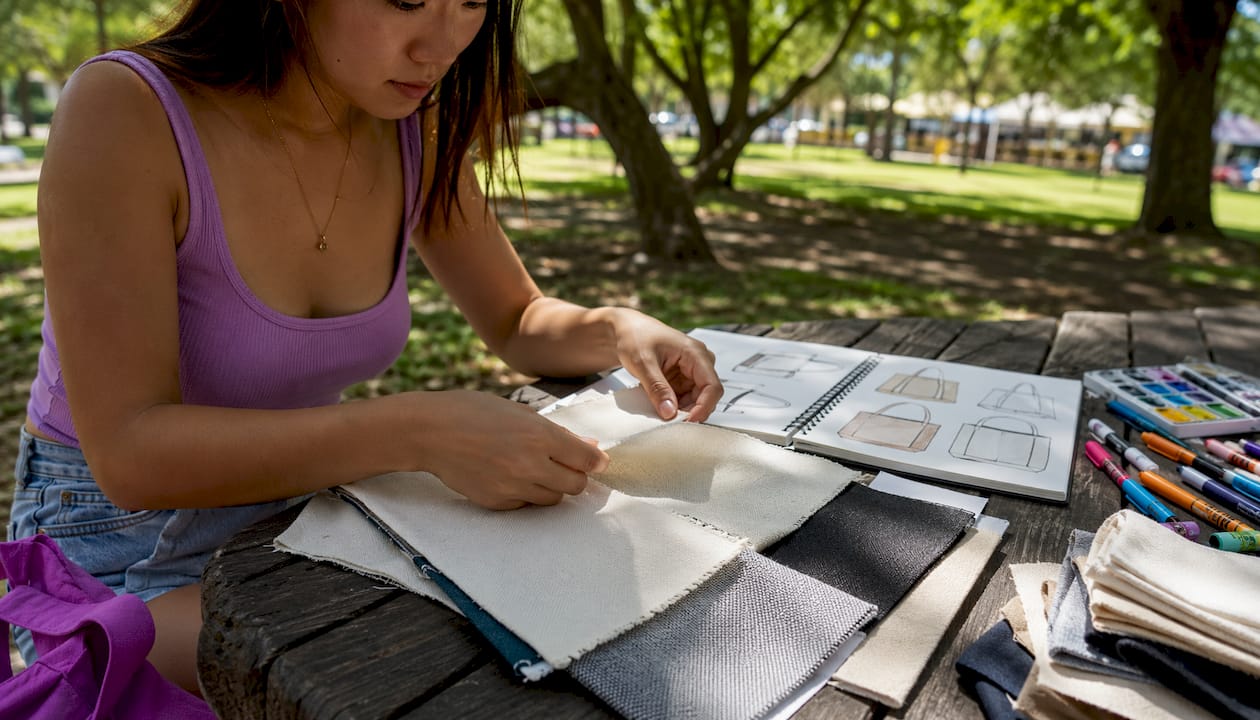
Decision checklist by use case:
| Use Case | Recommended Weight | Print Method | Key Feature |
|---|---|---|---|
| Event giveaway | 4–6 oz cotton | DTF / heat transfer | Low cost per unit |
| Retail merchandise | 10 oz canvas | Screen print / DTF | Durability, print clarity |
| Reusable grocery | 10 oz+ canvas | Screen print | Load capacity, reinforced handles |
| Premium corporate gift | 10 oz canvas | Embroidery / woven label | Premium feel, longer lifespan |
Questions to ask your supplier before ordering:
- What is your minimum order quantity (MOQ) for each print method?
- Do you provide a digital proof before production?
- Can I order a physical sample before the full run?
- What are your standard and rush lead times?
- What file formats do you accept, and what resolution is required?
- What is your return or reprint policy for production errors?
Pro Tip: Divide your total budget by the number of bags, then divide again by how many times each bag will realistically be used. A $6 canvas bag used over 200 times costs about $0.03 per use. A $2 cotton bag used around 50 times costs about $0.04 per use. Canvas typically lasts much longer, often making it the better long-term value.
Which materials and printing methods work best for your bags?
Cotton and canvas come from the same fiber. The difference is weight and weave. Lightweight cotton runs 3–6 oz; canvas runs 8–24 oz with a tighter weave that holds structure under load. Recycled polyester and non-woven polypropylene fill out the lower end of the market, mostly for single-use promotional pieces where cost per unit is the only priority.
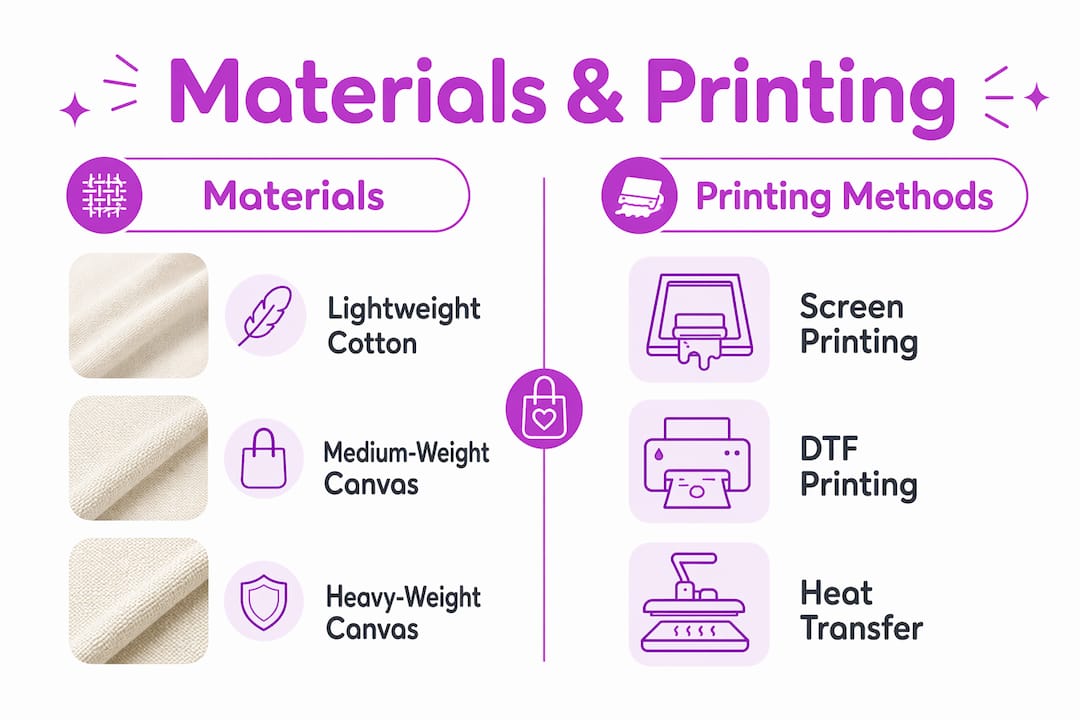
Material comparison:
| Material | Weight Range | Best For | Print Compatibility |
|---|---|---|---|
| Lightweight cotton | 3–6 oz | Giveaways, light use | DTF, heat transfer, screen print |
| Canvas | 8–24 oz | Retail, grocery, daily use | All methods including embroidery |
| Recycled polyester | Varies | Eco-branded giveaways | Sublimation, DTF |
| Non-woven polypropylene | Varies | Single-use promos | Screen print (limited) |
Cotton and canvas tolerate heat up to around 350°F, which is why heat-transfer and screen-printing methods work reliably across both. Synthetics run cooler and need sublimation or low-temp DTF.
Screen printing is the most cost-effective method above roughly 200 units. DTF and heat transfer are better for smaller runs or designs with photographic detail and gradients. Embroidery and woven labels create a premium look but need 10 oz+ canvas to avoid puckering.
Pro Tip: Fine-detail artwork with thin lines or small text prints cleaner on DTF than screen print. Bold, single-color logos above 200 units? Screen print every time.
What upgrades can you add to a custom tote bag?
Upgrades move a bag from functional to memorable. The right add-ons depend on your order size and how the bag will be used.
Common upgrades and what they do:
- Zippered top closure: Keeps contents secure; ideal for retail and corporate gifts
- Bottom gusset: Adds depth and load capacity; standard on grocery and market totes
- Interior pocket: Useful for keys or phones; common on premium retail styles
- Reinforced handles: Bar-tacked or double-stitched; extends handle life significantly
- Woven label: Replaces printed branding with a sewn-in tag; requires heavier canvas and typically a larger minimum order
- Custom handles: Color-matched or rope-style; usually available on bulk manufacturing runs
Most upgrades become available at higher order quantities. Woven labels and custom handles commonly require bulk production, while a zippered closure or gusset can often be added on mid-size runs. For ideas on how upgrades fit into a broader branded merchandise strategy, it helps to plan your full product lineup before finalizing specs.
Pro Tip: If you’re ordering upgrades for the first time, request a physical sample before the full production run. A gusset that looks right on screen can sit awkwardly on the actual bag.
What should you expect for turnaround times and pricing?
Print-on-demand services can produce a single custom tote in 2–3 business days. Bulk manufacturing, which unlocks upgrades like woven tags and custom handles, involves proofing cycles and longer production windows. Plan for at least two weeks on bulk runs, more if you need a physical sample.
Primary pricing drivers:
- Material and fabric weight (canvas costs more than lightweight cotton)
- Print method (embroidery costs more per unit than screen print)
- Number of print colors and print locations
- Setup fees, which vary by method and supplier
- Order quantity (per-unit cost drops as volume increases)
- Upgrades (zippers, gussets, woven labels each add cost)
- Shipping distance and speed
Blank bag prices give you a baseline: 4 oz cotton runs roughly $2–$6 per unit; 10 oz canvas runs roughly $4–$13. Custom printing adds approximately $0.50–$2.00 or more per unit depending on method and quantity.
Pro Tip: Build a two-week buffer into your event timeline. Artwork revisions, proof approvals, and shipping all take longer than expected when you’re under deadline pressure.
What files do you need to send your printer?
Getting your files right the first time is the single fastest way to move through proofing. Wrong file formats cause delays that no rush fee can fully fix.
File checklist:
- Vector files (AI, EPS, or PDF) for logos and text-based artwork
- High-resolution raster files (300 dpi minimum) for photos or detailed illustrations
- CMYK color mode for most print methods; Pantone spot colors for exact brand matching
- Fonts outlined or embedded so they don’t shift on the printer’s system
- Safe area respected: keep key artwork at least 0.25 inches from any edge or seam
Typical approval workflow:
- Submit files with your order details
- Receive a digital proof within 1–2 business days
- Review and approve (or request revisions)
- Request a physical sample if the order is large or the design is complex
- Confirm final approval and release to production
Pro Tip: Name your files clearly: “BrandName_ToteFront_CMYK_v2.pdf” beats “final_FINAL_USE THIS ONE.pdf” every time. It speeds up processing and avoids version confusion.
How do you place an order and manage fulfillment?
Step-by-step ordering flow:
- Choose your bag style, material, and any upgrades
- Request a quote or start your order online
- Upload your artwork files
- Review and approve the digital proof
- Confirm payment
- Production begins; track your order status
- Bags ship to your address, event venue, or multiple locations
Fulfillment options to discuss with your supplier:
- Standard bulk delivery to one address
- Split shipments to multiple event locations
- Direct-to-venue drop shipping for large conferences or trade shows
On returns and refunds: always confirm the policy before you order. Most custom print suppliers do not accept returns on correctly produced orders, since the product is made to your spec. What you should look for is a satisfaction guarantee that covers production errors, color mismatches, or defects. Ask specifically: “What happens if the bags arrive with a print defect?” Get the answer in writing.
Pro Tip: Pay by credit card when possible. It gives you a dispute option if a supplier fails to deliver on a documented promise.
How long do custom tote bags last, and how do you care for them?
A 10 oz canvas bag held a heavy load in tests and lasted far more fill cycles than a lighter cotton bag, demonstrating why material choice matters for durability. That gap is why material choice matters so much for anything beyond a one-time giveaway.
Care by material:
- Cotton and canvas: machine wash cold, air-dry to preserve shape and print
- Heat-transfer prints: turn the bag inside out before washing; avoid high heat in the dryer
- Embroidery: gentle cycle, lay flat to dry
Pro Tip: The handles and seams fail before the fabric does on most bags. Reinforced stitching and bar-tacking at stress points extend the bag’s life more than any other single upgrade.
What are the return and satisfaction guarantee policies?
Custom-printed products are made to order, so most suppliers do not accept returns for buyer’s remorse or design changes after approval. What matters is what happens when the supplier makes a mistake.
Look for these three protections before you place any bulk order:
- A reprint or refund guarantee for production defects (wrong color, misaligned print, damaged goods)
- A clear revision window during the proof stage with no extra charge for reasonable changes
- A stated response time for defect claims, typically 5–10 business days after delivery
Shaysprintshop’s focus on customer satisfaction means production issues are addressed directly. Confirm the specific terms for your order at the time of purchase, especially for large runs where a defect affects hundreds of units.
Key Takeaways
The best custom tote bags for events and retail come down to matching material weight to use case, choosing the right print method for your quantity, and working with a U.S.-based supplier who handles proofing and bulk orders directly.
| Point | Details |
|---|---|
| Match material to use case | Use 4–6 oz cotton for giveaways; 10 oz+ canvas for retail, grocery, and daily use. |
| Print method drives cost and quality | Screen print is most cost-effective above roughly 200 units; DTF suits small runs and full-color designs. |
| Canvas outlasts cotton significantly | A 10 oz canvas bag handled 200+ fill cycles vs. roughly 50 for a 4 oz cotton bag. |
| Build in a two-week buffer | Bulk orders with proofing, revisions, and shipping need more time than most buyers expect. |
| Shaysprintshop for U.S. bulk orders | Direct U.S. fulfillment, bulk pricing, DTF and screen-print capabilities, and design upload support in one place. |
Why U.S. manufacturing makes a real difference
Most buyers underestimate how much of the custom tote experience is actually a communication problem. You send a file, wait a week, get a proof that’s slightly off, send a correction, wait again. When your supplier is overseas, every round of that cycle adds days. When they’re domestic, it adds hours.
Shaysprintshop prioritizes U.S. fulfillment for exactly that reason. Proofs come back faster. Color questions get answered the same day. Rush orders are actually possible because there’s no ocean between you and the production floor.
The shop handles artwork prep issues that trip up first-time buyers: low-resolution files, fonts that aren’t outlined, RGB files submitted for a CMYK process. Those problems get caught and corrected at the proof stage, not after 500 bags are printed. For bulk orders, having an account contact who knows your brand’s colors and preferred specs makes repeat orders significantly smoother.
Ready to order your custom tote bags from Shaysprintshop?
Shaysprintshop gives you bulk pricing, fast U.S. fulfillment, and print expertise across DTF, heat transfer, and screen printing, all without the back-and-forth of working through a middleman. Whether you need 25 personalized totes for a Florida boutique or 500 branded bags for a corporate event, the process is straightforward: upload your artwork, approve your proof, and get your order shipped.
Browse the full custom tote bag collection to see available styles, fabric weights, and ordering options. Bulk discounts apply automatically as your quantity increases. Ready to get started? Visit Shaysprintshop to upload your design or request a quote today.
Useful sources and further reading
Canvas bags are better for branding because they hold shape and maintain print quality. Cotton works better for budget campaigns or short-term promotions.
Sources used in this article:
- Pamusan: Canvas vs Cotton Tote Bags — Material weight data (3–6 oz cotton, 8–24 oz canvas), durability test results, and price ranges
- Tote Bag Factory: Cotton vs Canvas Differences — Cotton heat resistance (~350°F) and print method compatibility
- PrintTotes: Cotton vs Canvas Comparison — Screen print vs DTF method guidance and embroidery requirements
- AI Art On Demand: Custom Tote Bags — POD turnaround times (2–3 business days) and bulk production upgrade availability
- Enviro-Tote: U.S. Canvas Tote Manufacturing — U.S. sourcing benefits for 50–50,000 unit orders
- Shaysprintshop: Custom Tote Bags — Product specs, print options, and ordering details
0 comments