

For most groups, a bulk pre-order spirit-wear drive is the best place to start. It has no leftover inventory, no guessing on sizes, and the highest margin per shirt since you only print what supporters already paid for. Once you pick a design and open orders, Shay’s Print Shop can turn a small-batch order around fast, which keeps momentum going while your campaign is still hot.
TL;DR:
- A bulk pre-order model offers the highest profit margin and eliminates leftover inventory, but it requires a two- to three-week lead time and upfront payment.
- Event-related shirts, such as race or tournament designs, tend to sell best because buyers associate them with memorable occasions, especially when purchased at the event.
- Setting a firm, visible order deadline is the most effective way to boost sales in the final days and ensures timely production and delivery.
- Maintaining simple, bold designs with at most two colors and offering personalization increases the likelihood of shirts being worn in public.
- Combining a low-effort spirit wear drop with higher-engagement ideas like design contests or QR-code impact shirts can maximize overall fundraising success.
Table of Contents
- 15 T-Shirt Fundraiser Ideas Worth Running This Season
- Bulk Pre-Order, Online Store, or Inventory: Which Format Fits Your Group?
- Design, Pricing, and Promotion: Your Pre-Launch Checklist
- How to Collect Orders and Get Shirts Into Hands on Time
- When a Publisher-Backed Fundraiser Print Shop Makes Sense
- Legal Considerations: Designs, Trademarks, and Fundraising Compliance
- Add a Donation Option and Watch Your Total Rise
- What Actually Moves the Needle in a T-Shirt Fundraiser
- Ready to Print? Here’s How to Order
- Sources
- FAQ
15 T-Shirt Fundraiser Ideas Worth Running This Season
Some of these ideas take an afternoon to launch. Others need a few weeks of setup. Pick based on your timeline, your group’s size, and how much design work you’re willing to do.
- Spirit wear drop. A school color or mascot design sold to families and students during a set two-week window. Push it through classroom newsletters and the front office bulletin board.
- Graduation year tees. Personalize with the class year and a senior slogan. Sell starting in January so families have time to plan senior night outfits around it.
- Race or 5K event shirt. Print the race date and route on the back. Selling shirts at packet pickup captures buyers who decide on the spot, since event-related shirts perform well when purchase ties to a memorable occasion.
- Design contest shirt. Let students, members, or community artists submit designs and vote on a winner. The voting itself becomes free promotion as entrants share the link with friends.
- Alumni or reunion shirt. Sell a nostalgic throwback design tied to a specific graduating class or founding year. Price slightly higher since nostalgia buyers are less price sensitive.
- Commemorative memorial shirt. Honor a coach, teacher, or community member. Keep the design simple and dignified, and route a portion of proceeds toward a named scholarship or fund.
- Team travel shirt. Sell to parents and players before an out-of-town tournament. Bundle it with a matching water bottle or tumbler for a small upcharge.
- QR-code impact shirt. Print a QR code on the sleeve or tag linking to a page showing exactly where the money goes. This kind of transparency builds donor trust and encourages repeat buyers.
- Limited-edition color drop. Release the same design in a new color every two weeks during a longer campaign. Scarcity messaging like “only available through Friday” pushes fence-sitters to buy now.
- Sponsor logo shirt. Sell ad space on the shirt sleeve or back to local businesses. A $100 to $250 sponsor slot can cover your entire print run before you sell a single shirt to the public.
- Staff vs. students shirt battle. Sell two competing designs and track which group sells more. The rivalry angle drives sharing across student and parent social feeds.
- Family reunion shirt. Personalize with a family crest, last name, or reunion year. These often sell in bulk to one buyer covering an entire extended family.
- Holiday or seasonal shirt. Tie a design to a specific season, like a fall festival or winter concert. Time sales two to three weeks ahead of the event for maximum visibility.
- Maker or local artist collab shirt. Partner with a local illustrator or small business for a design, and cross-promote to their audience too. A restaurant or local business cause-marketing partnership can extend your reach well past your usual supporter list.
- Peer-to-peer team shirt. Give each team member or student a personal sales link and track who sells the most. Public leaderboards, even informal ones, tend to push total sales higher.
A few of these ideas, like the sponsor logo shirt or the peer-to-peer team model, take more coordination up front but tend to produce the biggest per-shirt margins. Others, like a straightforward spirit wear drop, are fast to launch but rely on volume rather than markup. Mix a low-effort idea with one higher-engagement concept if your timeline allows both.
Bulk Pre-Order, Online Store, or Inventory: Which Format Fits Your Group?
The format you choose affects your margin, your risk, and how much work falls on your team. Here’s how the three main options stack up.
- Bulk pre-order: You collect orders and payment first, then print one batch. Zero unsold inventory, the highest margin per shirt, but buyers wait two to three weeks for delivery.
- Online store or print-on-demand: Supporters order anytime through a storefront, and shirts print as orders come in. Convenient and always open, but per-unit cost runs higher than a single bulk batch.
- Buy inventory upfront: You purchase a set quantity before knowing exact demand. Shirts are available instantly at events, but leftover sizes and colors become unsold cost if you guess wrong.
The margin math: a shirt that costs your group roughly $8 to $12 to produce in bulk typically sells for $18 to $25 at retail, leaving a $10 to $15 profit margin per unit before shipping. Bulk pre-order carries the least financial risk of the three formats because you’re never printing shirts nobody has already paid for.
Choose bulk pre-order if your team is small, your timeline allows two to three weeks for production, and you trust your supporter base to commit before seeing a finished product. Choose an online store if your campaign runs for months and you want a standing storefront rather than a one-time push. Choose inventory only if you’re selling at a live event where impulse buyers won’t wait for a preorder window to close.
Design, Pricing, and Promotion: Your Pre-Launch Checklist
A shirt people will actually wear in public sells better than one they buy out of obligation. Keep the design simple, legible from a distance, and repeatable across sizes without looking stretched or cramped on an extra-large.
Design checklist:
- One or two colors max, unless you’re working with a print method that handles full color easily
- Offer name or number personalization for team and family shirts, since customization increases perceived value
- Add a QR code linking to an impact page if your campaign supports a specific cause or need
- Test the design on both a light and dark shirt before finalizing color choices
Pricing checklist:
- Mark up at least $8 to $10 over your per-unit cost to leave real margin after shipping and platform fees
- Offer a tiered bundle, like one shirt for $20 or two for $35, to nudge buyers toward multiples
- Sell sponsor placements on the sleeve or back separately from individual shirt sales
Promotion checklist:
- Send three emails: a launch announcement, a mid-campaign reminder with a sales update, and a final “last chance” push before the order window closes
- Post shareable social graphics with the design, price, and deadline clearly visible
- Time the campaign to an existing event, like a game, concert, or open house, so buyers see the shirt in context
- Ask supporters to share their personal order link directly, since peer sharing and limited-time windows both increase conversion
Pro Tip: Set your order deadline three days before you actually need it. Campaigns almost always get a late surge of orders right before the cutoff, and that buffer keeps you from missing your print window.
How to Collect Orders and Get Shirts Into Hands on Time
Running the logistics well is what separates a fundraiser that feels effortless from one that turns into a week of chasing down sizes and payments.
- Pick your order collection method. A shared spreadsheet paired with a payment app works for very small groups but breaks down past 30 orders. A form tool like Typeform organizes sizes and names cleanly. A real ecommerce checkout collects payment and order details in one step and scales to any group size.
- Standardize your size chart before you post it, and pin a size guide image next to your order form so buyers aren’t guessing.
- Decide pickup versus shipping early. Pickup at a school or event saves on shipping costs; shipping works better for scattered alumni or remote supporters. See how bulk ordering for teams and events typically gets planned for larger groups.
- Follow a simple timeline: launch day, a mid-campaign promotional push around day seven, order window close around day fourteen, one to two weeks of production, then a single handout day.
When a Publisher-Backed Fundraiser Print Shop Makes Sense
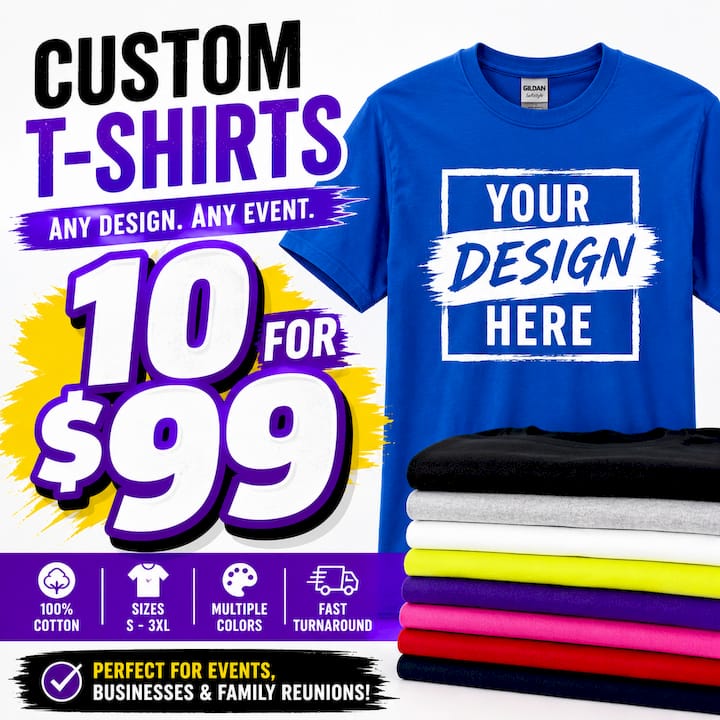
Shay’s Print Shop specializes in 100% cotton tees printed with DTF, built for exactly this kind of order: bulk packages like 10 shirts for $99, fast turnaround, and the ability to scale from a small team run to a full school spirit wear drive. If your campaign is a bulk pre-order, a team event shirt, or school spirit wear, request a quote before you lock in your price per shirt.
Legal Considerations: Designs, Trademarks, and Fundraising Compliance
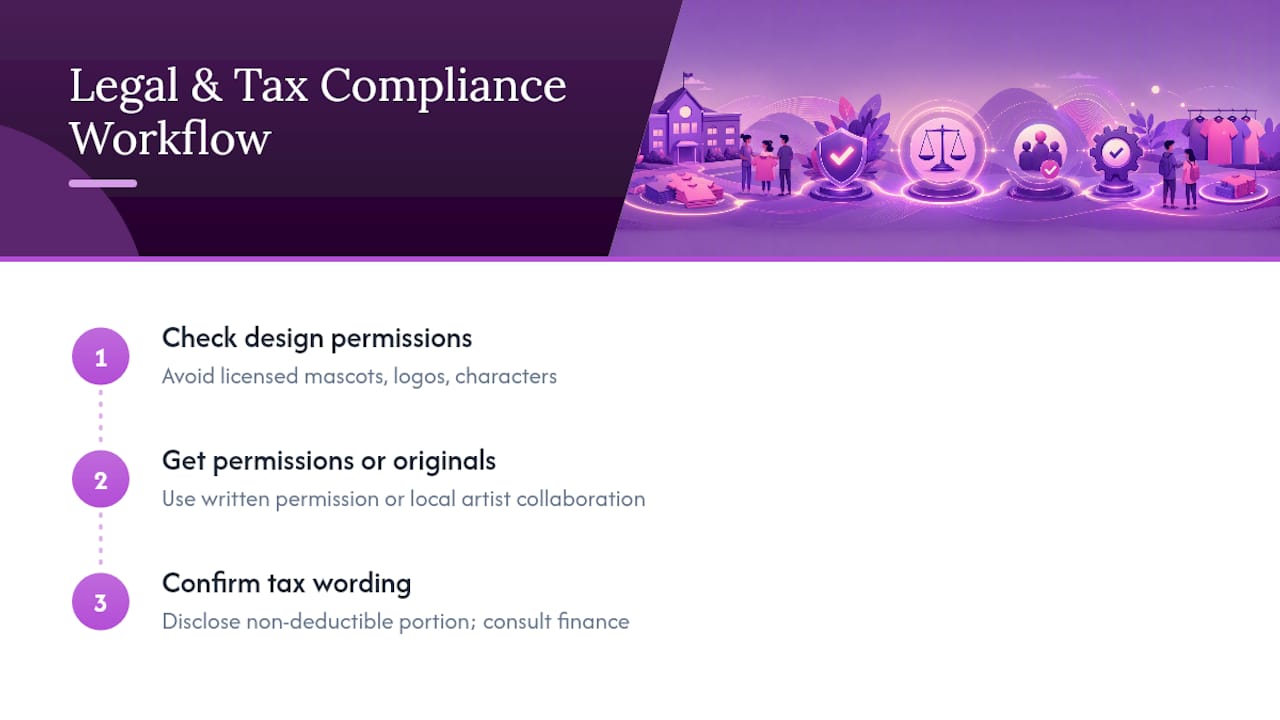
Before you finalize any design, check that it doesn’t use a licensed mascot, sports league logo, or copyrighted character without permission. Many school mascots and team logos are trademarked at the district or league level, and using them without a license, even for a nonprofit cause, can trigger a takedown request or a legal letter down the line.
If your design references a brand, band, or public figure, get written permission first or steer toward an original illustration instead. A local artist collaboration, similar to the logo design examples used in racing team graphics, sidesteps licensing issues entirely while still giving your shirt a professional look.
On the fundraising compliance side, most states require registered nonprofits to disclose that a purchase is not fully tax-deductible when the buyer receives goods (the shirt) in exchange for payment. Only the portion of a payment that exceeds the shirt’s fair market value, if any, typically qualifies as a deductible donation. If your group operates under a school PTA or booster club, check with your treasurer or district finance office before advertising the sale as tax-deductible. This is a detail many first-time organizers miss, and correcting it after the fact is far harder than getting it right in the announcement email.
Add a Donation Option and Watch Your Total Rise
Not every supporter wants a shirt, but plenty of them still want to give. Pairing your t-shirt sale with a simple crowdfunding or donate-only page captures that group instead of leaving their money on the table.
The mechanics are simple. Set up a donation page alongside your shirt order form, either through a dedicated crowdfunding tool or a basic payment link, and mention both options every time you promote the campaign. A supporter who already owns three fundraiser shirts from past years is far more likely to just donate $20 than order a fourth shirt they won’t wear.
Adding a no-merchandise donation path increases total campaign revenue because it removes the friction of “I don’t need another shirt” as a reason to skip giving entirely. Frame it clearly in your promotion: “Buy a shirt, or just chip in, either way it helps.” Some organizers also offer a small thank-you item, like a custom tumbler, as an upgrade tier for donors who give above a certain amount without wanting apparel. That upsell alone can meaningfully raise your average gift size, especially from donors who already gave last year and want something new.
What Actually Moves the Needle in a T-Shirt Fundraiser
Most advice on this topic focuses too heavily on the design and not enough on the format decision that happens before a single shirt is printed. A gorgeous design sold through the wrong format, like buying inventory upfront for a small, untested group, can still lose money. The format sets your ceiling; the design just determines how close you get to it.
The idea that “unique” always means better is also overrated. A solid spirit-wear reprint with a tight order window and a clear deadline will usually outsell a clever but confusing concept nobody understands at a glance. Save the creative swings, like design contests or QR-code impact shirts, for groups that already have an engaged base willing to pay attention to something more layered.
If there’s one thing worth prioritizing above all else, it’s the order deadline. A firm, visible cutoff does more to drive sales in the final 48 hours than almost any other tactic on this list.
— Jon Will
Ready to Print? Here’s How to Order
Small teams and volunteer groups need a fundraiser partner that doesn’t require a minimum order the size of a school district. Shay’s Print Shop built its pricing around exactly that gap: 10 custom shirts for $99, printed on 100% cotton with a durable DTF print, sized right for a small team preorder or a single classroom spirit wear run.
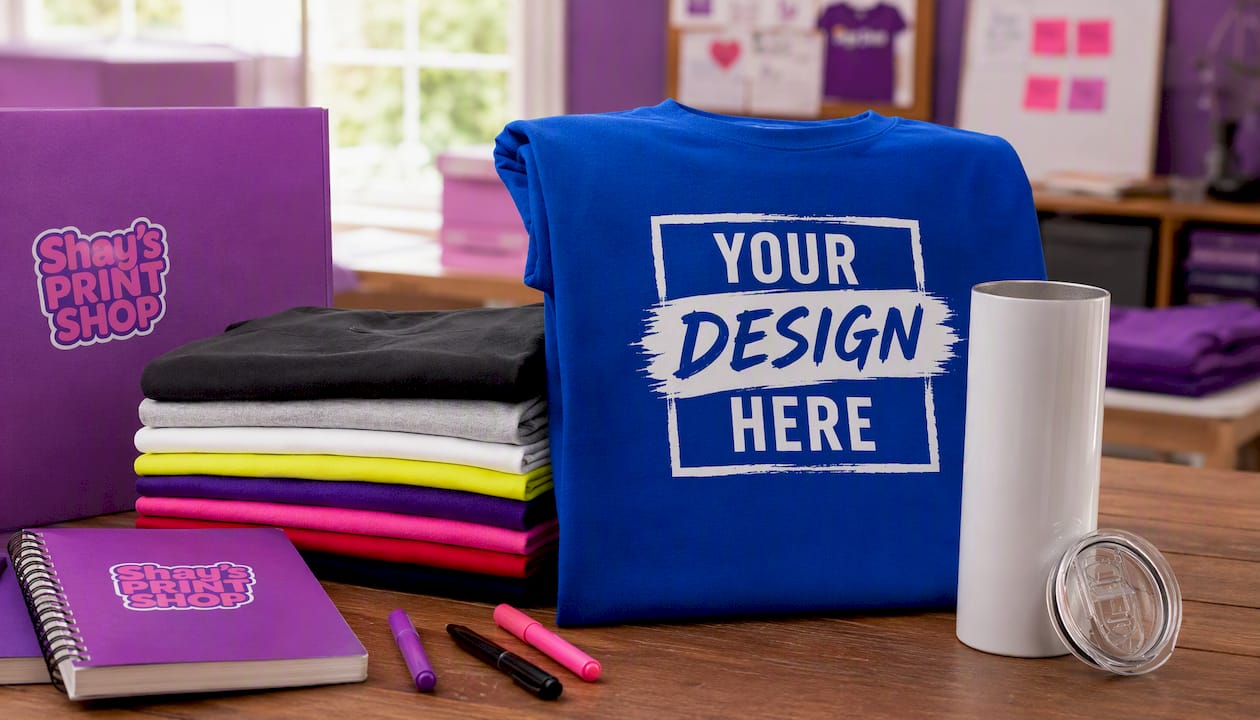
Ordering is straightforward: upload your design or logo, confirm your sizes and quantities, then choose shipping or local pickup depending on your timeline. Turnaround stays fast even during busy fundraiser season, so a campaign launched this week can realistically have shirts in hand within a couple of weeks. If your group needs more than shirts, browse the full custom apparel lineup or check custom tumbler pricing for a donor gift add-on. Start your order today and get a quote before your campaign deadline creeps up on you.
Sources
- Top 20 T-Shirt Fundraiser Ideas to Hit Your Goals in 2026
- 10 Creative t-shirt fundraising ideas for a cause
- 8 T-Shirt Fundraising Ideas That Work for Any Cause
FAQ
What is the most profitable fundraiser format for t-shirts?
A bulk pre-order model is typically the most profitable because you collect payment before printing, which eliminates unsold inventory and keeps your per-unit cost lowest.
What kind of t-shirt sells the most?
Event-tied shirts, like race day or tournament designs, and spirit wear with a school mascot or team logo consistently sell best because buyers connect the purchase to a specific memorable occasion.
How do I run a t-shirt fundraiser from start to finish?
Pick your format, finalize a simple wearable design, set a firm order deadline, promote through a three-email cadence and social sharing, then collect orders through a form or checkout before sending the batch to print.
What are some unique fundraiser ideas beyond a basic shirt sale?
Design contests with community voting, limited-time color drops, and QR-code shirts linking to an impact page all add engagement beyond a standard one-design sale.
How much does a bulk t-shirt fundraiser order cost to start?
Shay’s Print Shop offers 10 custom 100% cotton shirts for $99, which works well as a starting batch size for a small team or classroom preorder.
0 comments