

That combination hits the sweet spot between comfort, print longevity, and easy ordering logistics. It maximizes keep-rate long after the event ends, and a supplier like Shay’s Print Shop can match that spec with fast, bulk-friendly production.
TL;DR:
- Using a true midweight (5 to 6 ounces) 100% cotton shirt with durable print increases the likelihood attendees will wear it long after the event.
- Ordering should be based on actual registration demographics and managed sizing links, minimizing waste and overstock.
- Print methods like DTF and thick, premium fabric shirts provide better longevity and appearance through multiple washes, especially with high-quality placement.
- Pricing starts around $9.76 per shirt for bulk basic printing, with lead times of 3 to 7 days for standard orders, and supplier commitment to deadlines is essential.
- Packaging and presentation, such as foldable bags with small branding touches and organized distribution, boost perceived value and encourage shirt wearability.
Table of Contents
- Top Design Ideas for Conference T-Shirts
- What Makes a T-Shirt Attendees Actually Keep and Wear?
- Choosing Fabric and Print Methods for Durability
- Planning Sizes and Quantities Without Wasting Stock
- Finishing, Branding Placement, and Accessibility
- Budgeting and Timelines for Bulk Conference Orders
- How Shay’s Print Shop Handles Conference Orders
- Sustainable and Ethical Sourcing Considerations
- Recommendations for Reliable Suppliers and Fulfillment Services
- Packaging and Presentation to Enhance Perceived Value
- The Vendor Handoff Checklist Every Planner Should Send
- Ready to Order Your Conference Shirts?
- Sources
Top Design Ideas for Conference T-Shirts
You don’t need a design team to land on a shirt people actually want. You need a concept that fits your event’s personality and a print method that holds up. Here are ten approaches that consistently work for conferences, from tech summits to trade shows.
- Classic logo tee, left-chest placement. Small, single-color logo on the chest reads as understated rather than promotional, which is exactly why it gets worn again.
- Full-back statement logo, minimal front. Flip the emphasis: nothing on the chest, a bold graphic across the back. Great for hallway photo moments.
- Tonal, single-color design. Print in a shade close to the shirt color itself (think navy on navy). It looks premium and works on any body type.
- QR-code scavenger hunt shirt. Print a scannable code that links to a prize page or session schedule. Attendees wear their entry ticket.
- Speaker or track identifiers. Use small sleeve prints or back-of-neck labels to color-code speakers, volunteers, and VIPs without ugly lanyard clutter.
- Commemorative year/city stamp. A small “[Event] 2026” tag on the sleeve turns a plain shirt into a keepsake instead of a giveaway.
- Sponsor-balanced layout. Event logo dominant on the chest, sponsor names smaller on the sleeve or back hem, spaced evenly so no single brand overwhelms the shirt.
- Sustainability messaging. A subtle “printed on organic cotton” or “zero-waste event” tag appeals to attendees who care about sourcing, and it doubles as a talking point.
- Inside-joke or track-specific humor. For niche communities (developer conferences, trade guilds), a shirt referencing an inside joke gets worn at the next event too, not just this one.
- Multi-zone combo: embroidery plus print. Embroider a small logo on the chest, then use a full digital print on the back for detail and color range. It signals a bigger production budget without a bigger price tag.
What Makes a T-Shirt Attendees Actually Keep and Wear?
Design gets the click, but fit and fabric decide whether the shirt survives past the drive home. A shirt that feels cheap or fits badly gets donated or tossed within a week, no matter how clever the graphic is.
- Fit matters more than most planners assume. A relaxed unisex cut in true midweight fabric (roughly 5 to 6 ounces) reads as “shirt I’d actually wear,” not “conference swag.”
- Color choice extends shelf life. Heather gray, black, navy, and muted earth tones integrate into everyday wardrobes far better than bright event branding colors.
- Durability shows up in the details. Reinforced shoulder seams, double-needle hems, and stable, non-cracking ink keep the shirt looking new after a dozen washes.
- Premium categories outperform throwaways. Heavier tees and hoodies get kept more often than thin promotional shirts, simply because they feel like something worth owning rather than something to recycle.
Pro Tip: Treat the shirt as a marketing channel that leaves the venue with the wearer. If it’s not something they’d wear to brunch, it’s not doing its job.
Choosing Fabric and Print Methods for Durability
The fabric and print method you pick decide whether your shirt still looks good in month six or starts peeling after the second wash. Every option has a tradeoff between cost, feel, and longevity.
- 100% cotton offers the softest hand feel and the most natural drape, though it can shrink slightly on the first wash if not preshrunk.
- Ring-spun cotton costs a bit more but produces a smoother surface, which makes fine print detail sharper.
- Tri-blend fabric (cotton, polyester, rayon) drapes beautifully and resists wrinkling, but it takes dye differently and can run smaller.
- DTF (direct-to-film) printing handles full-color, photo-level detail on cotton with strong washfastness, which is why it’s become the default for event tees with complex graphics.
- Screen printing remains the most cost-effective option at high volume with simple, one- or two-color designs, but setup costs make small runs expensive per unit.
- Embroidery adds a tactile, premium feel for logos and small text, though it’s a poor fit for gradient or photographic artwork.
- Discharge and garment-dyed processes produce a soft, vintage look but require more testing to nail the exact color result.
Placement affects longevity too. Prints across seams or high-friction zones (underarms, waistband) fade faster than chest or back placements. Comfort Colors garment-dyed heavyweight tees and Bella+Canvas premium blanks are common choices among event merch suppliers for exactly this reason: they hold ink well and feel substantial.
Planning Sizes and Quantities Without Wasting Stock
Ordering conference shirts is a guessing game unless you build in a system. Guess wrong and you’re either stuck with 40 unclaimed mediums or scrambling to reprint XLs the night before doors open.
- Start with a size-mix template, then adjust based on your registered audience’s demographics rather than a generic bell curve.
- Use an attendee-managed sizing link during registration. Letting attendees select their size after signing up matches production to real demand instead of you guessing at checkout.
- Build in a buffer for walk-ups and VIPs, typically concentrated in the most common one or two sizes rather than spread evenly across the range.
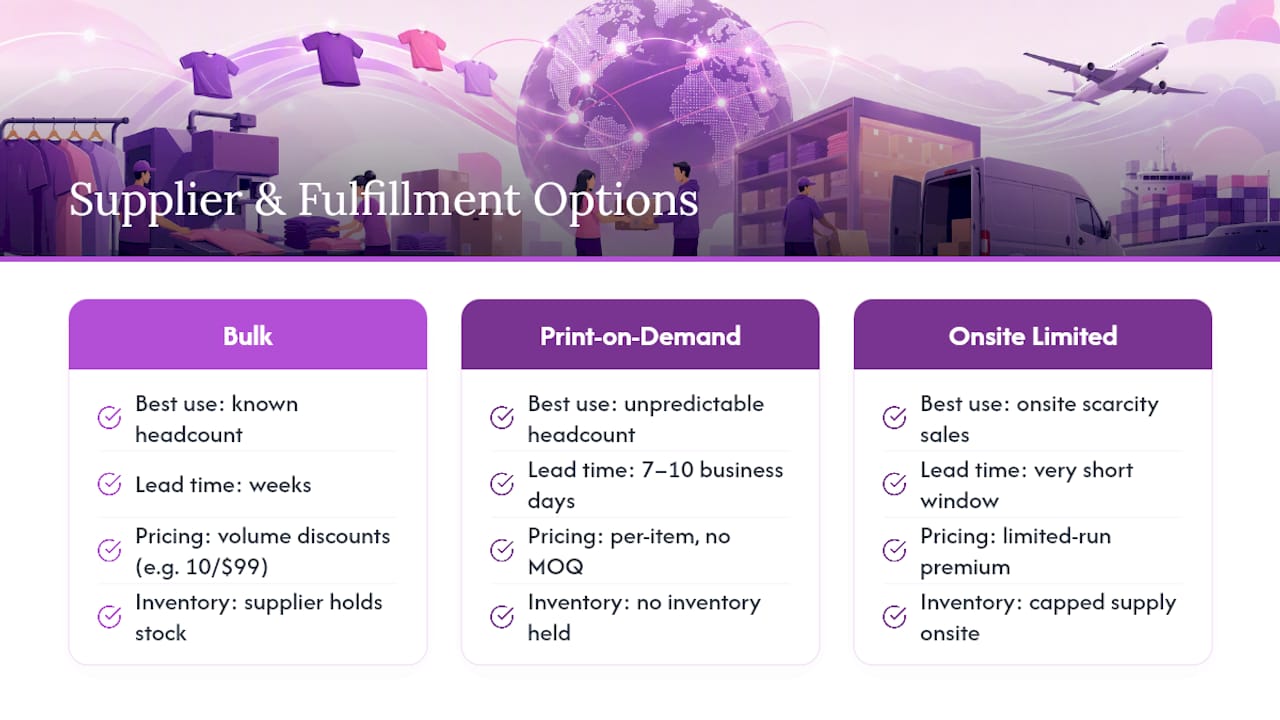
- Choose your ordering model based on lead time. Bulk ordering saves per-unit cost at higher volume; print-on-demand or no-minimum providers can turn around orders in 7 to 10 business days with zero leftover inventory risk.
- Set a clear onsite distribution window with badge or registration verification, so shirts don’t run out before eligible attendees arrive.
Pro Tip: If your registration platform allows it, close the sizing link at least two weeks before your art deadline. That gap is what turns a guess into an actual order.
A bulk ordering guide walks through quantity planning in more depth if you’re weighing bulk versus preorder for a specific headcount.
Finishing, Branding Placement, and Accessibility
The small choices at the end of design work are what make a shirt look professional instead of homemade. Tags, placement rules, and legibility deserve as much attention as the main graphic.
- Tag options matter for comfort. Tear-away tags or tagless heat-transfer labels avoid the itch complaints that come with printed care instructions.
- Sponsor hierarchy should stay simple. Front chest for the event brand, smaller sponsor logos on the sleeve or back, keeps the shirt wearable instead of looking like a NASCAR jacket.
- Contrast drives legibility. Dark ink on light shirts (or vice versa) reads clearly across a crowded expo floor; low-contrast pairings look nice in mockups but disappear in photos.
- Reserve print real estate deliberately for multi-sponsor events. A common rule of thumb: cap each sponsor logo at a consistent width, so no single brand dominates the shirt.
Budgeting and Timelines for Bulk Conference Orders
Pricing conversations with vendors go faster when you already know the rough shape of the market. Per-shirt cost depends heavily on quantity, print method, and finishing choices.
- Entry-level pricing exists at real volume. Basic front-only printing can start around $9.76 per shirt at some vendors, though bulk multi-color or multi-zone designs run higher.
- Cost drivers to ask about upfront: number of ink colors, specialty inks (metallic, glow, puff), embroidery digitizing fees, and one-time setup charges.
- Lead times vary by workflow. Standard bulk orders commonly run 3 to 7 business days in production, with rush workflows available at 5 to 10 days when timelines are tight.
Quick stat: vendors that support 7 to 10 business day turnarounds on print-on-demand orders remove the inventory guesswork entirely, which matters if your headcount is still shifting two weeks out.
Build your timeline backward from event day: lock art at least three weeks out, close size collection two weeks out, start production, then leave a shipping buffer of several business days before doors open.
How Shay’s Print Shop Handles Conference Orders
Shay’s Print Shop was built around the exact problem conference organizers run into: needing durable, good-looking shirts at a price that scales with headcount, without a six-week wait.
- 100% cotton shirts printed with DTF, matched to the fabric and print recommendations covered above.
- Bulk pricing starts at 10 shirts for $99, which keeps small-team orders and 500-person conferences on a similar cost logic.
- Fast turnaround built for large orders, so a shifting headcount two weeks before your event doesn’t blow up your timeline.
- US-based fulfillment, which shortens shipping windows compared to overseas print shops.
That combination, cotton comfort, print durability, and straightforward bulk math, is what lets Shay’s Print Shop handle everything from a 20-person leadership retreat to a 1,000-attendee industry summit.
Sustainable and Ethical Sourcing Considerations
Sustainability questions come up more with every conference cycle, and attendees notice the answer even when they don’t ask directly. A shirt printed on responsibly sourced cotton, with fair labor practices upstream, is a quieter form of brand credibility than any tagline you could print on it.
Start with the fabric. Organic cotton and recycled-blend fabrics reduce water and pesticide use compared to conventional cotton farming, though they typically cost more per unit, so budget for that tradeoff early rather than discovering it at quote time. Ask your supplier directly about where blanks are sourced and whether factories carry any third-party labor certifications; a vendor that can’t answer this quickly is a signal worth noting.
Print method plays a role too. Water-based and DTF inks generally produce less chemical runoff than older plastisol-heavy screen printing processes, which matters if sustainability is part of your event’s public messaging.
Order accuracy is its own sustainability lever. Every shirt that gets printed and never claimed is fabric waste, full stop. That’s the real argument for attendee-managed sizing links and modest buffers instead of padding your order “just in case.” Ordering closer to actual headcount does more for your environmental footprint than any single fabric choice.
If sustainability is a stated event value, put it on the shirt itself: a small “responsibly sourced” tag on the sleeve turns a supply-chain decision into something attendees can see and appreciate.
Recommendations for Reliable Suppliers and Fulfillment Services
Picking a supplier comes down to three questions: can they hit your deadline, can they handle your quantity, and will the shirt still look good in six months? Answer those honestly and the vendor list narrows fast.
For bulk orders with a known headcount and a few weeks of lead time, a supplier offering straightforward bulk pricing, like Shay’s Print Shop’s 10-for-$99 model, keeps your budget predictable as quantity scales. You’re not negotiating a custom quote every time your registration numbers shift.
For events with an unpredictable or still-growing headcount, print-on-demand and no-minimum providers solve a different problem: they let you sell shirts through an online store without holding inventory, and typical turnarounds of 7 to 10 business days work fine if you’re not printing the week of the event.
For onsite sales and limited-run scarcity plays, look at how larger conferences handle it. Official event shirts with limited onsite availability create genuine demand precisely because supply is capped, a tactic worth borrowing even at a smaller scale.
Whichever route fits your event, ask for a sample before the full run, confirm US-based production if shipping time is tight, and get turnaround in writing. A supplier who won’t commit to a date on paper is telling you something about how the order will actually go.
Packaging and Presentation to Enhance Perceived Value
How a shirt arrives changes how it’s perceived before anyone even unfolds it. A shirt stuffed loose into a tote bag reads as an afterthought. A shirt folded cleanly, bagged individually, and handed over with a small card reads as a gift.
Individual polybags with a printed event logo cost very little per unit but signal that someone thought about presentation, not just production. If budget allows, a simple belly band, a strip of paper wrapped around the folded shirt, adds a retail feel without the cost of a full box.
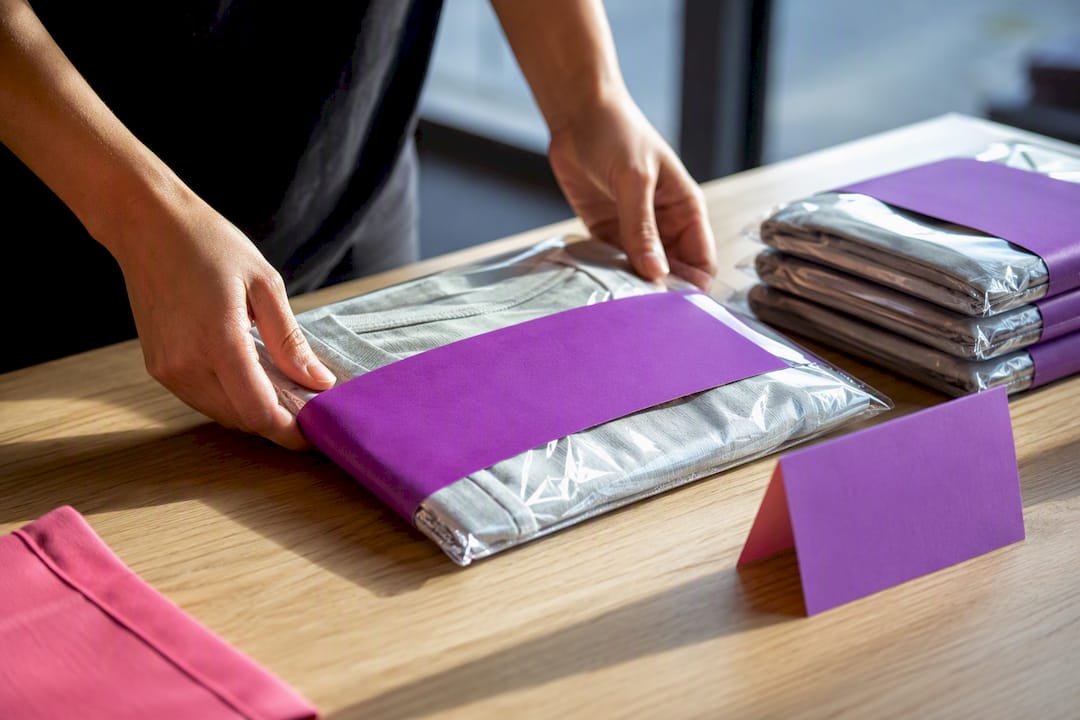
Distribution setup matters as much as the packaging itself. A staffed table with sizes visibly organized and a quick verification step feels intentional. A cardboard box with shirts dumped in and a “grab your size” sign feels like an afterthought, even if the shirt inside is identical.
For premium tiers, speaker shirts, VIP passes, sponsor swag, consider a small printed thank-you card tucked into the bag. It costs pennies and it’s the detail attendees remember when they talk about your event later. None of this changes the shirt itself. It changes whether the shirt feels like something given or something earned, and that distinction shows up in how often it actually gets worn.
The Vendor Handoff Checklist Every Planner Should Send
Most shirt order delays trace back to a vague brief, not a slow printer. Send your vendor this before you request a quote:
- Art files: vector format (AI, EPS, or high-res PNG), exact Pantone or hex color codes, and safe zones marked for each print area.
- Sizing: your collected size breakdown from the preorder link, plus a request for one physical sample in your most common size before full production.
- Specs: confirm fabric weight, print method (DTF, screen, or embroidery), and get written sign-off on a proof before the run starts.
- Delivery: a firm ship date, a count-and-inspect step on arrival, and a written policy for misprints or shortages.
Paste this into your first vendor email and you’ll skip most of the back-and-forth that eats into your timeline.
— Jon Will
Ready to Order Your Conference Shirts?
Everything in this guide points to the same conclusion: midweight 100% cotton, a durable print method, and smart quantity planning. That’s precisely what Shay’s Print Shop builds around, with 10 custom shirts for $99 as the starting tier, so a 20-person breakout session and a 300-person general session can both get outfitted without a complicated quote process.
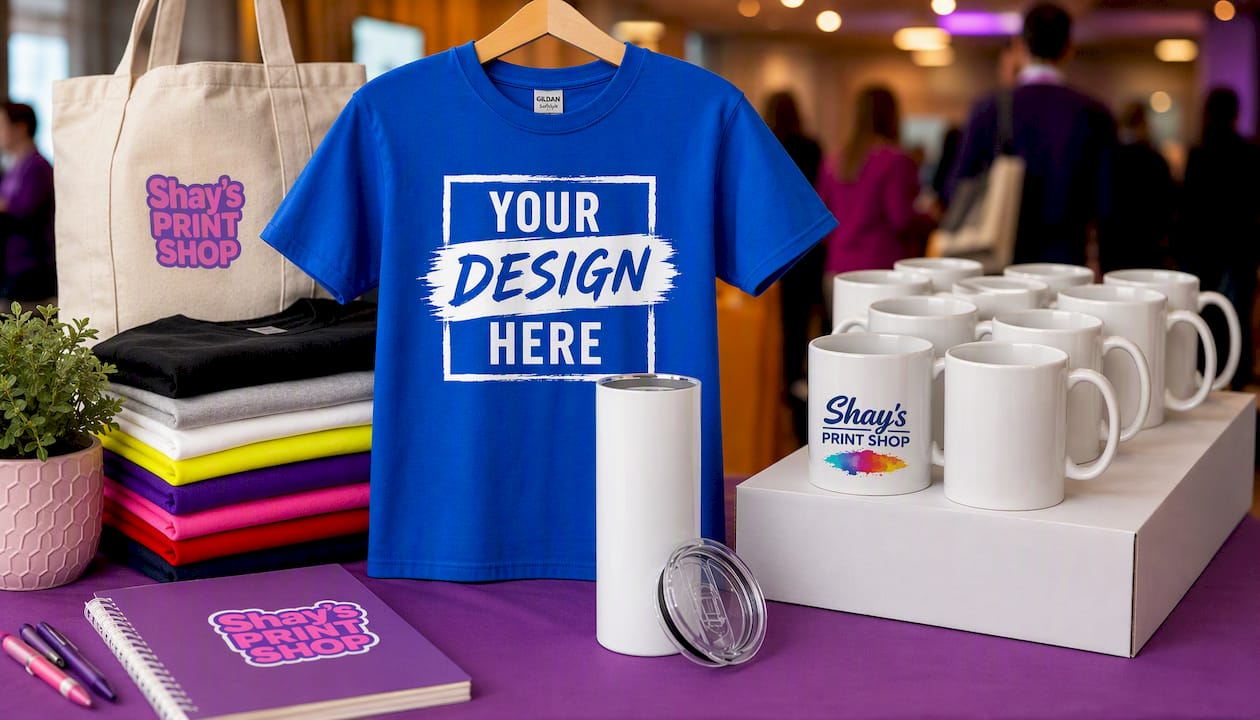
If your conference budget includes retain-worthy extras beyond the shirt, a custom tumbler pairs well with the premium-merch strategy covered earlier, since branded drinkware tends to stick around a desk far longer than a lanyard ever does. For mixed-age groups, family-run events, or teams with youth attendees, this size conversion guide helps you build an inclusive size run without overordering.
Ready to lock in your headcount and art files? Request a quote and get a turnaround date in writing before your next planning deadline hits.
Sources
- Conference swag & event merch — FLYP
- Custom tech conference merch — Fourthwall
- Gotprint
- Official 2026 T-Shirt Design! • All Things Open 2026
- Branded event giveaways that actually get kept (2026)
0 comments