

Wait at least 24 hours after pressing before that first wash, then turn the shirt inside out and wash it in cold water on a gentle cycle with a mild, dye-free detergent. Skip the bleach, skip the fabric softener, and never let an iron touch the print directly. Air dry when you can, or tumble on low heat and pull the shirt out while it’s still slightly damp. Follow this routine consistently and a well-applied DTF print can hold up for 50 to 100 or more wash cycles.
TL;DR:
- Proper pressing and application are critical because poor press quality causes early cracking regardless of washing routine.
- Waiting at least 24 hours after pressing before washing ensures the adhesive fully cures and reduces the risk of premature cracking.
- Turning shirts inside out and using cold water on a gentle cycle with mild, dye-free detergent greatly prolongs print durability during wash cycles.
- Avoiding high heat, bleach, fabric softeners, and direct steam during washing and drying prevents damage to the thermoplastic adhesive and ink.
- Bulk orders should include a pre-wash test, and shipments should contain care instructions to maximize the DTF print lifespan and customer satisfaction.
Table of Contents
- What Are the Best DTF Washing Instructions to Follow?
- How Should You Dry and Iron a DTF Shirt?
- What Should You Never Do With a DTF Print?
- How Long Do DTF Transfers Actually Last?
- How Do You Fix Cracking or Peeling When It Happens?
- What Does Shay’s Print Shop Recommend for Bulk Orders?
- Why Most Care Guides Miss the Point on DTF Longevity
- Ready to Order Shirts That Actually Hold Up?
- Sources
- FAQ
What Are the Best DTF Washing Instructions to Follow?
Getting a DTF shirt through hundreds of laundry days without cracking comes down to two things: what you do before the first wash, and what you do every wash after that. Here’s the step-by-step version, whether you’re throwing it in the machine or washing it by hand.
Before you wash anything:
- Let the shirt sit for at least 24 hours after it’s pressed. The adhesive layer under a DTF print needs time to fully cure, and washing too soon is one of the fastest ways to trigger premature cracking.
- Turn the garment inside out. This one habit does more for print longevity than almost anything else, because it keeps the design from rubbing directly against zippers, buttons, and other fabric in the load.
- Close any zippers and empty pockets so nothing snags the print during agitation.
Machine washing:
- Set the water temperature to cold, ideally under 86°F (30°C).
- Choose the gentle or delicate cycle. Cold water and a gentle cycle reduce the abrasion that wears down ink over time.
- Wash with a small, similar load. Jeans, towels, and anything with Velcro or zippers are rough companions for a printed shirt.
- Use a mild, dye-free liquid detergent. Powdered detergents can be abrasive, and enzymatic stain removers are formulated to break down organic material, which is exactly what they’ll try to do to your print.
Hand washing:
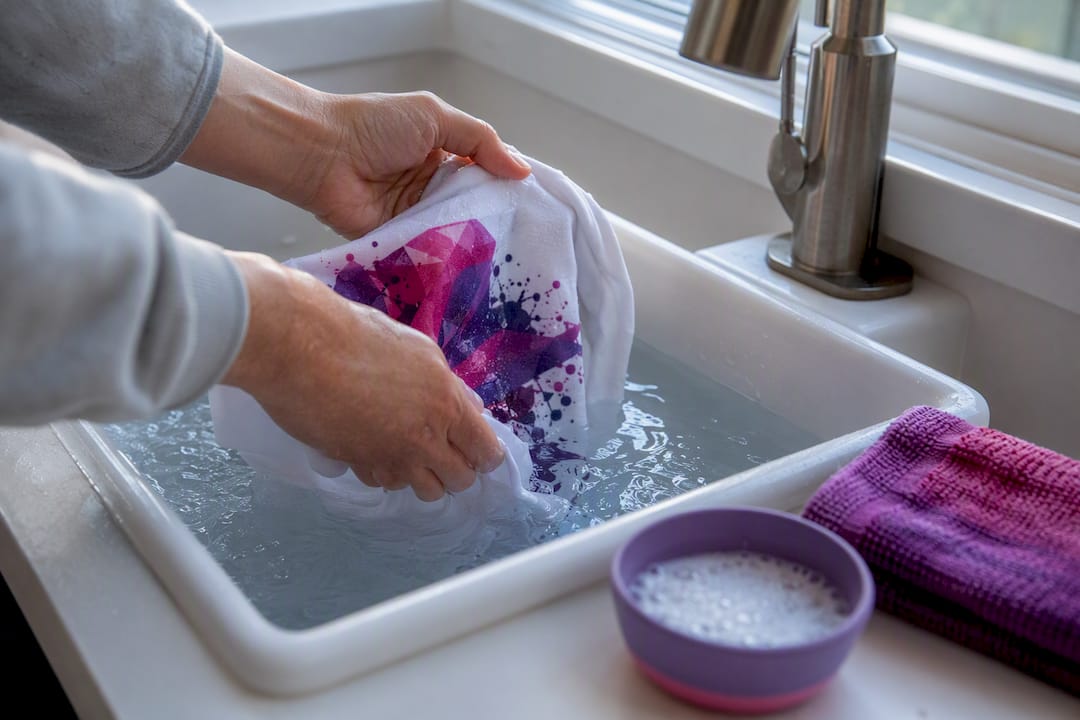
For a shirt you really don’t want to risk, hand washing removes mechanical agitation from the equation entirely. Soak the garment in cool water with a small amount of mild detergent, then gently squeeze (never wring) the fabric to work the soap through. Rinse thoroughly in cool water and press out excess moisture with a towel rather than twisting it. Hand washing in cool water is often the safer call for detailed or high-value pieces like team jerseys or event shirts you’re keeping for years.
How Should You Dry and Iron a DTF Shirt?
Heat is the real enemy here, more than water ever is. The adhesive that bonds a DTF transfer to fabric is thermoplastic, meaning it softens when it gets hot and hardens again as it cools. Every time you blast a printed shirt with high heat, you’re briefly softening that bond, and repeated softening is what eventually leads to lifting edges or cracked ink.
- Air dry whenever possible. Hang the shirt inside out in the shade, since direct sun adds UV exposure on top of heat.
- For heavier fabrics like hoodies, lay them flat to dry so the weight doesn’t stretch the print out of shape.
- If you must use a dryer, tumble on the lowest heat setting and pull the shirt out while it’s still a little damp rather than running a full high-heat cycle.
- Never run a printed shirt through the dryer on high heat more than once in a row. Consecutive hot cycles compound the softening effect.
When it comes to ironing, always flip the shirt inside out first. Use low to medium heat and keep steam away from the print entirely. If you absolutely have to iron from the front, lay a thin cotton cloth over the design first to create a buffer.
Pro Tip: Keep a spare pillowcase near the ironing board. It works perfectly as a pressing cloth and you’ll never have to hunt for one.
What Should You Never Do With a DTF Print?
A handful of habits are responsible for most of the premature fading, cracking, and peeling we see in printed shirts, and almost all of them are avoidable once you know what to watch for.
- No bleach or oxidizing agents. Bleach breaks down the polymer structure in the ink, causing colors to fade and the surface to weaken over time.
- No fabric softener. Softener leaves a residue on fibers that dulls color and interferes with how well the print stays bonded to the fabric underneath.
- No dry cleaning. The solvents and high heat used in dry-cleaning processes are incompatible with DTF adhesives and inks.
- No steam directly on the print, whether from an iron or a garment steamer.
- No hot-water washes or high-heat drying, and no washing printed shirts alongside jeans, towels, or anything with rough hardware.
How Long Do DTF Transfers Actually Last?
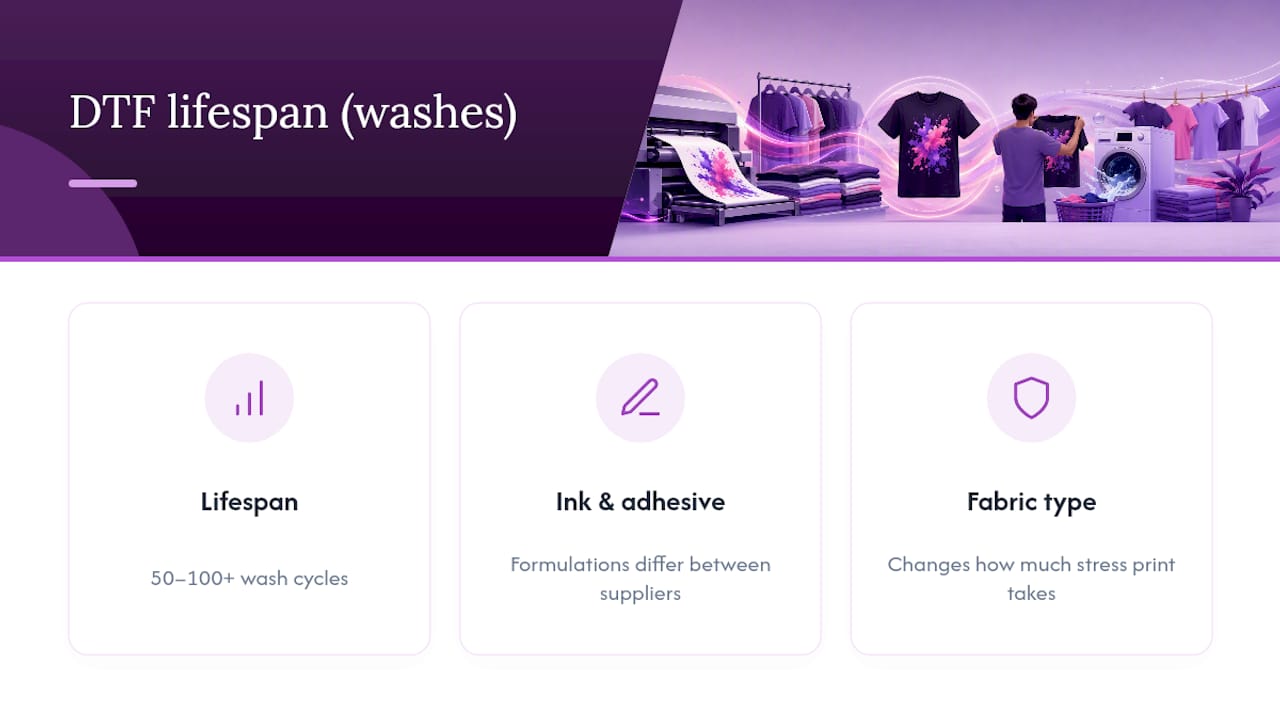
A properly applied DTF transfer holds up for 50 to 100 or more wash cycles when the garment is cared for the way we’ve described above. That’s a wide range, and the variance comes from real factors: ink and adhesive formulations differ between suppliers, and fabric type changes how much stress the print takes on with every wear.
Not every crack is the laundry’s fault, either. If a print starts failing within the first few washes, that’s usually a sign of an application issue, wrong press temperature, insufficient pressure, or too short a dwell time, rather than anything you did wrong at the sink. Placement matters too. Prints on high-stretch zones like sleeve cuffs or collars take more mechanical stress than a design centered on the chest, so expect slightly faster wear in those spots.
If you’re ordering in bulk for a team or event, request a sample first and run it through a few wash cycles before committing to a large order.
How Do You Fix Cracking or Peeling When It Happens?
Start by figuring out when the damage showed up. Cracking after the very first wash points to an application problem. Cracking after dozens of washes, especially along stretch points, is normal wear.
- Check whether the shirt was washed before the 24 to 48 hour curing window closed.
- Look for edge lifting (usually an application issue) versus flat surface cracking (usually heat or wear related).
- Stop using heat on the garment immediately: cold wash only, and skip the dryer entirely.
- Avoid folding directly across the affected area, since repeated folding through a print can cause micro-cracking to spread.
A light re-press can sometimes revive minor edge lifting, but heavy cracking or peeling usually means the garment needs a reprint. When you contact your printer, include clear photos of the damage and the wash date so they can pinpoint whether it’s a care issue or an application issue.
What Does Shay’s Print Shop Recommend for Bulk Orders?
Correct washing only gets you halfway there. The other half comes from how the shirt was pressed in the first place, and that’s on your printer, not you. At Shay’s Print Shop, we build care guidance into the ordering process itself, because the fewer surprises a customer has after their order ships, the better for everyone.
If durability is a concern for a large event or team order, ask your printer for their press specs, temperature, pressure, and dwell time, before you commit. It’s a fair question, and a shop that stands behind its work should have a straight answer. We also recommend requesting a test print before a bulk run, checking file formats ahead of time so your design translates cleanly, and packing a care card with bulk shipments so every recipient knows how to wash their shirt correctly from day one.
One more thing worth expecting: 100% cotton tees typically shrink 2 to 5% on the first wash. That’s normal fabric behavior, not a defect, and it’s worth factoring into sizing decisions for reunions or team orders where fit matters.
Why Most Care Guides Miss the Point on DTF Longevity
Most DTF care advice reads like a checklist, and checklists are fine as far as they go. What gets left out is the more useful truth: how a shirt survives the wash is decided largely before it ever touches water. A print pressed at the wrong temperature or for too short a dwell time will crack early no matter how carefully you launder it afterward, and no amount of cold-water gentle cycles fixes a bad press job.
That’s the piece conventional wisdom underweights. Care instructions matter, but they’re damage control for a print that was applied correctly in the first place. If you’re ordering shirts for a reunion, a team, or a business launch, the more important question isn’t “how do I wash this,” it’s “who pressed this, and did they get the fundamentals right.” Ask about press specs before you ask about detergent. Once you know the print was applied properly, the washing routine in this guide will carry it the rest of the way, often past the hundred-wash mark.
— Jon Will
Ready to Order Shirts That Actually Hold Up?
Shay’s Print Shop presses every DTF order with the durability question already answered before it reaches your washing machine. Our custom t-shirts start at 10 for $99, printed on 100% cotton with attention to press specifications and design quality.
Whether you’re outfitting a family reunion, a small business launch, or a full team roster, you can request a sample first, run it through a wash or two, and see exactly how the print holds up before placing a bulk order. Rounding out an event order? A matching custom tumbler makes a solid add-on for gifts or giveaways. Our team handles fast turnaround on large orders and is available if you have questions about sizing, shrinkage, or press specs before you buy. If you’re sourcing your own blanks to pair with a DTF press at home, Team Genius Squad’s men’s tees are worth a look too. Ready to see your idea on a shirt? Start your order today.
Sources
- DTF Wash Instructions: How to Care for DTF Prints
- How To Wash Shirts With DTF Prints: The Ultimate Care Guide
- Washing Instructions for DTF Shirts: The Professional Care Guide for 2026
FAQ
How long after DTF can you wash it?
Wait at least 24 hours after the shirt is pressed before running it through any wash. This gives the adhesive layer time to fully cure so it can withstand water and agitation.
Does DTF come off in the wash?
DTF prints don’t come off from normal washing when the garment was pressed correctly and cared for properly. Peeling or cracking usually points to washing too soon, high heat exposure, or an application error rather than the wash itself.
What is the best way to wash DTF shirts?
Turn the shirt inside out and wash it in cold water on a gentle cycle with a mild, dye-free detergent, then air dry or tumble on low heat. Avoid bleach, fabric softener, and direct ironing on the print.
Do you need to wash shirts before DTF transfers are applied?
Pre-washing isn’t typically required before a DTF transfer is pressed, since the process bonds to the fabric surface rather than reacting with any sizing or finish. Shay’s Print Shop applies transfers to clean, ready-to-print blanks as part of standard production.
0 comments