

Yes, cotton t-shirts shrink, and most of that shrinkage happens the very first time you wash and dry one. The fix is simple: wash cold on a gentle cycle and skip the high-heat dryer setting. If a shirt already came out smaller than you like, a lukewarm conditioner soak followed by gentle stretching can often recover part of the lost size.
TL;DR:
- Cotton fabric finish, such as sanforized or mercerized, determines whether a shirt will shrink less than 3% to 5 percent on first wash.
- Untreated cotton may shrink between 3% and 10 percent, with most shrinkage happening within the first five washes.
- Using cold water and low-heat drying significantly reduces shrinkage, while drying at high heat can cause an additional 1 to 3 percentage points of shrinkage.
- For bulk orders, fabric pre-shrinking and proper fabric specification can prevent most sizing issues before production.
- Soaking shrunken shirts in lukewarm water with conditioner and stretching them while damp can help relax fibers and recover some lost size.
Table of Contents
- Why Cotton Shrinks: Fiber, Manufacturing, and Finishing Causes
- How Much Do Cotton T-Shirts Usually Shrink?
- Preventing Unwanted Shrinkage: Laundry Rules That Actually Work
- How to Intentionally Shrink a Cotton T-Shirt
- How to Unshrink or Relax a Shrunken Cotton Shirt
- How Shay’s Print Shop Controls Shrinkage on Bulk Cotton Orders
- What the Research Actually Supports About Cotton Shrinkage
- Order Shirts That Fit Right From the Start
- Sources
Why Cotton Shrinks: Fiber, Manufacturing, and Finishing Causes
Cotton shrinks because the fiber itself is built under tension it eventually wants to release. Spinning, knitting, and sewing all stretch cotton yarn slightly before it ever reaches you. Water and heat let those fibers relax back toward their natural, shorter state, a process textile engineers call relaxation shrinkage.
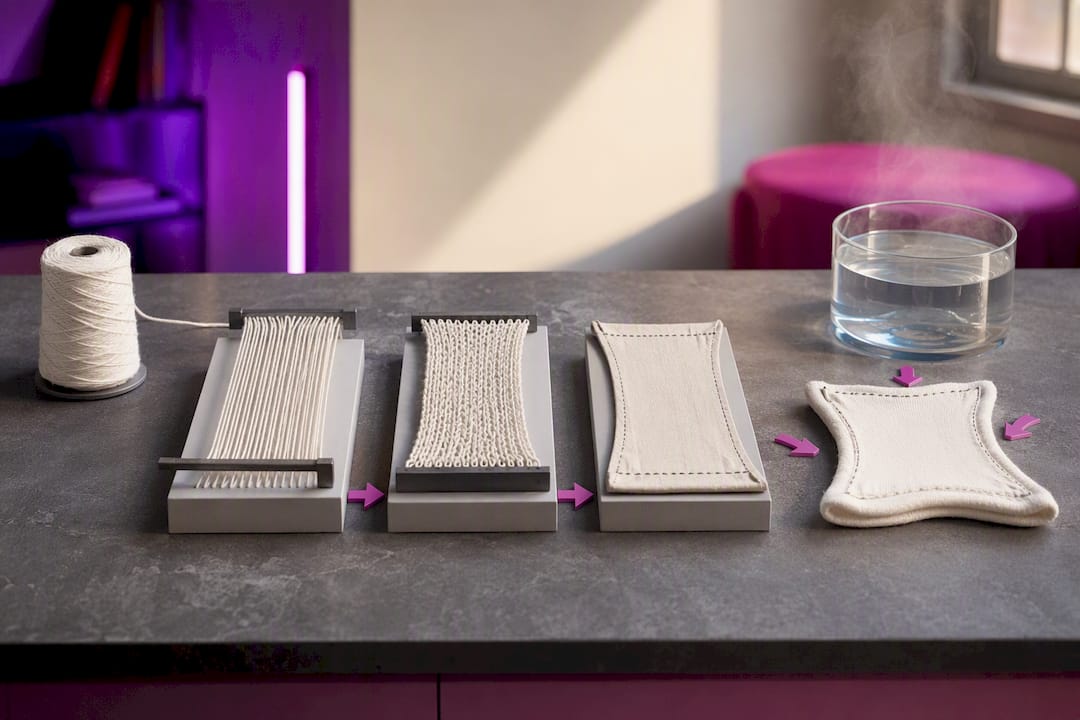
There’s a second layer to it. Cotton is cellulose, and cellulose swells when wet. Agitation and heat during washing and drying can cause the fiber structure to set at that shorter length once it dries, a related effect called consolidation shrinkage. Combine the two, and you get the classic “it fit yesterday” surprise.
Not every cotton tee behaves the same way. A few production factors decide how much a given shirt will move:
- Yarn type: ring-spun cotton tends to hold its shape better than cheaper open-end yarn.
- Knit vs. woven: knit jersey (standard tee fabric) generally shrinks more than tightly woven cotton.
- Fabric weight (GSM): heavier knits often shrink less than thin, lightweight tees.
- Finishing treatment: sanforized, mercerized, and pre-shrunk fabrics are chemically or mechanically stabilized before cutting.
The textile industry measures this with a standardized method, AATCC TM 135, which tracks dimensional change across repeated home-style wash cycles. Properly compacted or sanforized fabric typically holds residual shrinkage to 3% or less even after multiple washes, according to Cotton Incorporated’s testing guidance. That number is the benchmark reputable manufacturers build toward.
How Much Do Cotton T-Shirts Usually Shrink?
The honest answer depends entirely on how the fabric was finished before it became a shirt. Untreated cotton knit tees commonly shrink somewhere between 3% and 10% in length on the first wash, and poorly prepared fabric can creep even higher. Preshrunk, sanforized cotton behaves very differently.
By the numbers: Preshrunk cotton typically shrinks around 2% to 5% on its first home wash, while untreated cotton can shrink well beyond that depending on construction. Community and industry testing also suggests that roughly 70% to 90% of a garment’s lifetime shrinkage happens in the first wash, with the fabric largely stabilizing by around wash five.
Blended fabrics shift the math again. Adding even 10% polyester to a cotton shirt meaningfully limits shrinkage, since synthetic fiber resists the swell-and-set cycle that pure cotton goes through, as Boring Label’s breakdown of cotton behavior explains. Dryer heat adds its own penalty on top of washing, often another 1 to 3 percentage points if you run a hot, full-heat cycle instead of air-drying.
Preventing Unwanted Shrinkage: Laundry Rules That Actually Work
Most shrinkage complaints trace back to one of two habits: hot water or a hot dryer. Fix those two variables and you eliminate the majority of the risk.
- Read the care tag before the first wash. It reflects the specific finishing that shirt received, not a generic guess.
- Wash cold or cool, on a gentle or delicate cycle. Skip the long, aggressive agitation of a normal cycle.
- Use a short spin cycle, and consider a mesh bag for tees with delicate prints or trims.
- Air-dry flat or on a hanger whenever possible. This alone prevents the bulk of dryer-driven shrinkage.
- If you must use a dryer, choose the lowest heat setting and pull the shirt out while it’s still slightly damp.
- For bulk or custom orders, ask about compacting and pre-shrinking, and request dimensional-change results if the supplier tests to AATCC TM 135.
Pro Tip: If you’re ordering shirts for an event or reunion where sizing has to be right the first time, choose a pre-shrunk, sanforized fabric option and confirm the shirts are compacted before cutting. That single spec change prevents most of the fit surprises buyers report after the first wash.
This home-care routine mirrors advice from Real Simple’s laundry guidance on cotton clothing: cold water, low heat, and reshaping while damp are the highest-leverage habits available to anyone doing laundry at home.
How to Intentionally Shrink a Cotton T-Shirt
Sometimes you want a shirt smaller on purpose, maybe a tee that stretched out or one you bought a size too big. Cotton gives you a few workable options, each with a different risk profile.
- Hot wash plus high-heat tumble dry is the most predictable method. Expect a modest 3% to 10% length reduction depending on the fabric and how it was originally finished, according to Vogue’s guide to shrinking a shirt on purpose.
- Boiling-water soak followed by a hot tumble dry produces stronger results on untreated cotton, with community tests reporting 7% to 12% shrinkage. It also carries the highest risk of fading, distortion, and fiber damage.
- Localized steaming or compression works for small corrections, like tightening a loose cuff or hem, without shrinking the whole garment.
Any printed design, especially DTF transfers, can crack, warp, or peel under repeated high heat. Always test an inside seam or scrap fabric first, and never assume a printed shirt will shrink evenly around the design.
How to Unshrink or Relax a Shrunken Cotton Shirt
Full recovery isn’t guaranteed, but a shirt that’s a size too tight often has more give left in it than you’d think. The fibers just need to relax again.
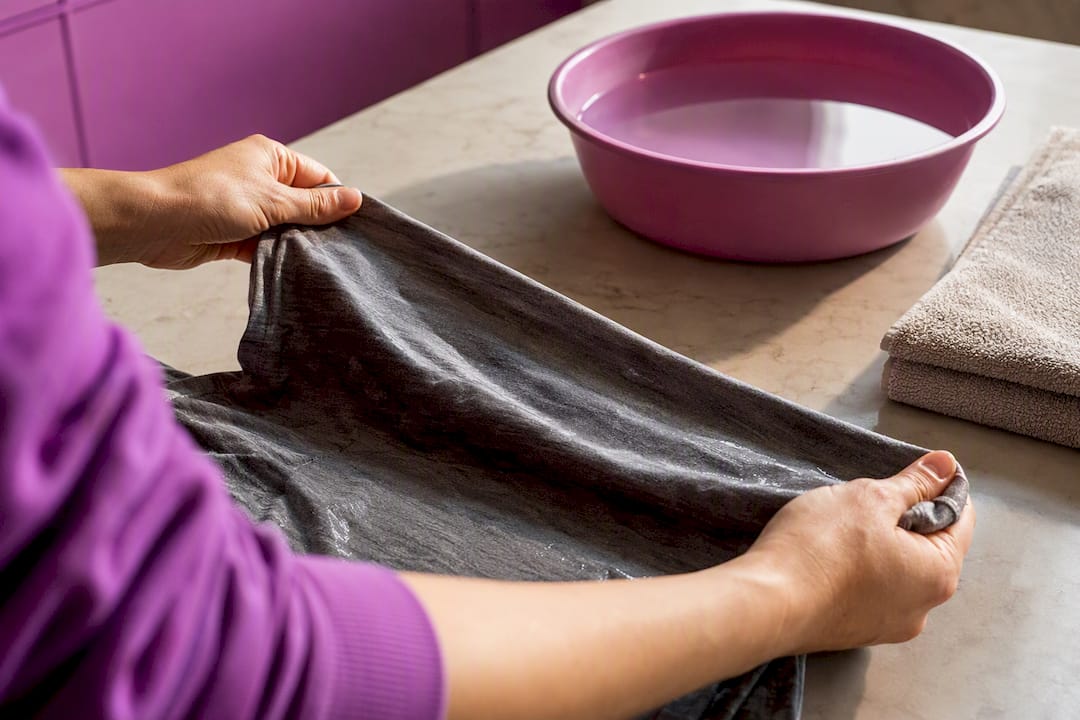
- Fill a basin with lukewarm water and mix in about 1 to 2 tablespoons of hair conditioner or a gentle baby shampoo per liter.
- Soak the shirt for 20 to 30 minutes, letting the conditioner work into the cotton fibers rather than scrubbing or agitating it.
- Lift the shirt out and roll it in a dry towel to absorb excess water. Don’t wring or twist it.
- Lay it flat on a clean surface and gently stretch it toward the dimensions you want, pulling evenly across the shoulders, chest, and length.
- Pin the corners or weigh down the edges so it holds its shape while it air-dries completely.
Soaking with hair conditioner works because the conditioner’s emollients temporarily loosen the bonds between cellulose fibers, giving them room to stretch back out. You can repeat the process if needed, but treat it cautiously. Once cotton fibers fully set through repeated heat exposure, no amount of soaking reverses that. If a shirt won’t budge after two attempts, a tailor or a size-up replacement is the more realistic path.
Pro Tip: Stretch the shirt while it’s still damp, not after it dries. Cotton fibers are far more pliable wet, and stretching a dry shirt mostly just strains the seams without actually recovering size.
How Shay’s Print Shop Controls Shrinkage on Bulk Cotton Orders
When you’re ordering shirts for a wedding, a company event, or a family reunion, shrinkage surprises are the last thing you want after everyone’s already picked their size. That’s exactly why fabric specification matters as much as the print itself.
Insisting on compacting before cutting and reviewing AATCC TM 135 results at approval is standard practice for catching shrinkage risk before it reaches a customer, a step Storiginator’s guide to spec’ing cotton shirts identifies as the single biggest lever for reducing fit complaints. Our Custom T-Shirts, 10 for $99 package uses 100% cotton built for exactly that kind of reliability, so your group’s sizes stay consistent from the first wear through repeated washes. We also recommend a cold-wash, low-heat care routine to protect both the fit and the print, especially when your design is placed close to seams where shrink-related distortion shows up first.
What the Research Actually Supports About Cotton Shrinkage
Most advice on this topic treats shrinkage like a mystery you have to guess your way around. It isn’t. The manufacturing side of the industry has measured this for decades, and the numbers are consistent enough to plan around: preshrunk cotton moves 2% to 5% on a first wash, untreated cotton moves considerably more, and nearly all of it happens before wash five.
Where conventional advice falls short is treating “wash cold” as the whole story. That’s the right habit, but it ignores the bigger lever: what happened to the fabric before you ever owned the shirt. A cheap, uncompacted knit will shrink noticeably even with perfect home care, while a properly sanforized shirt stays stable even with the occasional warm wash.
If you’re buying shirts for yourself, prioritize care habits. If you’re buying for a group, prioritize the specification, ask what finish the fabric received and whether it was compacted. That single question prevents more sizing headaches than any laundry tip ever will.
— Jon Will
Order Shirts That Fit Right From the Start
Chasing the perfect wash routine only gets you so far when the shirt was never properly finished in the first place. Shaysprintshop builds shrinkage control into production before a single order ships, so your group doesn’t have to gamble on fabric prep or guess at care instructions.
Our Custom T-Shirts, 10 for $99 package gives you 100% cotton shirts for events, businesses, and family reunions, sized to hold up wash after wash. If you’re planning a bulk order for a team, a reunion, or a company event, get a quote and lock in sizing before your group commits to a date. Fast turnaround means you’re not left waiting while other guests are still picking sizes.
Sources
- Does Cotton Shrink? How to Unshrink Cotton — Whirlpool
- How to ‘un-shrink’ cotton clothes — Real Simple
0 comments