

A properly applied DTF print typically survives 50 to 80 wash cycles under normal home washing, and can push past 100 washes with optimal care. Where your shirt lands in that range comes down to two things: how well the transfer was applied and how you wash it afterward. Most “DTF failed early” complaints trace back to one of those two factors, not to the technology itself.
TL;DR:
- Proper curing at the film stage and correct heat press settings are critical; deviations can significantly reduce wash durability.
- Standard care typically yields 30 to 50 washes, while optimal washing practices can extend lifespan beyond 80 washes.
- Washing in cold water, air drying, and avoiding fabric softeners are key habits to maximize DTF print longevity.
- Durability depends more on process calibration and initial curing than on the ink or transfer sheet quality alone.
- Using tested settings and requesting swatch samples before bulk orders improve chances of achieving long-lasting, durable prints.
Table of Contents
- What Determines DTF Durability: Materials and the Application Chain
- How Many Washes Does a DTF Print Really Survive?
- How to Wash, Dry, and Store DTF-Printed Garments
- Diagnosing Peeling, Cracking, and Edge Lift
- Fabric Compatibility: Cotton, Blends, Polyester, and Stretch
- DTF vs. Screen Printing, HTV, and DTG: Which Lasts Longer?
- Shop-Tested Settings Behind the 50 to 100 Wash Range
- The Truth About DTF Durability Nobody Tells You
- Order Durable DTF Shirts Without Guessing at Settings
- Sources
- FAQ
What Determines DTF Durability: Materials and the Application Chain
DTF durability gets decided long before the shirt ever touches a washing machine. It starts on the printer and ends at the heat press, and every step in between either builds a strong bond or sets you up for peeling.
The ink layer needs enough resin content to create a flexible, cohesive film once it cures. Too thin, and the print cracks the first time the fabric flexes. Too thick, and it feels stiff and plasticky against the skin. The adhesive powder matters just as much: grain size and how evenly it’s applied across the artwork determine whether the transfer bonds uniformly or leaves weak spots where powder coverage thinned out.
Curing happens at the gang-sheet stage, before the transfer ever reaches a garment, and it’s the single most important step in the whole chain. Under-curing at this stage is irreversible once you get to pressing. No amount of careful heat-press work afterward can fix a powder layer that never fully melted and bonded during curing.
Once you get to the heat press, four variables control the outcome:
- Temperature: most films cure and adhere well in the 300 to 325°F range, though exact numbers vary by film brand.
- Dwell time: typically 10 to 15 seconds for the main press, depending on fabric thickness.
- Pressure: firm, even pressure across the whole design, since uneven pressure creates weak edges.
- Peel method: cold peel after full cooling gives the strongest bond; peeling too early can lift the design before it sets.
Manufacturers recommend checking the film’s technical data sheet before running production, since small deviations of 5 to 10 degrees in platen temperature measurably affect how well the adhesive grabs the fabric.
How Many Washes Does a DTF Print Really Survive?
Numbers help here more than vague reassurance. Shop and lab testing consistently sorts DTF durability into three bands based on how the garment gets treated.
By the numbers: Standard care produces 30 to 50 washes before visible cracking or fading. Optimal care (cold water, air dry, no fabric softener) pushes that to 60 to 80 or more. Poor care, meaning hot water, fabric softener, and high dryer heat, can drop a print to as few as 10 to 20 washes.
“Standard care” means most people’s normal laundry routine: warm water, regular detergent, machine drying on a standard cycle. It’s not neglect, but it’s not optimized either, and it’s the baseline most printed shirts actually get.
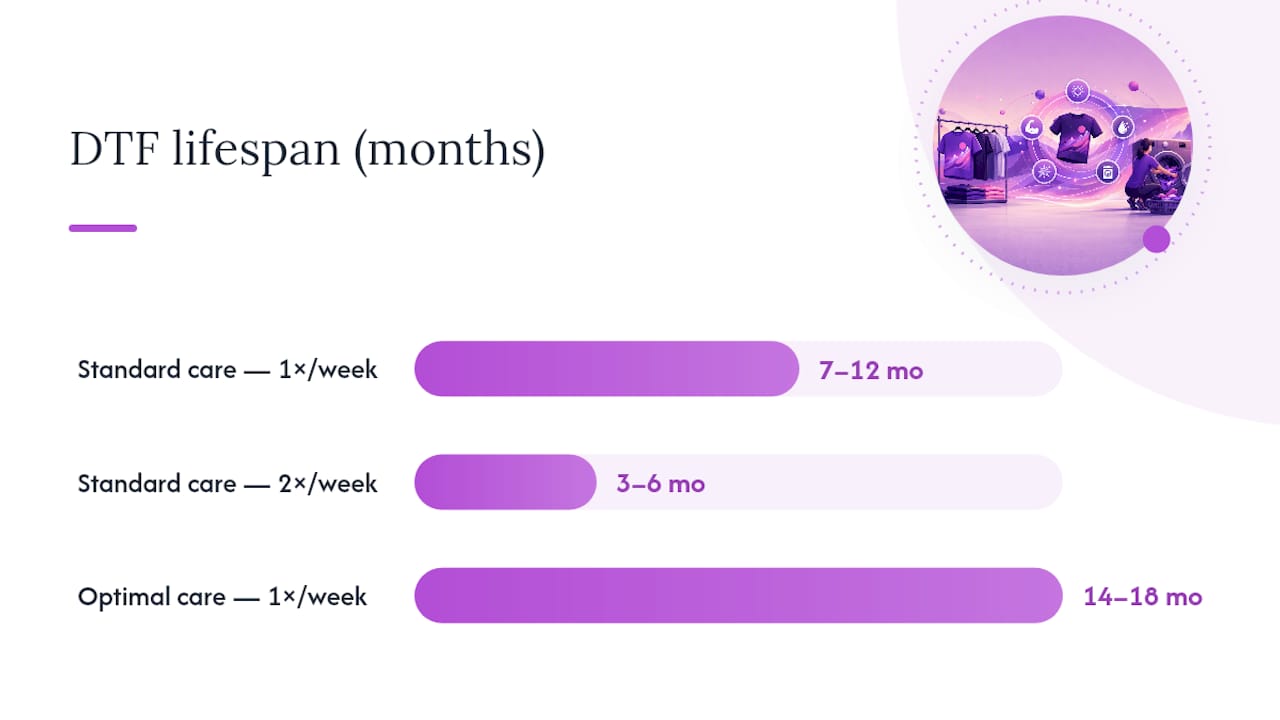
Translate that into real time and the picture gets clearer. Wash a shirt once a week and 30 to 50 washes covers roughly seven months to a year of regular wear. Wash it twice a week, as many work uniforms or gym shirts do, and you’ll hit that same wash count in three to six months. A shirt cared for optimally and washed weekly can realistically stay print-perfect for well over a year.
None of this means DTF is fragile. It means the print’s lifespan is a direct function of how it’s washed, which is good news, because washing is something you fully control.
How to Wash, Dry, and Store DTF-Printed Garments
Care instructions are where most of the durability battle actually gets won or lost. Follow these steps in order, every time:
- Turn the garment inside out before washing. This keeps the printed surface from rubbing directly against zippers, buttons, or other fabric.
- Wash in cold to warm water, never hot. Heat softens the adhesive bond and accelerates cracking over repeated cycles.
- Use a mild detergent and skip bleach and fabric softener entirely. Softener in particular coats the print with a residue that weakens adhesion over time.
- Air-dry when possible. If you need a dryer, use the lowest heat setting and avoid repeated high-heat cycles, which do more cumulative damage than any single wash.
- Iron only if necessary, and only inside out or through a protective cloth, on a low to medium setting. Never place a hot iron directly on the printed surface.
Pro Tip: If you’re washing a batch of event or team shirts on a schedule, set a consistent cold-wash, air-dry routine from day one. Garments that start with proper care habits from the first wash tend to outlast ones that get “trained” on hot water and then switched over later.
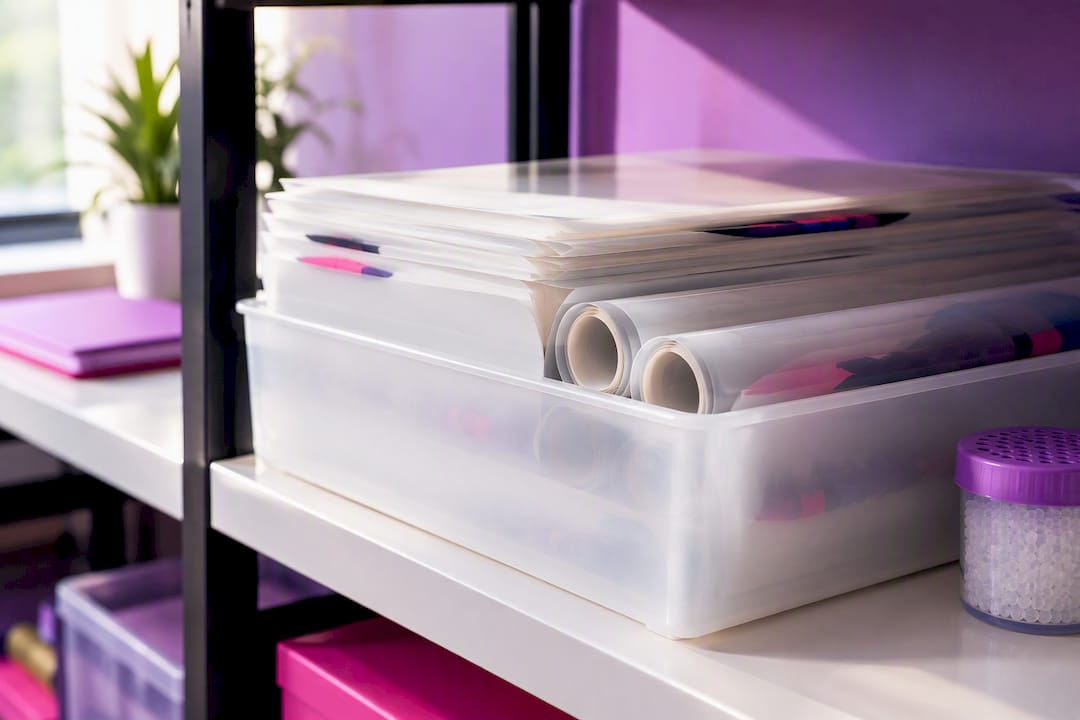
Unused transfer sheets have their own storage rules. Keep them flat or rolled printed-side protected, away from direct sunlight and humidity, and use them within the manufacturer’s recommended window, since adhesive powder can degrade in storage even before it’s ever pressed. Shay’s Print Shop’s own printer-tested washing instructions walk through this same routine step by step if you want a printable reference for customers or staff.
Diagnosing Peeling, Cracking, and Edge Lift
When a print fails early, the symptom usually points straight to the cause. Cracking across the whole design, not just at stress points, almost always means under-curing at the film stage, since the ink layer never became flexible enough to move with the fabric.
Peeling that starts at the edges and works inward points to powder inconsistency or a peel that happened too soon, before the adhesive fully set. A print that feels stiff, brittle, or “plasticky” right out of the box, before a single wash, usually means over-pressing: too much heat, too much time, or both, which can scorch the adhesive layer even though it looks fine at first glance.
Run through this checklist before blaming the transfer itself:
- Confirm the press is properly calibrated. Even a 5 to 10 degree drift throws off adhesion.
- Check the film’s technical data sheet for the correct cure and press specs for that specific product.
- Review peel timing. Cold peel needs full cooling; hot peel needs immediate action.
- Run a test swatch on the actual fabric before committing to a full production batch.
If a swatch test fails using correct settings, the issue is likely manufacturing quality in the film or ink. If the swatch passes but a production run fails, look at application: press calibration, operator consistency, or peel timing drifted somewhere along the way.
Fabric Compatibility: Cotton, Blends, Polyester, and Stretch
Fiber content changes how well any transfer bonds, and DTF is no exception. 100% cotton gives DTF one of its strongest results: the fibers absorb heat evenly and the adhesive bonds deeply into the weave, producing a soft hand feel that doesn’t sit on top of the fabric like a plastic sticker.
Cotton-poly blends often hit the best overall balance for shops running mixed inventory, offering strong adhesion with slightly better wrinkle resistance and dimensional stability than pure cotton.
Polyester and delicate fabrics need lower press temperatures to avoid scorching or dye migration, where the garment’s own dye bleeds into the print under too much heat. Use powders specifically rated for stretch fabrics on activewear or performance blends, since a rigid adhesive layer will crack the first time the fabric stretches.
- Always run a test swatch on the exact fabric batch before a production run.
- Never assume settings from one fabric type transfer cleanly to another.
- Athletic and performance fabrics benefit from the same cold-wash principles covered in general garment care guidance for sportswear.
DTF vs. Screen Printing, HTV, and DTG: Which Lasts Longer?
Every decoration method trades off durability against something else: cost, detail, or flexibility. Here’s how they generally stack up.
- DTF typically reaches 50 to 80-plus washes with correct application, handles fine detail and full color well, and works on cotton, blends, and polyester alike.
- Screen printing can edge out DTF at very high production volumes when expertly cured, but it struggles with complex, multi-color, photo-realistic designs and costs more to set up for small runs.
- Heat transfer vinyl (HTV) holds up well for simple text and bold shapes but tends to crack sooner on designs with fine detail or gradients, since vinyl doesn’t flex the same way as DTF’s ink and adhesive layer.
- DTG (direct-to-garment) produces excellent color depth on cotton specifically but generally shows more fading over time than DTF and struggles on blends or polyester.
For most custom apparel orders, from event shirts to team gear, DTF hits the sweet spot: full-color detail, real durability, and compatibility across fabric types without needing a different process for every shirt color or design. A closer breakdown of the DTF versus DTG decision is worth a look if your order mixes cotton and blended fabrics.
Shop-Tested Settings Behind the 50 to 100 Wash Range
Printer-tested washing guidance consistently lands finished shirts in the 50 to 100-plus wash range when customers follow the cold-wash, air-dry routine. That number isn’t theoretical. It reflects repeatable settings run on actual production presses.
For 100% cotton, the shop-proven routine follows a pattern common across well-run DTF operations: pre-press for 3 to 5 seconds to remove moisture and wrinkles, main press at 300 to 325°F for 8 to 15 seconds depending on garment thickness, a full cold peel, then a finishing press through parchment for 3 to 5 seconds to lock the adhesive.
- Pre-press: 3 to 5 seconds, removes moisture and wrinkles
- Main press: 300 to 325°F for 8 to 15 seconds
- Peel: cold, after full cooling
- Finishing press: 3 to 5 seconds through parchment
Want the exact settings behind a specific order? Shay’s cotton shirt press guide breaks down the repeatable parameters used on production runs, and swatch requests are available for anyone who wants to test before committing to a full order.
The Truth About DTF Durability Nobody Tells You
Most articles on DTF durability treat wash count like a fixed property of the technology, as if every DTF shirt should behave identically. That framing misses the point. DTF durability is closer to a recipe than a spec sheet: change one ingredient, whether it’s press temperature, peel timing, or laundry detergent, and the outcome shifts noticeably.
The conventional advice tends to over-focus on the printing equipment and under-focus on the two moments that actually decide a print’s fate: the cure at the film stage and the first ten washes at home. Get those right and 80-plus washes is realistic. Get either wrong and no amount of good ink chemistry saves the shirt.
If you’re ordering custom apparel, the single highest-leverage question to ask a supplier isn’t “what printer do you use.” It’s whether they calibrate against the film’s technical data sheet and whether they can show you a test swatch before a full production run. That habit, more than any brand of ink or press, is what separates a shirt that lasts a season from one that lasts years.
— Jon Will
Order Durable DTF Shirts Without Guessing at Settings
You’ve just read what actually determines whether a DTF print lasts 20 washes or 100.
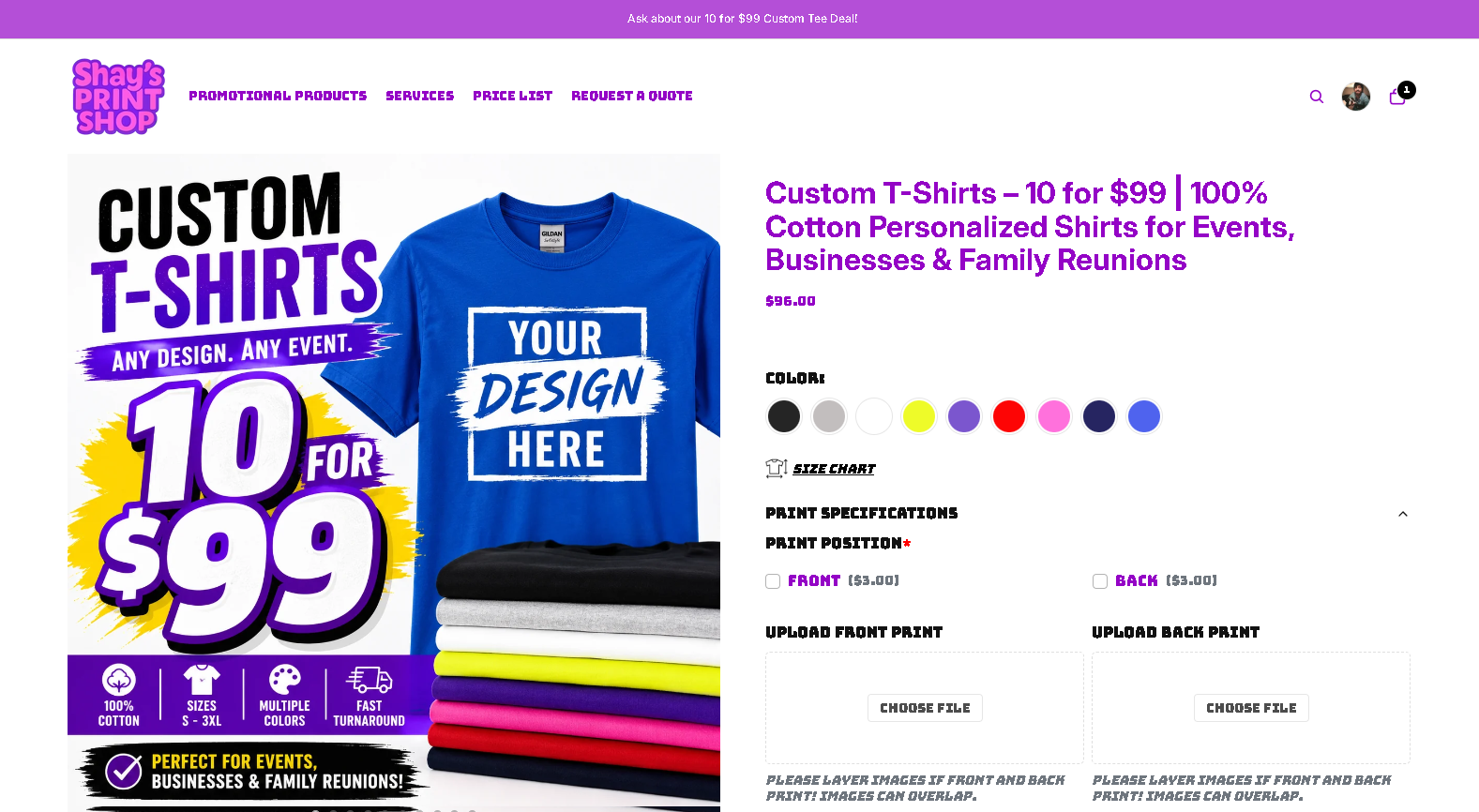
The 10 custom t-shirts for $99 package is built for exactly the kind of order where durability matters most: team gear, family reunions, small business runs, and event apparel that needs to survive more than a couple of washes before the season ends. If you want to see the print quality before committing to a full batch, request a small test run before your production order, and pair your shirts with custom stickers or a custom tumbler to round out an event package. Ready to place your order? Head to the custom t-shirt page and get your bulk order started.
Sources
For readers who want the primary technical references behind this article’s durability claims, the Roland DGA guide on print durability covers press calibration in depth, while DTFTransfers’ durability guide walks through the curing science behind adhesive bonding.
- How Long Do DTF Transfers Last? Wash Durability Guide (2026)
- DTF Transfer Durability Guide: How Long Do DTF Transfers Last? – DTFTransfers
- Why Print Durability Matters in DTF Printing – Roland DGA
FAQ
What Are the Disadvantages of DTF Printing?
DTF requires precise press calibration, since small temperature or timing errors during curing or application can cause early peeling or cracking. It also depends heavily on buyer care after purchase; skipping cold-wash guidance can cut a print’s lifespan to 10 to 20 washes even when the transfer itself was applied correctly.
Which Lasts Longer, DTF or Vinyl (HTV)?
DTF generally holds up better on designs with fine detail or gradients, since its adhesive layer flexes with the fabric instead of cracking like rigid vinyl sheets. HTV can perform comparably on simple, bold text or shapes, but complex full-color artwork favors DTF’s durability over time.
How Long Do DTF Transfer Sheets Last in Storage?
Unpressed DTF transfer sheets should be stored flat or rolled, printed-side protected, away from heat, humidity, and direct sunlight. Adhesive powder can degrade in storage before it’s ever pressed, so using sheets within the manufacturer’s recommended window helps preserve full adhesion quality.
How Long Does a DTF Printer Last?
Printer lifespan depends heavily on maintenance, usage volume, and print head care, and it varies significantly by brand and model. This falls outside the wash-durability question that matters most to buyers and shop customers, who should focus instead on whether their supplier tests and calibrates against the film manufacturer’s technical data sheet.
How Many Washes Does a Shay’s Print Shop DTF Shirt Typically Survive?
Shirts printed with Shay’s Print Shop’s shop-tested settings and cared for using the printer-tested washing instructions typically reach 50 to 100-plus washes. That range assumes cold-water washing, air drying, and skipping fabric softener, consistent with the care guidance covered throughout this article.
0 comments