

Yes, DTF works on 100% cotton shirts, and it works well when you match the right blank to the right press settings. The white underbase and adhesive powder let full-color transfers bond to cotton fibers and stay vibrant on any shirt color, from bright white to jet black. This guide covers which cotton blanks give the cleanest results, the press settings that actually hold up, and the care steps that keep your print looking new for years instead of months.
TL;DR:
- Using combed and ring-spun cotton blanks yields crisper edges and more precise details than open-end cotton, especially for small text and fine linework.
- Press settings around 320°F with medium pressure for 10 to 20 seconds, followed by a post-press step, are essential to ensure durability and prevent early wear.
- Heavier cotton with higher GSM provides better contact with the platen and improves adhesion, reducing weak spots and edge dullness.
- Proper care—including washing inside out in cold water and avoiding high-heat tumble drying—significantly extends the lifespan of DTF prints on cotton.
- Pre-washing garment-dyed blanks is crucial to prevent shrinkage-related misalignment and uneven design placement after laundering.
Table of Contents
- Does DTF Actually Work On Cotton?
- Which Cotton Shirts Give The Best DTF Results?
- What Fabric Details Affect Adhesion And Print Quality?
- How Do You Press DTF Onto Cotton Correctly?
- How Do You Choose The Right Blank For Your Project?
- How Long Does DTF Last On Cotton, And How Do You Care For It?
- What Has Shay’s Print Shop Learned From Printing DTF On Cotton?
- What Actually Determines Whether DTF On Cotton Looks Good?
- Ready To Order DTF-Printed Cotton Shirts Without The Trial And Error?
- Sources
Does DTF Actually Work On Cotton?
DTF prints your design onto a special film using white ink as a base layer, then applies a hot-melt adhesive powder before curing it. That combination is what makes DTF work on cotton, polyester, and blends alike, because the transfer isn’t relying on the fabric to accept dye the way sublimation does. It’s relying on heat and pressure to melt that adhesive powder into the weave of the shirt.
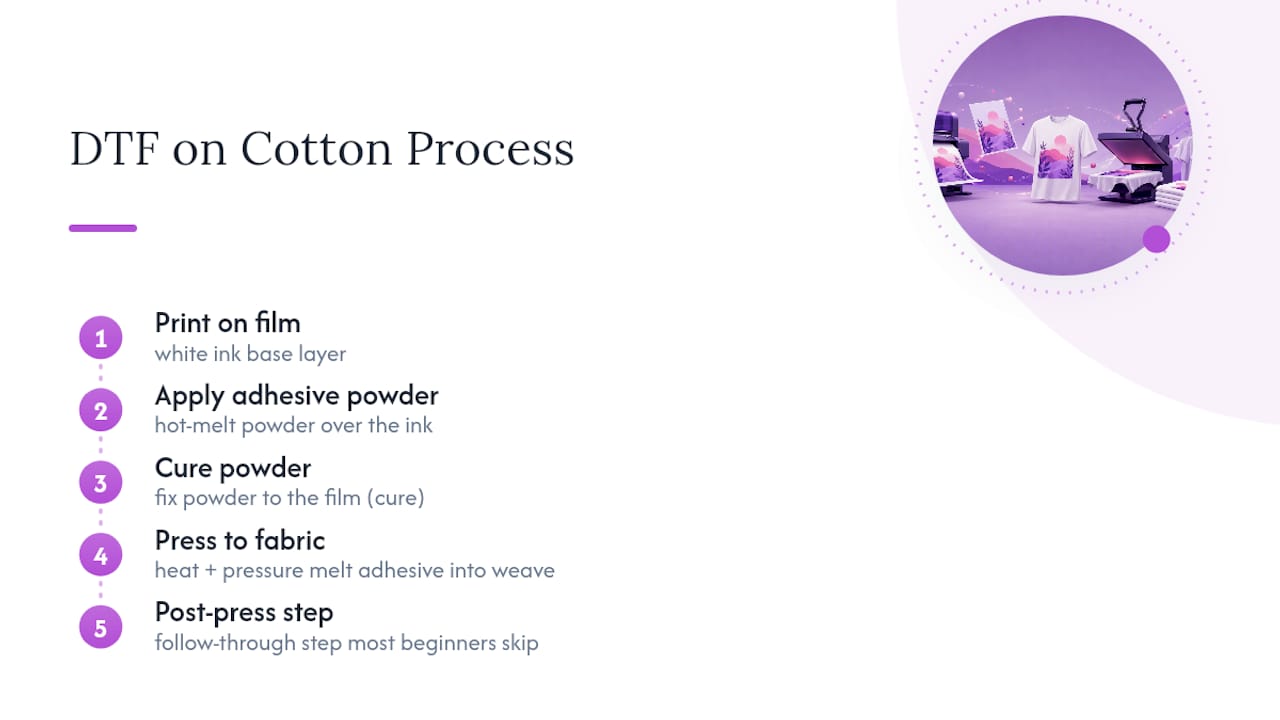
That’s the real answer to “can DTF print on cotton”: the fabric composition barely matters compared to how the transfer is pressed. Cotton actually takes DTF transfers beautifully because the fibers have enough texture for the adhesive to grip. The bigger variables are the blank you choose, your press settings, and whether you follow through on the post-press step most beginners skip. Get those three right and DTF transfer on cotton looks as clean five washes later as it did on day one.
Which Cotton Shirts Give The Best DTF Results?
Not all cotton is built the same, and the surface finish of your blank changes how sharp your print looks. Combed and ring-spun cotton removes short, uneven fibers during production, leaving a smoother surface that grips adhesive powder more evenly than open-end spun cotton. That’s why Airlume combed ring-spun cotton produces noticeably crisper edges after pressing compared to rougher, budget knits. Open-end cotton isn’t unusable, but fine text and small details tend to look softer around the edges.
Weight matters too. Most shops find a moderate weight range suitable for standard DTF work, balancing fabric stability and comfort. Lighter shirts under 4.5 ounces can scorch or show heat marks more easily, while very heavy fleece-weight cotton needs longer dwell times to transfer heat evenly through the fabric.
A few illustrative blanks worth knowing:
- Bella+Canvas 3001: Airlume combed ring-spun cotton with a soft retail hand, a strong pick when the shirt itself is part of the product experience.
- Gildan 5000: heavier, more affordable, and a workhorse for bulk orders where cost per shirt matters more than a boutique feel.
- Next Level 3600: a middle ground between softness and price, popular for small businesses that want both.
- Comfort Colors 1717: garment-dyed, heavier cotton with a vintage look, but it needs special handling before you press it.
Pro Tip: If your design has fine linework or small text, test it on both an open-end and a combed ring-spun blank side by side. The difference in edge sharpness is often visible without a loupe.
What Fabric Details Affect Adhesion And Print Quality?
GSM (grams per square meter) directly affects how evenly your platen makes contact with the shirt. Thin cotton flexes under pressure and can create air pockets that leave weak spots in the bond. Heavier cotton holds its shape better against the platen, giving more consistent contact across the entire design.
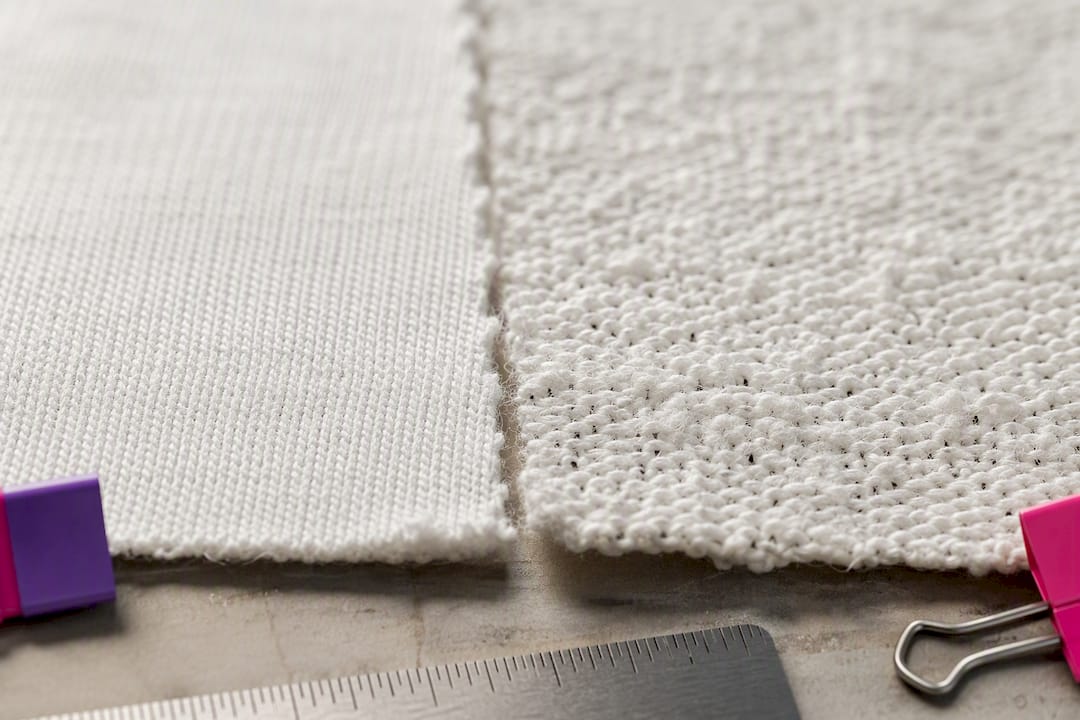
Texture matters just as much as weight. Slub cotton, tri-blends, and coarser open weaves create tiny gaps that can dull edge sharpness, since the adhesive powder has more surface irregularity to bridge. A tight, even knit gives the transfer a flatter, more uniform surface to bond to.
Color changes the equation entirely. Dark and mid-tone shirts need that white ink underbase to stop the garment color from showing through your design, and it’s what keeps colors opaque instead of muddy on black or navy cotton.
Garment-dyed cotton, like Comfort Colors, deserves special caution:
- Pre-wash a sample shirt before running a full batch to check for shrinkage.
- Cotton fibers can shrink measurably when exposed to heat and moisture, which can warp placement on a design that was positioned before that first wash.
- Garment-dyed blanks sometimes shrink unevenly across the body versus the sleeves, so a mid-chest logo might land slightly off after laundering.
If shrinkage is a concern for your project, our breakdown of first-wash shrinkage expectations walks through what’s normal and what isn’t.
How Do You Press DTF Onto Cotton Correctly?
Cotton doesn’t need exotic settings, but it does need consistency. A practical starting point for most DTF films is around 320°F with medium pressure for roughly 10 to 20 seconds, though your exact film, ink, and adhesive powder combination will shift that slightly. Always run a test press before committing to a full batch, since different film and adhesive brands behave differently even at the same nominal temperature.
Here’s the sequence that produces consistent results:
- Pre-press the shirt for 3 to 5 seconds to remove moisture and wrinkles. Cotton holds humidity, and pressing on a damp shirt traps steam under the transfer.
- Place the transfer film-side up, positioned with a placement guide or ruler rather than eyeballing it, especially on gang sheets with multiple designs.
- Press at your target temperature and pressure for the full recommended time. Medium to firm pressure works better than light pressure, since the adhesive needs firm, even contact to melt into the fibers.
- Peel the film according to your adhesive type. Cold peel is more forgiving for beginners, since the film releases cleanly once fully cooled. Hot peel saves time but requires faster, more confident handling.
- Post-press the shirt for another 5 to 10 seconds without the film. This step locks the adhesive fully into the cotton fibers, and skipping it is one of the most common reasons transfers fail early.
Pro Tip: Keep a felt or silicone pad under thin cotton shirts during gang pressing. It equalizes pressure across uneven fabric thickness so every shirt in the batch bonds the same way.
If you run into trouble, the fix is usually one of these:
| Problem | Likely cause | Fix |
|---|---|---|
| Edges lifting after wash | Skipped post-press or low pressure | Add post-press step, increase pressure |
| Cracking over time | Too much heat, too little pressure | Lower temp slightly, extend press time |
| Dull or muddy colors | Missing or thin white underbase | Check underbase opacity before pressing |
How Do You Choose The Right Blank For Your Project?
Match the blank to what the shirt actually needs to do. Retail apparel or anything customers will wear repeatedly benefits from Bella+Canvas 3001’s soft hand and clean surface. Large orders where cost per unit drives the decision usually land on Gildan 5000. Next Level 3600 splits the difference for businesses that want a nicer shirt without the premium price. Vintage-style merchandise or event shirts where a lived-in look is the goal point toward Comfort Colors 1717, paired with a pre-wash to lock in shrinkage before you print.
Cut and fit affect more than comfort. Tighter-fitting shirts can distort slightly during pressing if the platen stretches the fabric, so give yourself a little extra placement margin on fitted styles. Side seams, tagless labels, and taping at the shoulders also affect how flat the shirt lays on the platen, which matters more than people expect for gang-sheet accuracy.
Before committing to a full production run:
- Order physical samples of your top two or three blank candidates.
- Run a test batch of 5 to 10 shirts across different sizes.
- Check placement consistency, color opacity, and hand feel after the test press cools completely.
If you’re weighing DTF against other print methods for a specific project, our comparison of DTF versus DTG breaks down where each one makes more sense.
How Long Does DTF Last On Cotton, And How Do You Care For It?
DTF transfers can hold up through dozens of wash cycles when they’re pressed correctly and cared for afterward. Real-world lifespan varies based on wash habits more than almost anything else, and proper care noticeably extends how long the print stays intact.
The care routine that actually protects your print:
- Wash cold and inside out to reduce direct friction on the design.
- Use a gentle cycle instead of a heavy-duty one.
- Air dry or tumble dry on low heat. High heat is the fastest way to shorten a print’s life.
- Skip the dry cleaner and never iron directly on the printed area.
Most failures trace back to two causes: skipping the post-press step during application, or repeated high-heat tumble drying afterward. Neither is complicated to avoid, but both get overlooked constantly. For general fabric-care habits that extend to any printed garment, Capra Sports’ guide on washing printed jerseys covers gentle-wash practices that apply just as well to DTF shirts.
What Has Shay’s Print Shop Learned From Printing DTF On Cotton?
Clients who skip a sample order and jump straight to a 50 or 100 shirt run are the ones most likely to be surprised by shrinkage on garment-dyed blanks or unexpected color shifts on darker shirts. Pre-washing one sample before a full production run isn’t optional advice, it’s the single biggest predictor of a smooth order.
Placement mistakes are the other repeat issue, especially with fitted or tagless styles that lay differently on a platen than a standard tee. The Custom T-Shirts – 10 for $99 package exists partly to solve this, since a smaller bulk order lets you confirm fit and placement before committing to a larger reunion, team, or event run.
What Actually Determines Whether DTF On Cotton Looks Good?
Most advice about DTF on cotton focuses on the wrong variable. People obsess over ink brands and film types when the blank and the post-press step decide far more of the outcome. A mediocre film pressed correctly on combed ring-spun cotton with a proper post-press will outlast a premium film rushed through on a bargain open-end blank with the post-press skipped.
The conventional wisdom treats press settings like a fixed recipe: 320°F, medium pressure, done. In practice, every roll of film and every batch of adhesive powder behaves slightly differently, which is exactly why test presses matter more than any temperature chart. Shops that skip testing are the ones fielding complaints about cracking and peeling three washes later.
If you take one thing from this, prioritize the sample press over the finished product. Order your blanks, run a small test batch, check the results after a wash cycle, then commit to full production. That five-shirt detour saves far more money than it costs.
— Jon Will
Ready To Order DTF-Printed Cotton Shirts Without The Trial And Error?
Skip the test presses, the blank comparisons, and the guesswork on press settings. Shay’s Print Shop handles all of that on our end, so you get finished, durable DTF shirts on 100% cotton without setting up a heat press in your garage.

The Custom T-Shirts – 10 for $99 package includes 100% cotton blanks, full-color DTF printing on your uploaded logo or design, and standard sizing and color options for events, businesses, and family reunions. Turnaround is fast, and you can start with a smaller batch if you want to confirm fit and colors before ordering for the whole group.
Upload your design, pick your sizes, and place your order through the product page above. If you’re also outfitting a team or event with more than shirts, our DTF-printed hats guide covers how to match caps to your shirt order.
Sources
- What Is DTF Printing? How DTF Works (2026) | DTFWiz
- What Is DTF Printing On Shirts Benefits Workflow And Uses Guide - Jinlongprints
- Best Blank T-Shirts for DTF Printing: Brand-by-Brand Guide (2026)
- DTF Printing: A Game-Changing Technique For Your T-Shirt Business | Brildor
- Cotton — Wikipedia
0 comments