

Most custom t-shirt orders take 5 to 14 business days from artwork approval to delivery, though production timelines shift with your printing method, order size, and how fast you approve your proof. Print-on-demand shops often quote 48 to 72 hours before shipping, and if you only need a handful of shirts, some shops can turn a heat press or DTF job around in 24 to 48 hours.
Here’s the fastest path by method:
- Heat press/HTV and DTF: same-day to 48 hours for small runs
- DTG: 2 to 7 business days
- Screen printing: 7 to 14+ business days, but cheapest and fastest once you hit bulk quantities
- Embroidery and sublimation: 7 to 14 days due to digitizing or specialty processing
The two delays you actually control: how fast your artwork is print-ready, and how fast you approve the proof. Printers can’t start the clock until both boxes are checked.
Key Takeaways
Custom t-shirt turnaround depends less on the printer’s equipment and more on how fast you supply artwork and approve your proof.
| Point | Details |
|---|---|
| Standard timeline | Budget 5 to 14 business days for most custom orders from approval to delivery. |
| Match method to deadline | DTF and DTG handle rush jobs in 24 to 72 hours; screen printing needs 7 to 14+ days but wins at bulk volume. |
| Know the break-even | Screen printing typically beats DTG in speed and cost once orders pass 24 to 48 units. |
| Control what you can | Fast proof approval and print-ready files remove the two most common causes of delay. |
| Order through Shay’s Print Shop | The 10 for $99 DTF package skips screen setup time and ships from US-based fulfillment. |
Table of Contents
- How Long Does T-Shirt Printing Turnaround Take by Method?
- How Does Order Size Change Your T-Shirt Production Timeline?
- What Can You Do to Speed Up Your T-Shirt Order?
- What Do Rush T-Shirt Printing Options Actually Deliver?
- How Fast Can Shay’s Print Shop Turn Around Your Order?
- What Happens at Each Stage of Your T-Shirt Order?
- What Usually Causes T-Shirt Printing Delays?
- Does Custom Apparel Take Longer Than Stock Shirts?
- What Actually Matters When You’re Racing a Deadline
- Ready to Order? Here’s How Shay’s Print Shop Keeps It Fast
- Sources
How Long Does T-Shirt Printing Turnaround Take by Method?
The printing method you pick does more to shape your t-shirt production timeline than almost any other factor. Each technique has its own rhythm, and knowing that rhythm helps you match your deadline to the right process instead of guessing.
Direct-to-garment (DTG) printing needs almost no setup. Once the printer is running, each shirt takes about 2 to 3 minutes to print, which makes small batches move fast. Dark cotton shirts need a pretreatment step first, which adds a little time but keeps colors vivid. Expect 2 to 7 business days total for a typical DTG order.
DTF (direct-to-film) is the workhorse for mixed garment types and dark colors. Press time runs about 1 to 2 minutes per shirt, and because there’s no pretreatment step, it’s a strong choice for rush jobs and small-to-medium runs alike.
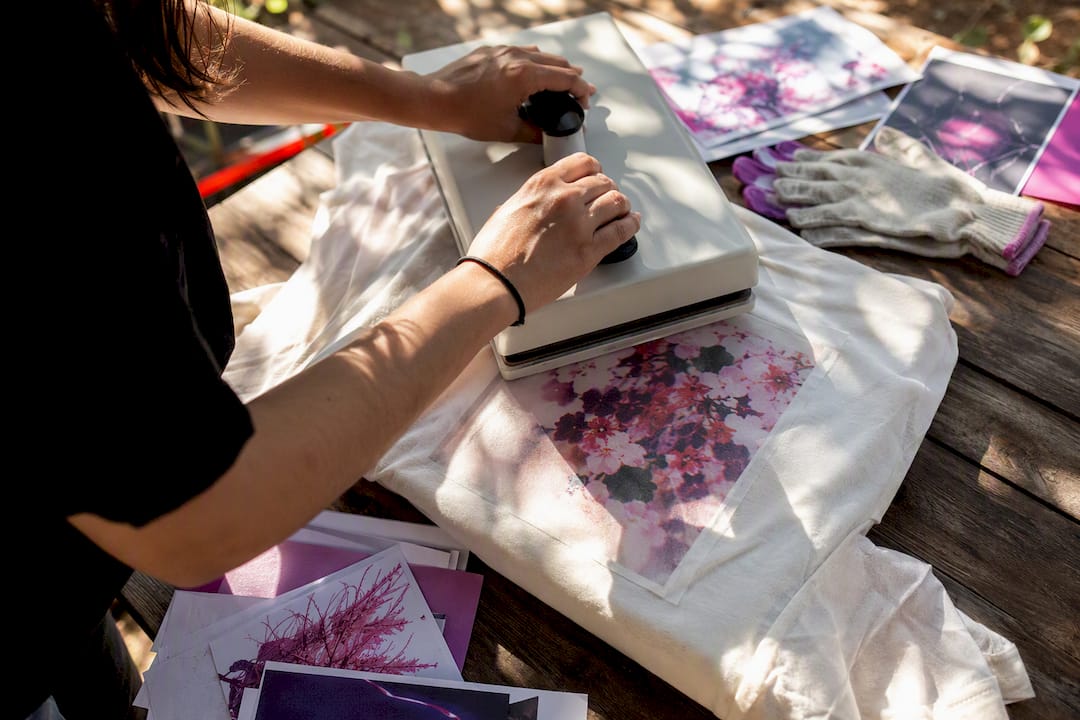
Heat press and HTV (heat transfer vinyl) is your fastest option for a single shirt or a walk-in order. At 3 to 5 minutes per shirt, you can watch it happen. It just doesn’t scale. Print 200 shirts one at a time and you’ll be there all week, so this method shines for same-day requests, not bulk production.
Screen printing flips the script. Setup runs 2 to 5 hours because each color needs its own screen burned and mounted. But once the press is dialed in, an automatic press can pump out a shirt every 10 to 20 seconds. Budget about a week or more for mid-to-large orders, and know that the long setup pays for itself once volume climbs.
Embroidery and sublimation generally run slower across the board, typically 7 to 14 days, because embroidery requires digitizing the design into stitch paths and sublimation often needs specialty blanks or coatings.
How Does Order Size Change Your T-Shirt Production Timeline?
Your headcount changes everything about how a printer schedules your job. Here’s what to expect at different volumes.
- 1 to 24 shirts: DTG or DTF wins here almost every time. No setup penalty, and you can often see a finished proof within a day or two of approval. Total turnaround: 2 to 7 business days.
- 25 to 150 shirts: This is the gray zone. Screen printing starts to pull ahead of DTG around the 24 to 48-unit mark, because the per-shirt speed on an automatic press outruns DTG’s per-shirt print time once you’re past setup. Expect 5 to 10 business days depending on the shop’s queue.
- 150+ shirts: Screen printing is almost always the right call at this scale, both for cost and speed. Plan for 7 to 14+ business days, and confirm the shop has open press time before you commit to a date.
Bulk buyers planning a large event or team order should build in extra room during graduation season, back-to-school weeks, and the run-up to major holidays. Print shops get slammed in April, May, August, and November through December, and a shop that normally turns work around in a week might need two during those stretches. Always ask directly about current queue length before you lock in a date. It costs nothing to ask, and it can save you from a last-minute scramble.
What Can You Do to Speed Up Your T-Shirt Order?
Plenty of turnaround time is in your hands, not the printer’s. A few habits shave real days off the clock.
- Submit print-ready files: vector formats like EPS or AI work best, or a high-resolution PNG at 300 dpi with a transparent background and correct dimensions.
- Approve your proof fast. Check spelling, placement, and color before you say yes, and set a clear approval window with your printer upfront.
- Stick to in-stock garment colors and sizes rather than special-order blanks.
- Limit your ink colors or print locations. A single-location print skips extra setup that a front-and-back, multi-color job requires.
- Ask about local pickup instead of shipping, or request a split shipment so part of your order arrives sooner.
Pro Tip: Ask your printer for a same-day proof-approval option. A same-day turnaround on your sign-off can trim a full business day or more off the total timeline, especially for DTF and DTG orders.
What Do Rush T-Shirt Printing Options Actually Deliver?
Rush service buys you speed, but it comes with trade-offs worth knowing before you pay extra.
Most shops offer tiered rush windows: 48-hour, 24-hour, and occasionally same-day for very small runs. Heat press, DTF, and DTG are the methods that can realistically hit those windows since screen printing’s setup time works against same-day turnaround. Some providers advertise a guaranteed 48-hour express option that counts from the moment you approve your proof, not from checkout.
- 48-hour rush: widely available across DTG, DTF, and screen printing for smaller quantities
- 24-hour rush: usually limited to DTF, DTG, or heat press
- Same-day: only realistic for single shirts or very small orders, and only if the shop has your blank in stock
To hit tighter deadlines, shops sometimes skip secondary finishing steps like individual bagging or a second quality pass. That’s a fair trade for speed, but it raises the odds of a missed flaw slipping through. Get a confirmed dispatch date, an expedited shipping estimate, and a written rush fee in writing before you approve production.
How Fast Can Shay’s Print Shop Turn Around Your Order?
Shay’s Print Shop builds its entire process around 100% cotton t-shirts printed with DTF, a method chosen specifically because it balances speed with a soft, durable finish. That’s why the 10 for $99 bulk package is priced the way it is: enough volume for a team, a classroom, or a family reunion without the setup penalty a screen-printed order would carry.
- 100% cotton shirts printed with DTF for a durable, vibrant finish
- Bulk pricing built for event planners, small businesses, and families
- US-based fulfillment out of Florida and Massachusetts keeps shipping predictable
- Fast proof turnaround so your production clock starts sooner
| Order type | What to expect |
|---|---|
| Standard order | Quote, proof, and production scheduled once artwork is approved |
| Bulk order | Volume pricing with capacity for larger events and teams |
| Rush request | Ask directly about current rush availability and fees |
Start your quote by uploading your logo or design, and Shay’s team maps it to a realistic delivery date before you commit.
What Happens at Each Stage of Your T-Shirt Order?
A t-shirt order isn’t one step, it’s five, and knowing each one helps you spot exactly where your timeline might stretch.
Quote and design finalization comes first. You submit your artwork, sizes, and quantities, and the shop confirms pricing and feasibility. This step can take minutes if your file is ready, or days if you’re still finalizing a logo.
Artwork prep and proof follows. The shop adjusts your file for the printing method, whether that’s separating colors for screen printing or resizing for a DTF transfer, then sends you a digital proof. This is the stage most within your control: a same-day approval keeps things moving, while a slow reply can add two or three days without anyone actually working slower.
Printing is the physical production run itself, whether that’s a DTG printer laying down ink, a heat press curing a DTF transfer, or an automatic screen press cycling through colors.
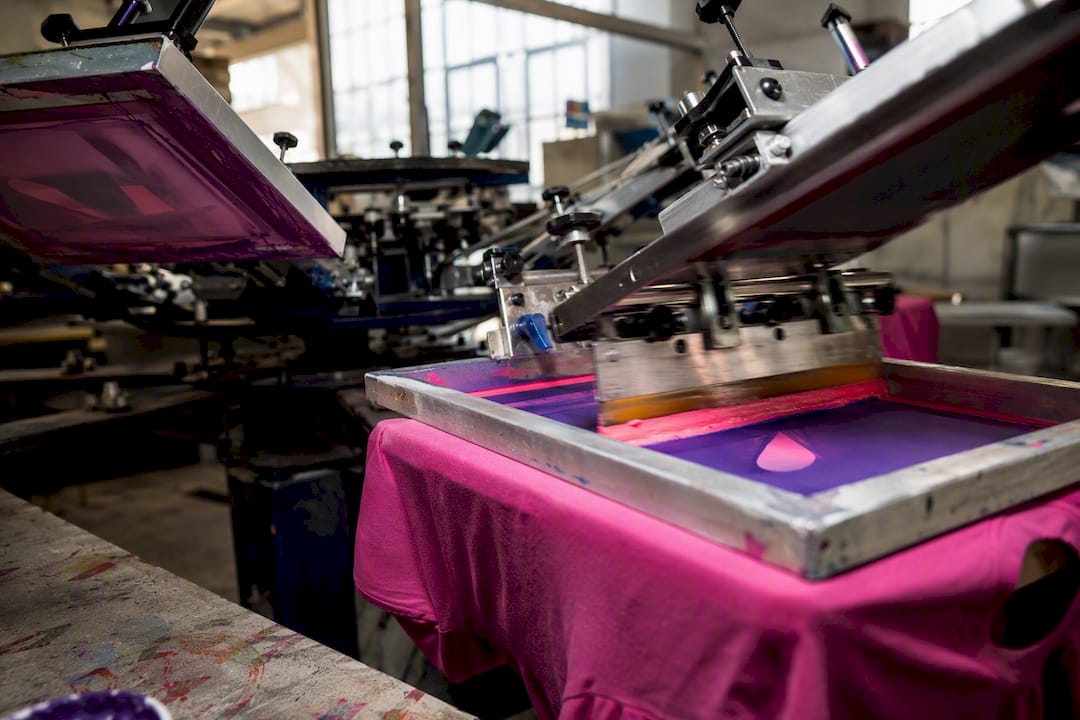
Curing and quality checks happen right after printing. Heat-set ink needs to cure at the correct temperature to bond with the fabric, and a quick inspection catches misprints, color shifts, or placement errors before they ship.
Packaging and dispatch wrap things up. Shirts get folded, bagged if requested, and handed to the carrier. Skipping this last finishing step is one of the few places rush orders save real time.
What Usually Causes T-Shirt Printing Delays?
Most delays trace back to a small handful of repeat offenders, and nearly all of them are avoidable with a little planning.
Unclear or low-resolution artwork tops the list. A blurry logo or a file missing a transparent background forces the printer to pause and request a fix, which can add a full day or more depending on how fast you respond. Slow proof approval is a close second: a proof that sits in your inbox for three days adds three days to your delivery date, no matter how efficient the printer is.
Out-of-stock blanks cause delays too, especially with unusual sizes or colors that need to be reordered from a supplier. Peak season demand compounds all of this, since a shop juggling graduation orders and a corporate event in the same week has less slack to absorb your late proof approval or last-minute size change.
To sidestep these issues, submit print-ready files from the start, respond to proofs within a day, and confirm your garment colors and sizes are in stock before you finalize your order. Ask your printer directly about their current queue, particularly in spring and around the holidays, since a shop that quotes one week in February might need two in May.
Does Custom Apparel Take Longer Than Stock Shirts?
Choosing a custom garment over an off-the-shelf stock shirt adds time at nearly every stage of production, and it’s worth knowing where before you commit to a deadline.
Stock apparel, meaning standard colors and sizes a shop already keeps on hand, skips the sourcing delay entirely. The printer pulls the blank from inventory and moves straight to printing. Custom apparel, whether that means a specific brand of blank, an unusual color, or a special fabric blend, often requires ordering from a supplier first, which can add several days before printing even starts.
Design complexity compounds the difference. A single-color, single-location print on a stock tee is about as fast as production gets. Add a second print location, a specialty ink like glitter or puff, or a multi-color design that requires extra screens, and you’ve added setup time on top of the sourcing delay. For streetwear-style designs with layered graphics, that setup time is worth planning around from the start.
If your event date is firm, lean toward in-stock blanks and simpler print designs. Save the specialty fabric and multi-location artwork for orders where you have real flexibility on the delivery date.
What Actually Matters When You’re Racing a Deadline
Most turnaround advice focuses on the printer’s side of the equation: press speeds, setup times, production schedules. That’s useful, but it skips the part that actually determines whether most people hit their event date. Proof approval speed decides more outcomes than method choice does.
A shop quoting 5 business days for DTG isn’t lying if you approve your proof same-day. It’s a very different number if that proof sits unanswered for two days first. The conventional advice to “order early” is fine but incomplete. Order early, and then treat your proof inbox like it’s on a deadline too, because it is.
The other overlooked factor is asking about queue length instead of assuming a quoted timeline holds during graduation week or December. A printer’s standard turnaround and their actual turnaround during peak season can differ by several days, and most buyers never ask the question that would reveal the gap.
— Jon Will
Ready to Order? Here’s How Shay’s Print Shop Keeps It Fast
Skipping screen setup fees and long minimums matters when your event date isn’t moving. Shay’s Print Shop built its 10 for $99 custom t-shirt package around DTF printing specifically because it skips the multi-hour screen setup that slows down small and mid-size orders elsewhere.
Upload your logo, photo, or design, choose your sizes and colors, and you’ll get a proof back fast enough to keep your production clock on track. The package covers 100% cotton shirts built for reunions, team orders, business events, and anything in between, with US-based fulfillment out of Florida and Massachusetts. If mugs or tumblers fit your event better, the 12 custom coffee mugs for $75 package and the custom tumbler line follow the same fast-proof process. Start your quote today and get a real delivery date, not a guess.
Sources
- How Long Does Custom Shirt Printing Take? (Timeline Guide)
- How long does it take to print a shirt? (Printify guide)
- How Long Does It Take To Print A Shirt: The 2026 Definitive Guide To Production Speed
Recommended
- Best Custom T-Shirt Printing for Small Businesses (2026) – Shay’s Print Shop
- DTG vs DTF for Apparel: Which Method Should You Choose? – Shay’s Print Shop
- Streetwear T-Shirt Printing: Methods, Costs, and How to Start – Shay’s Print Shop
- Fundraising T-Shirt Printing: Bulk vs. Preorder Explained – Shay’s Print Shop
0 comments