

A youth XL typically matches an adult XS to small in chest width but runs noticeably shorter in body length. That single difference causes most of the sizing surprises in mixed-size group orders. Here are four conversion rules you can apply right now:
- Chest first, length second. Compare flat chest measurements (half the full circumference) before checking length. A youth XL chest of 33–36 inches sits right at the adult XS range, but the body length will be noticeably shorter.
- Expect a consistent length gap. Youth shirts are cut shorter through the torso at every size. That gap doesn’t disappear at the top of the youth range.
- Age labels are a starting point, not a guarantee. Clothing Digest recommends measuring chest and body length rather than relying on age labels, because two kids the same age can need completely different sizes.
- Youth XL is not the same as adult small. According to Size, a youth XL is designed for ages 16–18, heights of 62–67 inches, and a chest of 33–36 inches. An adult small typically starts at a 34–36 inch chest but adds 2–4 inches of body length. The chest overlaps; the proportions do not.
For custom apparel and mixed-size runs, those differences directly affect print placement, artwork scaling, and how finished shirts look on the people wearing them.
Key Takeaways
Youth XL and adult XS share a chest range of roughly 33–36 inches but differ by 2–4 inches in body length, making measurement the only reliable way to match sizes for custom or group orders.
| Point | Details |
|---|---|
| Chest overlaps, length doesn’t | Youth XL matches adult XS in chest (33–36 in) but runs 2–4 inches shorter in body length. |
| Measure, don’t guess | Measure flat chest and body length on the garment; chest circumference and torso length on the person. |
| Brand cuts vary | Bella+Canvas youth runs slimmer and shorter than Gildan or Port & Company at the same size label. |
| Scale artwork per size group | One artwork file rarely works across youth and adult sizes; create placement guides for at least two size groups. |
| Shaysprintshop for group runs | Shaysprintshop handles mixed-size custom orders with sample approvals and bulk pricing starting at 10 shirts for $99. |
Table of Contents
- How do youth and adult sizes compare in measurements?
- What are the measurement differences brand by brand?
- How do youth and adult shirts actually fit, and who should pick each?
- What do you need to check before printing on mixed youth and adult sizes?
- How do you measure for the right size?
- How do you manage a mixed-size group order without surprises?
- Shaysprintshop quick reference for youth and adult orders
- What experienced custom printers see go wrong with mixed-size orders
- Custom mixed-size shirts, priced for groups
- Sources
How do youth and adult sizes compare in measurements?
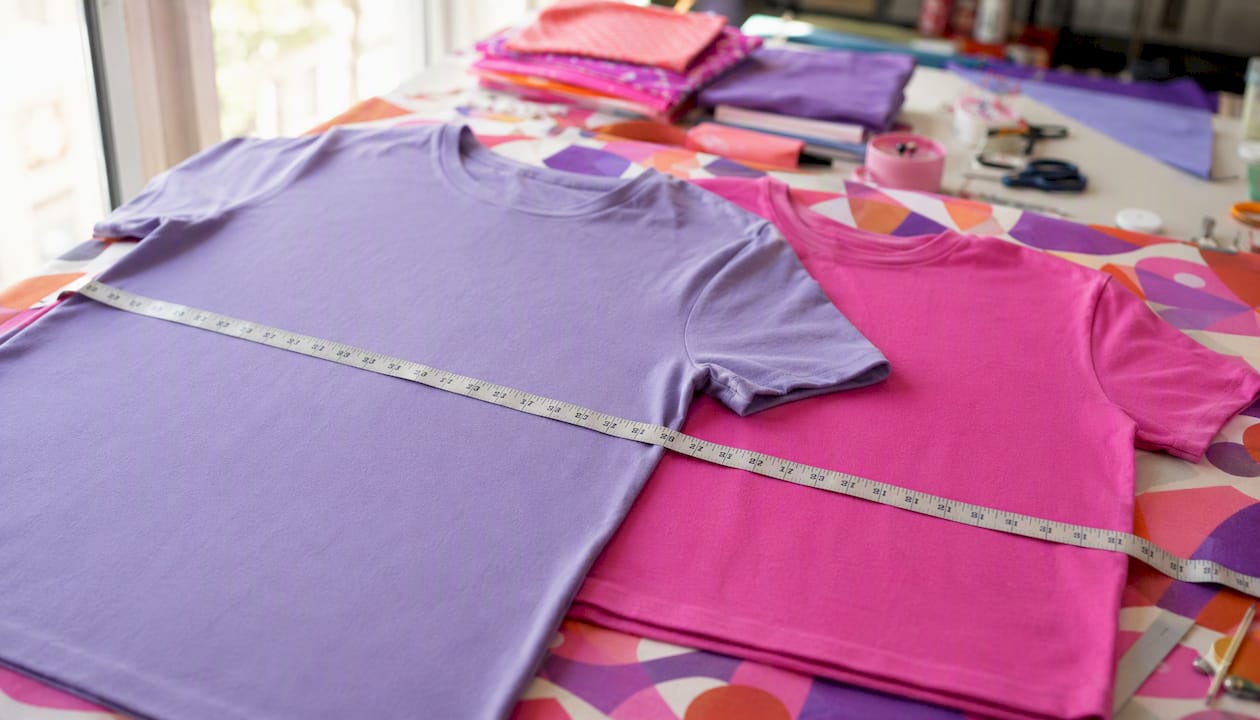
The table below uses typical flat-lay measurements across major blank-shirt brands. “Flat chest” is half the full chest circumference, measured across the front of the shirt. “Body length” runs from the high point of the shoulder to the hem.
| Size Label | Flat Chest (inches) | Body Length (inches) | Height / Age Mapping | Adult Equivalent Note |
|---|---|---|---|---|
| Youth XS | 12–13 | 17–18 | Ages 4–5 | No adult equivalent; child only |
| Youth S | 13–14 | 18–19 | Ages 6–7 | No adult equivalent; child only |
| Youth M | 14–15 | 19–20 | Ages 8–10 | No adult equivalent; child only |
| Youth L | 15–16 | 20–21 | Ages 10–12 | Approaches adult XS in chest only |
| Youth XL | 16.5–18 | 21–23 | Ages 16–18, 62–67 in | Adult XS–S in chest; 2–4 in shorter |
| Adult XS | 16–17 | 25–26 | Adults 5’ | Closest adult match to youth XL |
| Adult S | 17–18 | 27–28 | Adults 5’4"–5’8" | Wider and longer than youth XL |
| Adult M | 18–20 | 28–29 | Adults 5’6"–5’10" | Noticeably larger than any youth size |
Key deltas to memorize: Youth XL and adult XS share a chest range (roughly 33–36 inches full circumference), but adult XS is 2–4 inches longer in the body. Shoulder width and sleeve length also run narrower and shorter in youth cuts. For print placement, that body-length difference shifts the chest print zone up by 1–2 inches on a youth shirt compared to the same adult size.
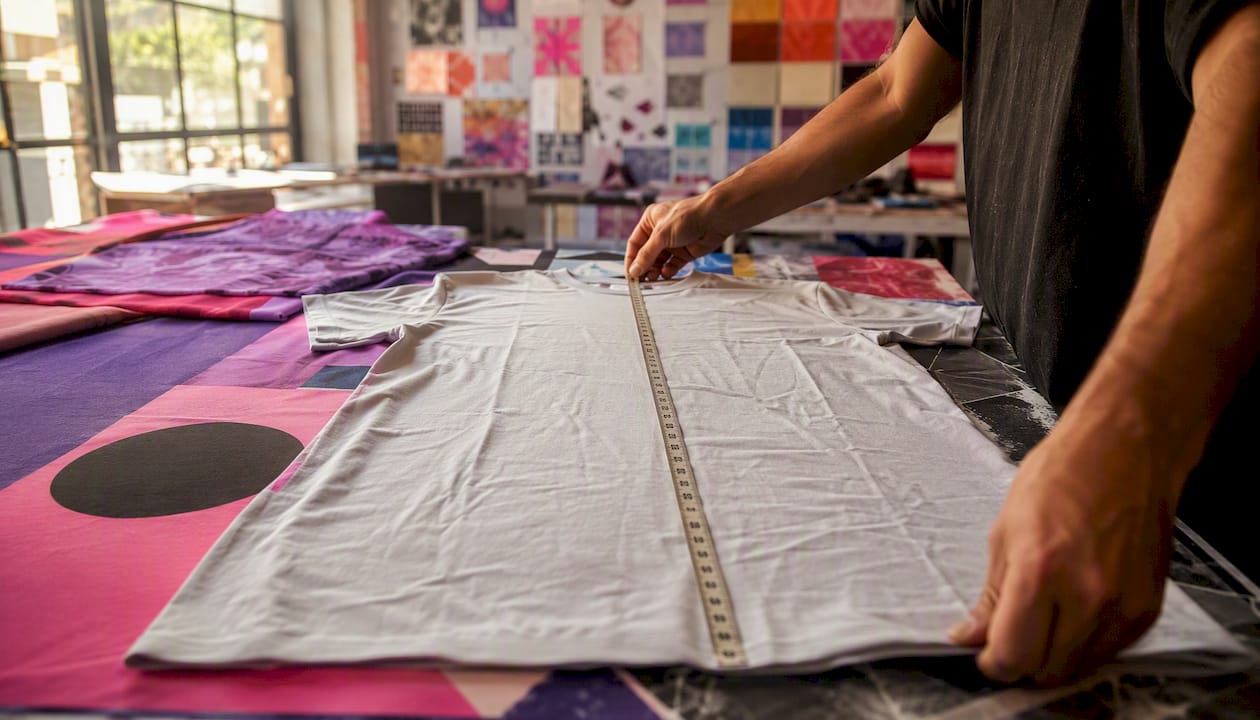
Measuring method matters here. For a garment, lay it flat and measure straight across the chest from armhole seam to armhole seam. For body length, measure from the center back of the collar seam straight down to the hem. Those two numbers, not the size label, are what you actually need when placing a custom order.
Crescendo Apparel notes that even when a youth garment matches an adult size in one dimension, the proportions differ throughout: narrower shoulders, a shorter torso, and a different sleeve pitch. That’s why a teen who fits a youth XL in the chest may still prefer an adult XS for the longer body coverage.
What are the measurement differences brand by brand?
Every brand cuts its blanks slightly differently. Before you commit to a mixed-size run, pull the specific brand’s size chart and compare it against the standard deltas above.
Gildan
Gildan’s youth sizes (common styles: 5000B, 2000B) run boxy with a relaxed fit. A Gildan youth XL typically measures about 17–18 inches flat chest and 22–23 inches body length. The adult Gildan 5000 in XS measures about 17–18 inches flat chest and 27–28 inches body length. The chest overlaps almost exactly; the body length gap is roughly 5 inches.
Bella+Canvas
Bella+Canvas youth tees (3001Y) run slimmer and more fitted than Gildan. A youth XL in the 3001Y measures approximately 16.5–17.5 inches flat chest and 21–22 inches body length. The adult 3001 in XS runs about 16–17 inches flat chest and 25–26 inches body length. The slim cut means a stocky teen may find the chest tight even if the label says XL. For printing, the narrower chest on Bella+Canvas youth limits the usable print area compared to Gildan youth of the same size label.
Hanes
Hanes youth shirts (5450) tend to run slightly wider than Bella+Canvas but narrower than Gildan. Youth XL measures roughly 17–18 inches flat chest and 21–22 inches body length. Hanes uses a tagless collar and a slightly longer body than some competitors at the same size, which gives a little more print real estate on youth sizes. Pre-shrunk options are available and worth specifying for mixed-size orders.
Next Level Apparel
Next Level youth tees (3310) are cut for a modern, fitted silhouette. Youth XL runs about 16–17 inches flat chest and 20–21 inches body length, making it one of the shorter youth XL options on the market. The adult Next Level 3600 in XS measures about 16–17 inches flat chest and 25–26 inches body length. The body-length gap here can reach 5 inches, so artwork that looks centered on an adult XS will sit noticeably higher on a Next Level youth XL.
Port & Company
Port & Company youth tees (PC54Y) are a workhorse option for group orders. Youth XL measures approximately 17–18 inches flat chest and 22–23 inches body length. The fit is relaxed, similar to Gildan, and the fabric weight (5.4 oz) is comparable. Port & Company adult XS in the PC54 runs about 17–18 inches flat chest and 27–28 inches body length. A reliable, consistent blank for mixed-size runs because the proportions are predictable across the size range.
Nike and Under Armour
Nike and Under Armour youth performance tees are cut for athletic movement, with a longer back hem, shorter front, and a tapered torso. A Nike youth XL (Core Cotton tee) typically measures 17–18 inches flat chest and 22–24 inches body length. Under Armour youth XL (Tech Tee) runs similarly. For custom printing on performance fabrics, confirm your print method is compatible before ordering in bulk.
Pro Tip: Always pull the specific style number’s size chart, not just the brand’s general chart. A Gildan 5000B and a Gildan 64000B (Softstyle) can differ by an inch in chest and length at the same size label.
Check marketplace listings for popular blank SKUs to cross-reference seller-provided measurements against the manufacturer chart before committing to a style.
How do youth and adult shirts actually fit, and who should pick each?
The measurement numbers tell part of the story. The fit experience tells the rest.
Proportion differences between youth and adult cuts:
- Shoulder slope: Youth shirts have a steeper shoulder slope and narrower shoulder seam placement. On an adult, this creates a dropped-shoulder look.
- Sleeve length: Youth sleeves are shorter and set at a narrower angle. A petite adult in a youth XL will notice the sleeve hits higher on the arm.
- Torso length: Youth shirts end 2–4 inches higher at the hip. For most adults, this means the shirt doesn’t fully tuck or cover the waistband.
- Neck opening: Youth collars are smaller in circumference. Some adults find youth necklines uncomfortably tight.
- Waist taper: Youth shirts have less waist shaping than fitted adult cuts, but more than boxy adult unisex styles.
Pick youth sizing when:
- The wearer is a child or pre-teen who fits within the youth XS–L chest range.
- A petite adult wants a cropped or shorter fit intentionally.
- Budget is a factor and the person’s chest measurement falls within the youth XL range (33–36 inches full circumference).
- The order is for a youth sports team where athletic youth cuts match the intended use.
Pick adult sizing when:
- The wearer is a teen with a chest over 36 inches or a torso longer than 23 inches.
- A stocky or broad-shouldered child has outgrown youth proportions even if the chest measurement still fits.
- The shirt needs to cover the waistband or be tucked in.
- The print design requires a larger canvas or a lower chest placement.
Pro Tip: When you’re unsure whether a specific person sits at the youth XL or adult XS crossover, order one sample in each and compare them side by side before committing to a full run.
What do you need to check before printing on mixed youth and adult sizes?
Mixing youth and adult sizes in one print run introduces real production variables. Here’s a numbered checklist to work through before you send files to production.
- Confirm flat measurements for every size in the run. Don’t rely on size labels. Get the flat chest and body length for each style and size you’re ordering.
- Set print placement by the smallest size. The chest print on a youth XS or S will sit much higher and cover a smaller area than on an adult L. Confirm the placement works on the smallest garment first.
- Scale artwork proportionally for youth sizes. Shrinking artwork by the same percentage as the size difference is a common mistake. A design that fills 10 inches wide on an adult M should not simply be reduced to 7 inches on a youth S without checking how it reads visually. Scale for visual weight, not just dimension.
- Account for maximum print area by size. A typical adult M allows a chest print area of roughly 12 × 14 inches. A youth S may allow only 8 × 9 inches. Design your artwork so it works at both scales, or create two versions.
- Specify pre-shrunk fabrics if your run mixes washed and unwashed garments. Cotton shrinks 5–8% after the first wash. On a youth shirt with a 22-inch body length, that’s up to 1.75 inches of movement, which can shift a chest print noticeably.
- Request a sewn sample or print-on-sample before the full run. This is the single most effective step for catching placement and scaling errors. Shaysprintshop’s production guidance recommends sample approvals and confirming exact print placement when mixing youth and adult sizes.
- Confirm ink coverage compatibility with the fabric. Performance fabrics (polyester blends from Nike, Under Armour) require different DTF settings than 100% cotton blanks. Mixed-fabric runs need separate production setups.
Additional production items to include with your order:
- Flat measurements for each size and style (not just the size label)
- Desired fit description (relaxed, fitted, cropped)
- Artwork files at full resolution with placement guides for both youth and adult sizes
- Confirmation of pre-shrunk fabric preference
- Sample approval requirement before bulk production begins
Pro Tip: Register your mock-up on the actual garment template for each size, not just scaled down from the adult template. Most print software lets you place artwork on a size-specific template — use it.
How do you measure for the right size?
A repeatable measurement method eliminates most sizing mistakes. Here’s how to measure both a person and a garment.
Measuring a person:
- Chest circumference: Wrap a flexible tape measure around the fullest part of the chest, keeping it level and snug but not tight. Record the full circumference in inches.
- Height: Measure barefoot, standing straight against a wall. Record in inches.
- Torso length: Measure from the base of the neck (where a collar would sit) straight down to the natural waist. This tells you whether a youth shirt’s shorter body will cover enough of the torso.
Measuring a garment:
- Flat chest: Lay the shirt flat. Measure straight across the front from armhole seam to armhole seam. Multiply by two for the full chest equivalent.
- Body length: Measure from the highest point of the shoulder seam (at the collar) straight down to the hem.
- Sleeve length: Measure from the center back of the collar to the end of the sleeve cuff, running over the shoulder seam.
Converting measurements to a size:
- Compare the person’s full chest circumference to the garment’s flat chest × 2. For a comfortable fit, the garment’s full chest should be 1–2 inches larger than the person’s chest for a fitted look, or 3–4 inches larger for a relaxed fit.
- If the person’s chest falls in the youth XL range (33–36 inches) and the torso length is under 22 inches, a youth XL likely fits. If the torso is longer, move to adult XS.
- When the chest measurement sits between two sizes, choose the size that gives the preferred body length rather than the tighter chest fit.
Measurement checklist:
- Full chest circumference recorded
- Height recorded
- Torso length recorded
- Garment flat chest measured and doubled
- Garment body length measured
- Sleeve length measured if relevant
- Fit preference noted (fitted vs. relaxed)
How do you manage a mixed-size group order without surprises?
Group orders for teams, reunions, and events are where sizing confusion causes the most problems. A clear workflow prevents returns and reprints.
Ordering tips for group organizers:
- Collect exact chest measurements from every participant before placing the order. A size preference form that asks for chest circumference (not just “S/M/L”) cuts misorders significantly.
- Ask each person whether they prefer a fitted or relaxed fit. Someone who measures 35 inches in the chest may want a youth XL for a snug fit or an adult S for a relaxed one.
- Order samples in the sizes at the crossover point (youth XL and adult XS/S) before committing to the full run. See the bulk t-shirt ordering guide for lead-time guidance on sample orders.
- Standardize on one brand for the entire order. Mixing Gildan and Bella+Canvas in the same run means two different body lengths, two different chest widths, and two different shrinkage rates at the same size label.
- Plan your artwork grading. If you have sizes from youth S through adult XL in one order, you may need three artwork scales: one for youth XS–M, one for youth L–XL, and one for adult sizes.
- Build in a 5–10% buffer on the most popular sizes for replacements and late additions.
Sample-order checklist:
- Order at least one sample in youth XL and adult XS/S for crossover sizes
- Approve print placement on the smallest size in the run
- Confirm body length and chest width match your measurement data
- Allow 3–5 business days for sample production before approving bulk
Pro Tip: Specify pre-shrunk fabrics for the entire order. When youth and adult shirts are washed together after an event, pre-shrunk blanks keep the print placement consistent across all sizes.
Shaysprintshop quick reference for youth and adult orders
Here’s how Shaysprintshop approaches mixed-size custom orders, with sample measurements and operational details to help you plan.
Sample measurements used as internal reference (illustrative; verify against your chosen style’s manufacturer chart):
- Youth M: approx. 14–15 in flat chest, 19–20 in body length
- Youth XL: approx. 17–18 in flat chest, 22–23 in body length
- Adult XS: approx. 16–17 in flat chest, 25–26 in body length
- Adult S: approx. 17–18 in flat chest, 27–28 in body length
- Adult M: approx. 18–20 in flat chest, 28–29 in body length
Operational notes:
- Sample orders typically turn around in 3–5 business days; bulk orders vary by quantity and complexity.
- The 10 shirts for $99 bulk package covers 100% cotton DTF-printed shirts and works for mixed-size runs when you specify sizes at checkout.
- Mixed-size production runs are handled by confirming flat measurements for each size, approving a sample before bulk production, and scaling artwork for each size group.
- Include your flat measurements, fit preference, and artwork placement specs with every order to avoid back-and-forth delays.
Pro Tip: Send your size breakdown (how many of each size) along with your artwork file when you first reach out. It lets the production team flag any placement issues before production starts, not after.
What experienced custom printers see go wrong with mixed-size orders
Most mixed-size order problems come down to three assumptions: that youth length equals adult length, that one artwork file works for all sizes, and that the same brand name means the same measurements across styles.
Dos and don’ts from the production floor:
- Do send a sample approval request before bulk production. One sample catches 90% of placement and scaling errors.
- Don’t assume youth XL body length equals adult XS body length. They share a chest range, but the body length gap is real and consistent across brands.
- Do pick one brand for the entire order when possible. Cross-brand runs introduce measurement variables that complicate artwork scaling and shrinkage planning.
- Don’t submit a single artwork file and expect it to scale correctly across youth and adult sizes. Provide placement guides for at least two size groups.
- Do specify pre-shrunk fabrics, especially when youth and adult shirts are going to the same group and will be washed together.
Custom mixed-size shirts, priced for groups
Placing a custom order that spans youth and adult sizes doesn’t have to be complicated.
The 10 shirts for $99 package is a straightforward starting point for groups: pick your sizes, upload your design, and get printed shirts in your hands fast. Whether your order spans youth M through adult XL or sits entirely at the youth/adult crossover, the process is the same. Specify your flat measurements, confirm your artwork placement on a sample, and let the production team handle the rest. Ready to place your order? Visit the custom shirts page to get started.
Sources
Use these resources to verify exact measurements for the specific style you’re ordering before placing a bulk run.
- Youth Size Chart: Youth Small, Medium and Large by Age
- How Do Kids Clothes Sizes Work: The Complete Parent’s Guide | Clothing Digest
0 comments