

Vintage bootleg graphics, Y2K maximalism, embroidered soft-stitch textures, and personalized occasion shirts are leading 2026 t-shirt design trends, while single-placement minimalism holds steady as the quiet alternative. Pick one lane that fits a specific buyer and occasion, order a small test run, and let real interest tell you whether to scale. Your blank and print choice matter almost as much as the artwork itself.
TL;DR:
- Testing small batches with 10 to 25 units on a specific buyer group or occasion helps validate trend success before large-scale production.
- Using garment-dyed cotton blanks in the 6 to 7 ounce range enhances the authentic vintage or faded look crucial for certain trends like bootleg or nostalgic graphics.
- DTF printing is the preferred method for detailed, multi-color designs such as Y2K maximalism, pet portraits, or gradients, while screen printing suits simple, bold graphics for mass orders.
- Trendy graphics such as food art, celestial motifs, and personalized occasion shirts perform best when paired with the right blank, print technique, and timely marketing tied to actual events.
- Focusing on niche differentiation, specific occasions, and well-chosen aesthetics prevents oversaturated markets and increases the chances of repeated sales.
Table of Contents
- The Top T-Shirt Trends 2026 Buyers Are Actually Chasing
- Matching Blanks, Weights, and Print Methods to Each Look
- How to Test a Trend Before You Commit to a Bulk Order
- What We’re Seeing Work in Real Orders
- Why Your Blank Choice Decides If a Trend Actually Works
- Sustainability Is Showing Up in the Shirt, Not Just the Message
- Where Smart Textiles Fit Into 2026 Custom Apparel
- How Cultural Moments Shape What People Want to Wear
- The Printing Methods Actually Worth Using in 2026
- Marketing a Trend-Driven Shirt So It Actually Sells
- What Actually Matters When You’re Chasing a Trend
- Test Your Next Design With a Low-Cost Starter Run
- Sources
- FAQ
The Top T-Shirt Trends 2026 Buyers Are Actually Chasing
You don’t need to chase every direction in graphic tees this year. You need three or four that fit your customers, and a way to test them before you commit to a bulk order. Below are the visual directions actually showing up in marketplace data and trend forecasting for 2026, with a plain-language note on who buys each one and how to produce it so it looks right, not cheap.
-
Food art. Retro can labels, diner menu graphics, and oddly specific food references (think sardine tins, hot sauce bottles, coffee cups) are having a moment, partly fueled by food-culture virality on social platforms that turns a random snack into a cultural signal worth designing around. It fits foodie small businesses, farmers markets, and restaurant merch. Print with DTF on a garment-dyed cotton tee so the colors sit warm and slightly faded, chest placement, medium size.
-
Celestial and mystical motifs. Moon phases, tarot-inspired line art, and star charts keep resurfacing across wellness brands and gift shops. It works for boutique retailers and anyone selling to a spiritual or self-care audience. Screen print in one or two ink colors on a soft midweight blank; oversized back placement reads more intentional than a small chest logo here.
-
Nostalgic and retro bootleg. Faux-vintage band tee layouts, distressed graphics, and “bootleg” style typography borrowed from '90s concert merch are one of the strongest lanes forecasters point to for 2026, according to Wear2AM’s breakdown of competing aesthetic directions. It fits event merch, small brands wanting instant personality, and anyone selling to a younger buyer. DTF on a washed cotton tee, single front placement, sized slightly oversized for the cropped-in look bootleg graphics need.
-
Y2K maximalism. Bright gradients, chrome text effects, and busy layered graphics are back, aimed squarely at Gen Z buyers who want a tee that looks loud in a photo. It suits streetwear sellers and youth-focused events. DTF is the right call here because it handles gradients and fine detail that screen print struggles with; keep the blank a plain cotton-poly blend so the print pops without competing texture.
-
Hand-drawn and illustrative. Loose ink-line characters, doodle-style borders, and sketchbook aesthetics give a shirt a handmade feel even when it’s mass-produced. It’s a natural fit for artists, indie brands, and gift shops. Screen print works well for flat color hand-drawn art; chest placement keeps it personal rather than shouty.
-
Minimalist text and repeating text. A single word, a short phrase, or a small phrase repeated in a grid pattern continues to perform for buyers who want something wearable outside the original context. It fits professional services, subtle brand merch, and anyone who wants a shirt they’d actually wear to the grocery store. Single-placement chest print, one ink color, premium cotton blank. This is the safest bet if you’re testing your first design.
-
Faded pastels and muted brights. Instead of true pastel or true neon, 2026 designs increasingly split the difference: washed-out color combinations that read soft in photos but still pop against a garment-dyed shirt, a direction Printify’s design guidance backs with its two-to-four color rule judged against the actual blank color. Works for lifestyle brands and gift shirts. Match to a washed or garment-dyed blank, never a stark white fast-fashion tee, or the faded effect disappears.
-
Botanical and earthy motifs. Pressed-flower line art, mushroom illustrations, and muted greens and browns keep showing up across marketplace trend reports as a steady, evidence-backed direction for 2026, per MerchBanao’s trend synthesis. Fits wellness brands, plant shops, outdoor businesses. Screen print in earthy ink tones on a natural or sage cotton blank.
-
Embroidered and soft-stitch textures. Actual embroidery or DTF prints designed to mimic a soft-stitch look are named specifically in marketplace trend data as a rising direction for 2026. It signals a premium product instantly, which makes it ideal for small businesses that want their merch to look higher-end than a basic screen print. Small chest placement, always on a heavier midweight blank so the stitching (or faux-stitch print) has structure to sit on.
-
Protest and statement shirts. Bold, short declarative phrases tied to causes or values continue to move, especially around elections, awareness months, and community events. Fits nonprofits, advocacy groups, and community organizers. Screen print in one high-contrast color, oversized back or full front placement so the message reads from a distance.
-
Custom and personalized occasion shirts. Family trip shirts, pet portrait tees, and reunion apparel are among the strongest demand signals in Etsy’s marketplace data heading into 2026, according to Kittl’s trend and seller report. This is the single most reliable category on this whole list because the buyer already knows what they want before they land on your site. DTF on a premium washed cotton blank, because these shirts double as keepsakes people wear for years.
-
Oversized back graphics. A large design centered on the back with a small or no front print continues gaining ground, especially for band-style and event merch. Fits concerts, races, and brand drops that want a “walk-away” impact. Requires a DTF or screen print large enough to hold detail at scale; use a slightly oversized fit so the back panel has room to breathe.
-
Single-placement minimalism. One small graphic, one spot, nothing else on the shirt. It’s the opposite of maximalist Y2K, and it’s just as strong a lane because it appeals to buyers who want something they’ll actually wear daily. Fits professional brands, subtle merch, everyday wear. Chest or sleeve placement, one or two colors, screen print or DTF depending on detail level.
-
Vintage travel and tourist tees. Faux souvenir shirts referencing a made-up destination, retro postcard graphics, and “tourist trap” style type treatments are a named alternative Who What Wear points to as a replacement for dated tie-dye and logo-heavy styles. Fits gift shops, event merch, and travel-adjacent small businesses. DTF on garment-dyed cotton for that sun-faded look.
-
Animal motifs. Specific breed illustrations, wildlife line art, and pet-focused graphics keep performing, tying closely into the personalized occasion category above. Fits pet businesses, animal rescues, and any family ordering a shirt with their dog’s face on it. DTF for photo-accuracy portraits, screen print for simpler line-art versions.
-
Matching and group tees. Coordinated designs for bachelorette weekends, sports teams, and work retreats remain one of the most consistent bulk-order categories year over year. Fits event planners and team organizers directly. Bulk DTF printing on a consistent blank color across sizes keeps the group photo looking sharp.
-
Sustainability-themed designs. Shirts referencing eco values, secondhand culture, or “wear it don’t waste it” messaging are showing up more in 2026 as buyers pay closer attention to where their apparel comes from. Fits eco-conscious brands and nonprofits. Pair the message with an actual sustainable-leaning blank choice, discussed more below, or the design reads hollow.
-
Bold typographic statements. Large, confident type treatments, sometimes a single word stretched edge to edge, remain a dependable seller because they photograph well and translate instantly on social media. Fits nearly any small business. Screen print for crisp edges, single-placement front print.
What to skip in 2026: Who What Wear’s forecasting names six styles specifically identified as dated heading into this year: tie-dye, pre-rolled sleeves, knotted-waist tees, unsubtle logo shirts, embellished shirts, and pocket tees. If your current lineup leans on any of these, that’s your cue to redirect the budget toward retro stripes, tourist-style graphics, or a clean minimalist tee instead. Old inventory isn’t wasted, but new production dollars should skip this list.
Matching Blanks, Weights, and Print Methods to Each Look
A great graphic on the wrong blank looks cheap no matter how good the artwork is. Material and fit decide whether a design actually lands with the customer, a point Wear2AM’s practitioner analysis makes clear when comparing why some 2026 aesthetics succeed and others fall flat despite similar artwork quality.
- Choose the blank based on the finished look you want. A 100% cotton garment-dyed or washed tee gives you that soft, slightly faded surface that retro, bootleg, and tourist-style graphics need to look authentic rather than printed yesterday. A cotton-poly blend holds sharper detail and brighter color, which suits Y2K maximalism and photo-accurate pet portraits.
- Pick a weight in the 6 to 7 ounce range for most orders. Anything lighter feels flimsy and shows print-through on darker inks. Anything heavier gets expensive fast and can feel stiff for warm-weather events. The 6 to 7 ounce midweight range is the sweet spot for durability without sacrificing drape.
- Match the print method to the texture you’re after. DTF (direct-to-film) handles gradients, photo detail, and multi-color designs, which makes it the right call for Y2K graphics, pet portraits, and anything with fine linework. Screen printing is better for flat, one- or two-color designs like protest tees or bold typography, and it holds up longer on high-wear items like reunion shirts printed in bulk. Discharge printing removes the shirt’s original dye and replaces it with ink that soaks into the fabric, which is how you get that broken-in, vintage-bootleg look without waiting years for actual wear. Embroidery, or a DTF print styled to mimic stitching, gives you that soft-stitch texture buyers are responding to right now.
- Decide placement based on how refined you want the final product to feel. Single-placement chest prints read minimalist and premium. Oversized back graphics create visual impact from a distance, ideal for events and concerts. A chest-offset placement, slightly off-center rather than dead center, gives a design a more casual, lived-in feel that suits hand-drawn and illustrative styles.
Pro Tip: Order one sample in your intended blank and weight before you commit to a bulk run. Photos on a screen never tell you how a garment-dyed cotton tee actually drapes, and that’s the detail that makes or breaks whether a “vintage” design looks real or looks like a costume.
Care and durability matter more than most sellers assume. A heavier cotton blank holds up to repeated washing better than a thin fast-fashion tee, which reduces returns and complaints, especially for keepsake orders like reunion or memorial shirts that a family plans to keep for years. Cheaper blends save money upfront but tend to pill and fade faster, which shows up in reviews within a few months, not years.
How to Test a Trend Before You Commit to a Bulk Order
Trends aren’t guaranteed sellers. Marketplace data consistently shows that success depends on matching a trend to a defined audience and a specific occasion, not just copying whatever’s popular. Treat every trend on the list above as a visual ingredient you combine with a real buyer and a real moment, not a finished recipe.
Here’s a simple four-step framework to validate before you scale:
- Define the buyer first. Are you designing for a family planning a reunion, a sports mom stocking up for the season, or a small business owner wanting staff shirts? Name the buyer before you touch the design software.
- Pick a seasonal window. Trend-driven items convert best when they’re tied to an actual occasion, spring break travel, back-to-school, a specific holiday, rather than dropped with no context.
- Order a small test run. Ten to twenty-five units is enough to gauge real interest without tying up cash in a design that might not move. If a design sells through quickly at that size, it’s a strong signal to reorder in bulk.
- Track preorders and direct interest before scaling. A design that gets zero preorder interest or lukewarm reactions from your actual audience is a red flag, no matter how many trend articles feature the aesthetic.
A crowded trend usually means the smartest move isn’t to abandon it, it’s to niche it down. If everyone’s doing vintage bootleg graphics, narrow yours to a specific recipient (a specific sports team, a specific hometown, a specific pet breed) and launch inside a tight seasonal window rather than competing head-on with generic versions of the same idea. Pricing and tagging matter here too: use the specific occasion or trend term in your product title and description (family reunion, retro bootleg, pet portrait) so search and marketplace algorithms can match your shirt to buyers already looking for it.
What We’re Seeing Work in Real Orders
A lot of custom shirt printing shows recurring patterns. Family reunion kits, pet portrait tees, sports mom runs, and small business promo shirts often outperform pure trend-chasing designs, because the buyer already has a reason to purchase before they see the artwork.
If you’re starting from scratch, here’s a practical starter kit: order two blanks, one premium garment-dyed cotton tee and one midweight cotton-poly blend, pair each with one personalized design (a family name, a pet photo, an event date) and one trend piece from the list above. Print both with DTF on 100% cotton and order ten shirts to test real reaction before committing to more.
Why Your Blank Choice Decides If a Trend Actually Works
The graphic gets all the attention, but the blank underneath it is doing half the work. A premium, garment-dyed cotton tee holds ink differently than a stiff fast-fashion blank fresh off a warehouse shelf, and that difference shows up the moment a customer touches the shirt.
Washed and garment-dyed cotton tees have a softer hand-feel right out of the package, no break-in period required. That matters most for trends like vintage bootleg, tourist-style graphics, and faded pastels, where the whole visual concept depends on looking like it’s been worn and washed a dozen times already. A crisp, stiff blank undercuts that effect no matter how well the print job goes.
Weight matters just as much as finish. Anything under 5 ounces tends to feel thin and shows print-through, especially with dark or saturated inks. The 6 to 7 ounce range holds up to repeated washing, drapes better on most body types, and reads as a quality garment rather than a promotional throwaway. Fast-fashion blanks cut costs by going lighter and thinner, and customers notice within a few washes, even if they can’t articulate exactly why the shirt feels cheap.
If you’re choosing between a cheaper blank and a better one, remember that the blank is the foundation the entire design sits on. A great graphic on a poor blank still reads as a poor product.
Sustainability Is Showing Up in the Shirt, Not Just the Message
Eco-conscious buying habits are shaping 2026 t-shirt trends in two ways: what the design says, and what the shirt is actually made of. Sustainability-themed graphics, secondhand culture references, “rewear don’t waste” messaging, are showing up more often as a design category on their own. But buyers are increasingly checking whether the product backs up the message.
That’s pushing more small businesses toward heavier, longer-lasting cotton blanks instead of thin fast-fashion tees that fall apart after a season. A shirt that lasts three years instead of three washes is a sustainability decision, even without a single eco-slogan printed on it. Durable materials reduce the churn-and-replace cycle that drives a lot of apparel waste in the first place.
Print method plays a role too. Screen printing and DTF, when applied to a well-made blank, produce a shirt built to be worn for years, not a season. Buyers pairing an eco-conscious message with a shirt that falls apart quickly create a credibility gap that shows up in reviews. If sustainability is part of your brand story, the durability of the blank underneath your design needs to match the message printed on top of it.
Where Smart Textiles Fit Into 2026 Custom Apparel
Smart textiles, fabric embedded with sensors, LEDs, or conductive thread, get a lot of buzz in fashion coverage, but they remain a niche category for custom and small-batch apparel heading into 2026. The cost and manufacturing complexity keep this technology mostly in the hands of large fashion houses and specialty athletic brands, not the small business ordering a batch of reunion shirts or event merch.
Where technology is actually changing custom apparel right now is in design and production, not the fabric itself. DTF printing lets small businesses produce photo-accurate, full-color graphics that would have required expensive screen setups just a few years ago. Design software has made it easier for a family organizing a reunion or a small business owner with no design background to build a professional-looking graphic from a template or an uploaded photo.
QR codes printed directly onto shirts are a low-cost, practical piece of “smart” apparel worth watching, linking a shirt to a website, a playlist, or a digital guestbook for an event. It’s a simple technique that adds interactivity without the cost of embedded electronics. For most small businesses and individuals ordering custom apparel in 2026, the more realistic technology investment is in the design and printing process, not in the shirt’s fabric.
How Cultural Moments Shape What People Want to Wear
T-shirt graphics have always tracked what’s happening in culture, and 2026 is no exception. Food-culture virality is a clear example: a random snack or ingredient goes viral on social platforms, and within weeks it’s showing up as retro-style graphics on shirts and merch. That’s a useful signal for small businesses watching for the next micro-trend worth testing in a small batch.
Protest and statement shirts follow a similar pattern, tied closely to elections, awareness campaigns, and community organizing moments. These shirts move fastest when they’re tied to a specific, timely cause rather than a generic value statement, which is part of why timing a launch to an actual event or awareness month outperforms a shirt dropped with no context behind it.
Nostalgia itself is a cultural response worth noting. The strength of vintage bootleg and Y2K aesthetics in 2026 isn’t random; it reflects a broader cultural pull toward decades that feel simpler in hindsight, especially among younger buyers who didn’t experience those eras firsthand. Watching what’s trending in music, food, and entertainment culture generally gives you a two to four week head start on what’s about to show up as a t-shirt graphic. Small businesses that pay attention to these cultural signals, rather than only watching apparel trend reports, tend to catch a trend earlier and cheaper.
The Printing Methods Actually Worth Using in 2026
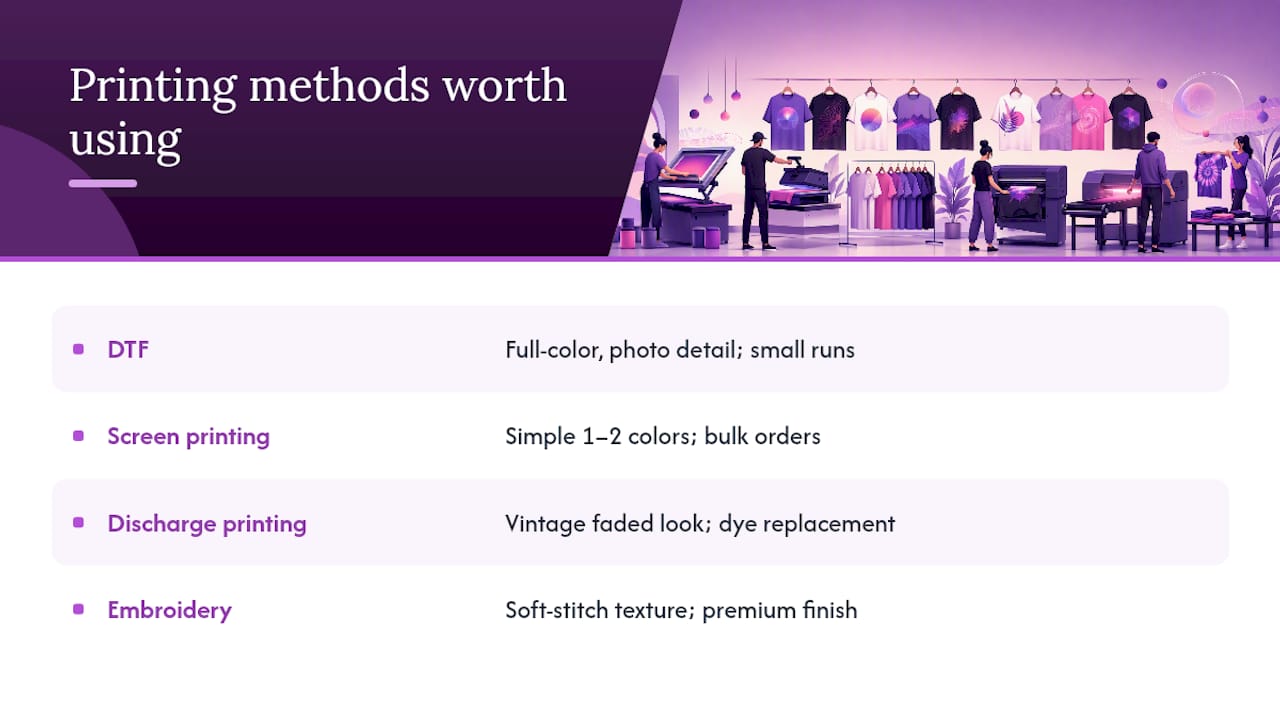
DTF (direct-to-film) printing has become the default for full-color, photo-detail, and gradient-heavy designs, and it’s the method behind most of the personalized and Y2K-style trends covered above. It handles fine detail and unlimited colors without the setup cost screen printing requires for complex designs, which makes it the practical choice for small runs and one-off personalized orders.
Screen printing hasn’t gone anywhere and remains the stronger choice for simple, one- or two-color designs, especially bold typography, protest shirts, and bulk orders where the same design repeats across dozens or hundreds of units. It holds up longer under heavy washing than most digital methods, which matters for team merch and reunion shirts a family expects to keep for years.
Discharge printing is worth knowing about specifically for the vintage bootleg and faded aesthetic trends. Instead of sitting on top of the fabric, discharge ink removes the shirt’s original dye and replaces it with color that soaks in, producing that broken-in, soft, slightly faded look without years of actual wear. It’s a technical step up from standard screen printing but delivers a texture DTF can’t fully replicate.
Embroidery and faux-embroidery DTF prints round out the toolkit for 2026, matching the soft-stitch texture trend directly. For small businesses weighing these options, the deciding factor usually comes down to detail level and order size: DTF for detailed, smaller runs and personalized items, screen print for bulk simple designs, discharge for vintage texture, embroidery for a premium finish.
Marketing a Trend-Driven Shirt So It Actually Sells
The design is only half the job. How you market a 2026 trend-driven shirt determines whether it reaches the right buyer before the trend cools off. Seasonal timing does more work than most sellers give it credit for: a family reunion shirt marketed in April for a July gathering converts far better than the same design pushed randomly in October.
Product titles and tags should name the specific trend and occasion together, not just the general product type. “Retro Bootleg Family Reunion Tee” pulls double duty, catching both trend-aware shoppers and occasion-specific searchers, compared to a generic listing that just says “custom t-shirt.” This is where a lot of small sellers leave easy visibility on the table.
Photography matters more for trend-driven designs than for basic tees, because buyers are judging both the graphic and how the fabric looks in person. A shirt styled on a real body, showing the drape and the faded or textured finish of the blank, sells better than a flat mockup, particularly for washed, garment-dyed, or discharge-printed designs where texture is part of the appeal.
Preorders and small test batches double as marketing tools, not just inventory control. Announcing a limited run of 10 to 25 units creates urgency and gives you real data on demand before you commit to a bigger order. Partner content and community references, pairing a design’s messaging with the buyer’s actual values, also helps a trend-driven shirt land with the right audience instead of getting lost in a sea of similar graphics.
What Actually Matters When You’re Chasing a Trend
Most trend roundups hand you a list of aesthetics and stop there, as if picking the right graphic is the whole job. It isn’t. The businesses that actually sell through a run of trend-driven shirts are the ones who treat the visual as one ingredient in a recipe that includes a specific buyer, a specific occasion, and a blank that matches the look they’re promising.
The conventional advice to “follow the trends” undersells how crowded most of these aesthetics already are. Vintage bootleg and Y2K graphics are everywhere in 2026 precisely because they work, which means the differentiator isn’t the trend itself, it’s how narrowly you apply it. A generic retro tee competes with hundreds of similar listings. A retro tee designed for one specific hometown’s high school reunion competes with almost none.
If you take one thing from this, prioritize the small test run over the big bet. Ten shirts tell you more about whether a design will sell than any trend forecast, including this one.
— Jon Will
Test Your Next Design With a Low-Cost Starter Run
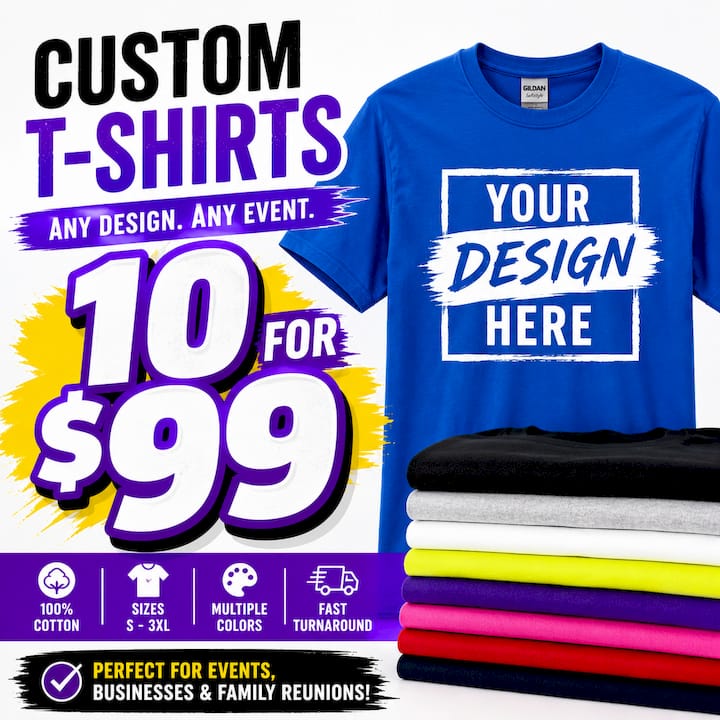
Shay’s Print Shop gives you a straightforward way to test any trend on this list without the risk of a large bulk order most print shops require. The 10 for $99 custom t-shirt package uses 100% cotton blanks with DTF printing, and it’s built for exactly the kind of small validation run this article recommends before scaling any design.
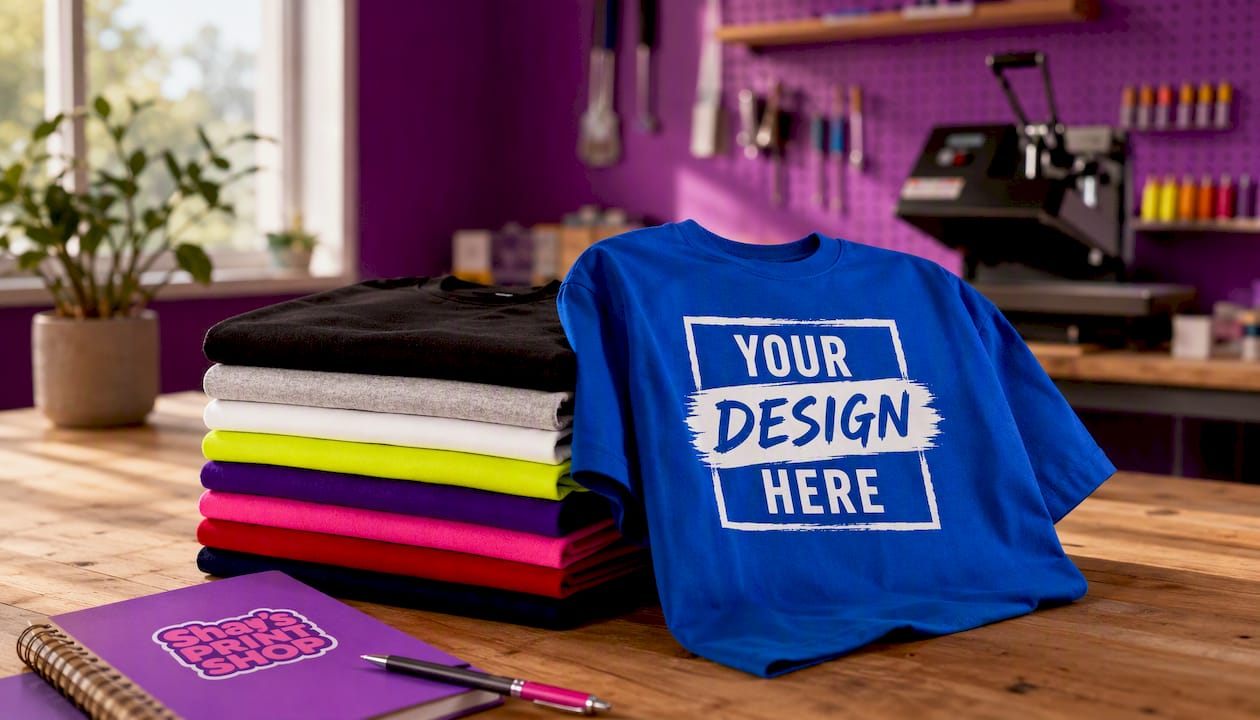
It’s a natural fit for family reunion kits, pet portrait tees, small business promo shirts, and event merch where you want to see real reaction before committing to fifty or a hundred units. Pricing is flat and predictable, no hidden tiers to calculate, and turnaround is fast enough that you can test a design, get feedback, and reorder before the season you’re targeting has passed. If you’re weighing several of the directions covered above, start with one personalized design and one trend piece, order your ten shirts, and let the response guide your next move.
Sources
- The 6 T-Shirt Trends That Are In and Out in 2026 | Who What Wear
- T-Shirt Design Trends 2026: 8 Evidence-Backed Ideas
- Graphic Tee Trends 2026: What Is Resonating and Why — WEAR2AM Blog | WEAR2AM
- 2026 T-shirt design ideas and trends: Etsy trends, custom shirt ideas, and graphic tee inspiration
- T-shirt design ideas for your business | Printify
FAQ
What are the trendiest t-shirt designs for 2026?
Vintage bootleg graphics, Y2K maximalism, embroidered soft-stitch textures, personalized occasion shirts, and celestial motifs lead the pack, alongside steady performers like botanical illustrations and single-placement minimalism.
What t-shirts are in style in 2026?
Washed and garment-dyed cotton tees with faded, retro-inspired graphics are dominating, while stiff fast-fashion blanks and dated styles like tie-dye and unsubtle logo shirts are falling out of favor.
What are the hottest design trends for 2026?
Food art, nostalgic bootleg graphics, and personalized family or pet-themed shirts are the hottest categories right now, largely because they combine a strong visual with a clear, ready-made buyer.
What are the key merch trends for 2026?
Occasion-led merch, matching group tees, oversized back graphics for events, and protest or statement shirts tied to specific causes are the strongest merch categories heading into 2026.
How do I know if a t-shirt trend will actually sell?
Order a small test run of 10 to 25 units, tie the design to a specific buyer and occasion, and watch preorder or direct interest before committing to a bulk order. A 10-for-$99 starter package is enough to validate most designs without overcommitting.
0 comments