

Start with branded t-shirts, hoodies, hats, and one low-cost accessory like a tote bag or mug. These items are the fastest small business apparel ideas to design, source, and sell because they need no size guesswork, work with print-on-demand or small bulk runs, and give you real sales data before you spend on inventory.
TL;DR:
- Printing on demand is ideal for testing new designs without inventory risk, but offers slower shipping and lower margins than bulk orders.
- Focus your apparel lineup on one buyer persona, such as event attendees or local customers, to tailor design, fabric, and marketing strategies effectively.
- Seasonal demand peaks in spring, summer, and winter holidays, so timing orders three to four weeks ahead is crucial to meet deadlines and avoid overstock.
- Using clear, simple graphics, correct fabric choices, and consistent placement boosts perceived value and decreases return rates.
- Selling online through marketplaces, social media, and local markets creates multiple customer channels that validate your designs and expand reach.
Table of Contents
- Small Business Apparel Ideas Grouped by Goal
- Which Production Route Fits Your Budget and Timeline?
- Design Rules That Cut Returns and Raise Perceived Value
- How Should You Price and Order Small Business Apparel?
- Where Shay’s Print Shop Fits Into Your Apparel Plan
- How Do You Figure Out Who Your Apparel Is Actually For?
- What Seasonal and Trend Factors Should Shape Your Lineup?
- What Legal Risks Should You Watch for in Apparel Design?
- How Do You Market Small Business Apparel Without a Big Budget?
- What Sustainability Options Actually Matter to Buyers?
- Where Should You Actually Sell Your Apparel?
- A Quick Note on Testing Before You Commit
- Ready to Turn Your Design Into a Real Order?
- Sources
Small Business Apparel Ideas Grouped by Goal
Not every shirt idea serves the same job. A giveaway tee at a trade show has a different mission than a hoodie you’re selling online for profit, so match the product to the goal before you touch a design file.
Promotional and giveaway items exist to put your logo in front of people, not to turn a profit on the item itself.
- Branded t-shirts — cheap per unit at volume, easy to hand out at events, ideal for sponsorships and community giveaways.
- Tote bags — low cost, high visibility, and useful long after the event ends, which keeps your logo circulating for free.
- Trucker hats or caps — inexpensive to produce in bulk and popular enough that people actually wear them out.
The promotional-products industry has run on exactly this logic for decades: cheap branded items sustain brand awareness far longer than a one-day ad buy.
Retail-ready merch is built to be sold, which changes the math entirely.
- Premium hoodies and crewnecks — higher price point, higher perceived value, and typically the strongest per-item margin in a small apparel lineup.
- Graphic tees with a distinct design identity — sell best when the collection stays focused rather than sprawling across a dozen half-finished ideas.
- Coffee mugs and photo mugs — a natural add-on for gift buyers, and a smart way to raise average order value without adding another shirt design.
Team and uniform apparel covers polos, performance tees, and matching hats for staff, sports leagues, or family reunions. Consistency matters more than creativity here: same font, same placement, same color palette across every size.
Event-specific items include reunion shirts, bachelorette tanks, fundraiser tees, and conference lanyards or badges. These live and die on turnaround time, since most buyers are ordering against a fixed date.
Accessories round out the lineup. Tumblers travel well as gifts and corporate swag, and they pair naturally with a shirt bundle if you’re trying to raise your average cart size.
If you want a fuller breakdown of format options by use case, the branded apparel guide for small businesses walks through specific event, team, and retail scenarios in more depth.
Which Production Route Fits Your Budget and Timeline?
The right sourcing method depends on how many units you need and how fast you need them.
- Print-on-demand (POD). No minimum order, no upfront inventory risk, and a genuinely accessible way to test a design before committing real money. Slower per-unit shipping and thinner margins are the tradeoff.
- Local print shops. Faster turnaround than most POD services and a real person to talk to about placement or fabric questions, though pricing usually favors larger orders.
- Screen printing. Cost-efficient once you’re past roughly 25 to 50 units of the same design, since the setup cost amortizes across the run. Less practical for one-off or highly personalized orders.
- Embroidery. Best for polos, hats, and anything that needs a durable, upscale finish. Slower and pricier per unit than printing, but it reads as premium.
- DTF and DTG printing. Handles full-color designs and photo uploads on 100% cotton without the setup delay screen printing requires, which is why shops built for bulk personalized orders lean on it for family reunions and events.
Pro Tip: Order one physical sample before you commit to a bulk run. A placement that looks perfect on screen can print two inches off-center on an actual shirt, and that’s a far cheaper lesson to learn on one sample than on 50 reprints.
Design Rules That Cut Returns and Raise Perceived Value
Bold, simple graphics outperform busy ones almost every time, especially once your design shrinks down to a thumbnail on a phone screen. Placement matters just as much as the art itself: a centered chest logo reads as classic retail, a small left-chest mark reads as corporate polo, and a full back print reads as event or team merch. Pick one lane per product line instead of mixing signals.
Fabric choice shapes how a shirt feels years after purchase, not just on day one.
- Ring-spun 100% cotton holds print detail better than blends and feels softer against skin.
- Heavier cotton weights resist shrinking and pilling through repeat washes.
- Offering both a fitted and a relaxed cut in the same design reduces the size-related returns that eat into margin.
Small details prevent expensive mistakes. Specifying exact sleeve and pocket placement before printing avoids the reprint costs that come from a design landing in the wrong spot. Guidance from POWR’s small-business apparel research backs this up directly: brands that launch with a focused core collection of three to five designs, correct fabric weight, and clear size photos convert noticeably better than those that skip sizing visuals altogether. Real people modeling the product, not just a flat mockup, remain one of the simplest fixes for return rates.
How Should You Price and Order Small Business Apparel?
Most small apparel sellers price at roughly 3 to 5 times production cost, which is the range POWR’s conversion research points to for shirts that actually sell. Bulk orders lower your per-unit cost enough to justify holding inventory once you know a design sells, but only after you’ve tested it.
- Use POD or a small batch to validate a design before locking in a bulk order.
- Bundle a tee with a hat or mug to raise average order value without designing a new product.
- Run a limited drop or pre-order to fund production costs before you print a single unit.
- Save premium pricing for hoodies and upgraded blanks, where the margin gain justifies the higher unit cost.
Where Shay’s Print Shop Fits Into Your Apparel Plan
Once a design earns real orders, Shay’s Print Shop handles the jump from sample to bulk. The shop prints on 100% cotton using DTF, so photo uploads and full-color logos hold detail without a screen-printing setup fee. Pricing covers small reunions, staff sets, or a first retail test run, and turnaround stays fast enough for event deadlines. It’s built for event planners, small businesses, and families who need real quantities without guessing at pricing.
How Do You Figure Out Who Your Apparel Is Actually For?
Every product on your list should trace back to one buyer, not a vague “everyone.” A family planning a reunion cares about matching sizes and one clear group photo print, not trend-forward design. A small retail shop testing streetwear cares about a design that photographs well on Instagram and a fit that flatters more body types. A sports league cares about durability through repeated washing and correct roster names on the back.
Write down the specific person buying before you sketch anything. Are they buying for themselves or as a gift? Is this a one-time event purchase or a repeat customer relationship? A bachelorette party buyer wants something fun for one weekend; a business client ordering staff polos wants something they’ll reorder every year. Those two buyers need entirely different pricing conversations, different fabric choices, and different marketing language.
Age and use case also shape fit and sizing. Youth sports teams need a wider range of small sizes than a corporate uniform order ever will. Event apparel for a summer wedding calls for lighter fabric weights than winter team gear. None of this requires formal market research. A quick look at who has already asked you for custom shirts, and what they actually needed the product to do, usually tells you more than a survey ever could.
What Seasonal and Trend Factors Should Shape Your Lineup?
Apparel demand moves in predictable waves. Spring and early summer bring graduation shirts, reunion orders, and wedding party apparel. Late summer shifts toward back-to-school team gear and fall sports uniforms. Winter holidays drive gift-focused items: mugs, tumblers, and cozy hoodies outsell tees by a wide margin once temperatures drop.
Trend-chasing is riskier than seasonal planning. A design tied to a meme or a viral moment can sell fast, but it dies just as fast, and a bulk order timed wrong leaves you with dead inventory. The safer play is pairing a timeless base design, like a simple logo tee, with small trend-driven variations you can swap out each season without redesigning the whole product.
Building in lead time matters more than most new sellers expect. Order graduation and reunion apparel at least three to four weeks ahead of the event date, since production and shipping windows tighten as popular seasons approach. If you’re testing a trend-driven design, start with a small POD batch rather than a bulk order, so a design that fizzles doesn’t leave you holding fifty unsold shirts. Save bulk commitments for designs and seasons you already have sales history on.
What Legal Risks Should You Watch for in Apparel Design?
Using a celebrity’s likeness, a sports team’s logo, or a movie quote without permission can trigger a takedown or a legal claim, even on a small print run sold to a handful of customers. Trademark and copyright protection doesn’t require the original owner to be a huge company. A local band, a small artist, or an independent designer can enforce their rights just as forcefully as a major brand.
Before you finalize a design, run a basic search to check whether the phrase, logo, or graphic you’re using is already trademarked. The United States Patent and Trademark Office maintains a public database for exactly this purpose. If your design leans on a font, clip art, or stock graphic, confirm the license actually covers commercial apparel sales, since many free design assets are licensed for personal use only.
Registering your own brand name and logo protects you on the other side of this equation. If your apparel line grows into a recognizable name, a registered trademark stops competitors from copying your branding once you’ve built real recognition. It’s a smaller step early on, but one worth taking before your brand outgrows casual protection.
How Do You Market Small Business Apparel Without a Big Budget?
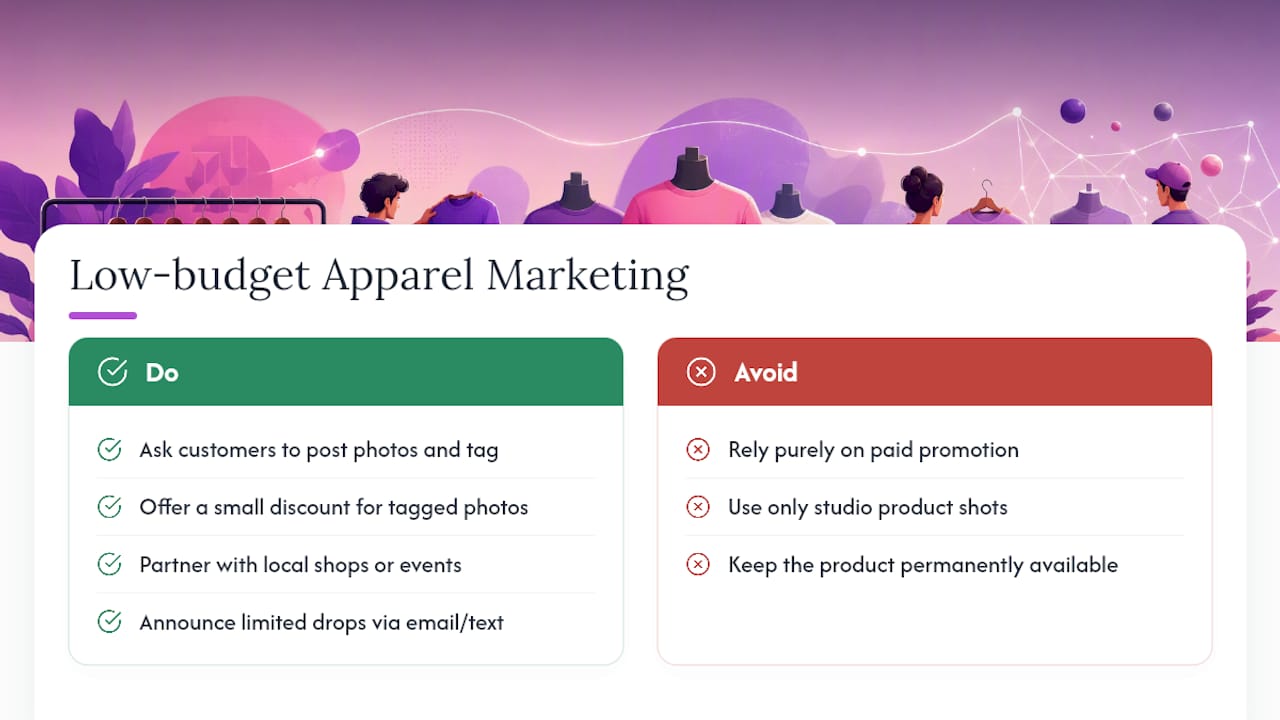
Wearable products carry a built-in advantage most products don’t get: every person who wears your shirt becomes a walking ad. Lean into that instead of relying purely on paid promotion. Ask early customers to post a photo wearing the item and tag your account, and offer a small discount code in exchange. User photos consistently outperform studio product shots for apparel, because buyers want to see how a shirt actually fits a real body.
Local partnerships extend reach without extra spend. A gym, a coffee shop, or a community event willing to display or wear your apparel puts your design in front of a built-in audience. Sponsoring a small local event with a batch of branded giveaway tees, per the promotional-products research above, builds recognition that outlasts a single social post.
Email and text updates work better for apparel than most sellers assume, particularly for limited drops. Announcing a small-batch design with a short ordering window creates urgency that a permanently available product can’t. Pair that with consistent, simple hashtags and a recognizable visual style across every post, so a design becomes identifiable at a glance even before someone reads your business name.
What Sustainability Options Actually Matter to Buyers?
Shoppers are willing to pay roughly 12% more on average for sustainable apparel, which makes eco-conscious blanks a real differentiator rather than a purely ethical checkbox. Organic cotton, recycled polyester blends, and transparent labor sourcing all give you something concrete to say in your product descriptions instead of a vague “eco-friendly” label.
Recycled polyester and cotton perform differently in comfort, durability, and cost, and the comparison guide from THE PRECIOUS LAMB breaks down which fabric fits which use case. If sustainability is central to your brand story, say so specifically: name the material, name the certification if one exists, and skip generic green language that buyers have learned to tune out.
You don’t need to overhaul your entire product line to make this work. Even offering one sustainable option alongside your standard blanks lets buyers self-select into the premium tier, which raises your average order value without forcing every customer to pay more.
Where Should You Actually Sell Your Apparel?
Retail e-commerce sales keep climbing year over year, and Statista’s ongoing tracking of that growth is the clearest evidence that an online storefront belongs in your plan from day one, not as a later upgrade. A basic Shopify or Squarespace store, paired with a payment processor, gets you selling within a day or two.
Marketplaces like Etsy work well for handmade or design-forward apparel, since buyers there already expect small-batch, personality-driven products. Instagram and TikTok shopping features let you sell directly from a post, which shortens the gap between “I saw this” and “I bought this” to almost nothing.
Don’t overlook in-person channels either. Local markets, pop-ups, and event tables let buyers touch the fabric and try a size before committing, which matters enormously for a first-time apparel buyer who’s never ordered from your brand before. Running both an online store and occasional in-person sales gives you two very different customer discovery paths feeding the same product line.
A Quick Note on Testing Before You Commit
Test small before you go big. Order a 10-piece run or a POD sample, build a size chart, and put up a simple landing page before you sink real money into inventory.
— Jon Will
Ready to Turn Your Design Into a Real Order?
You’ve got the ideas, the sourcing routes, and the pricing math. The one thing that turns any of it into revenue is placing an actual order, and that’s where Shay’s Print Shop earns its keep: no design software required, no minimum order intimidating enough to stall you out, just a straightforward path from your logo to a finished shirt in your hands.
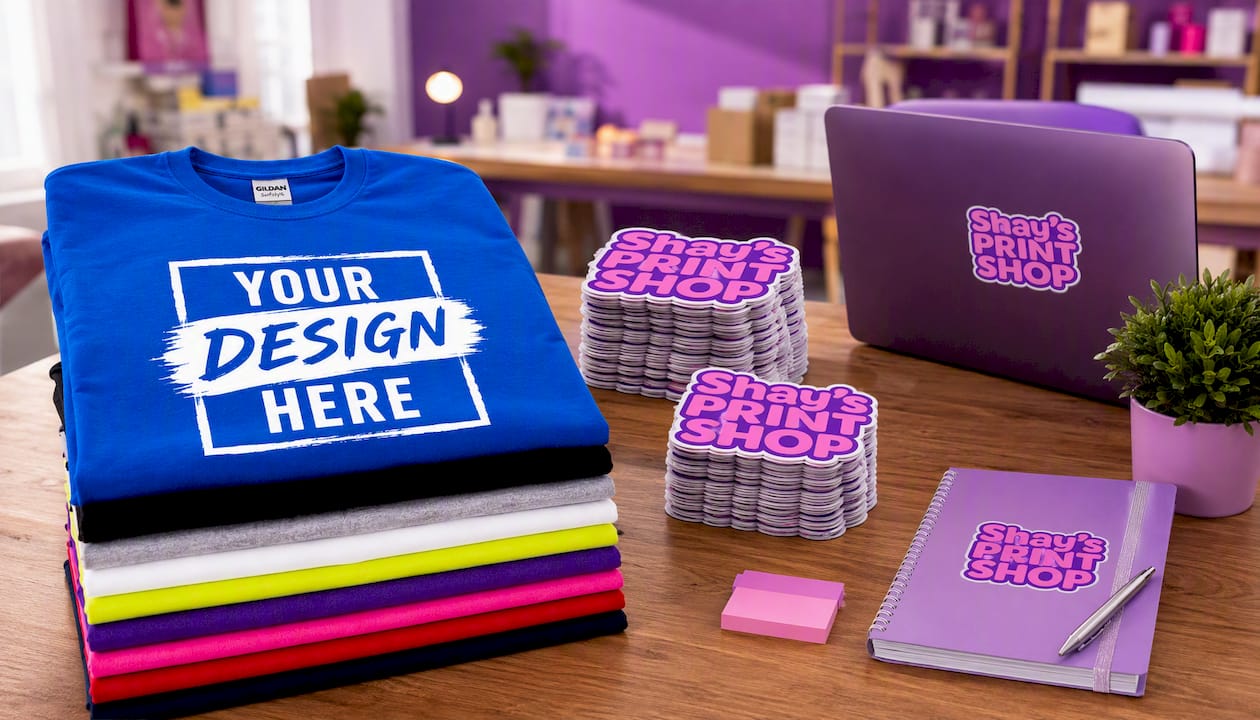
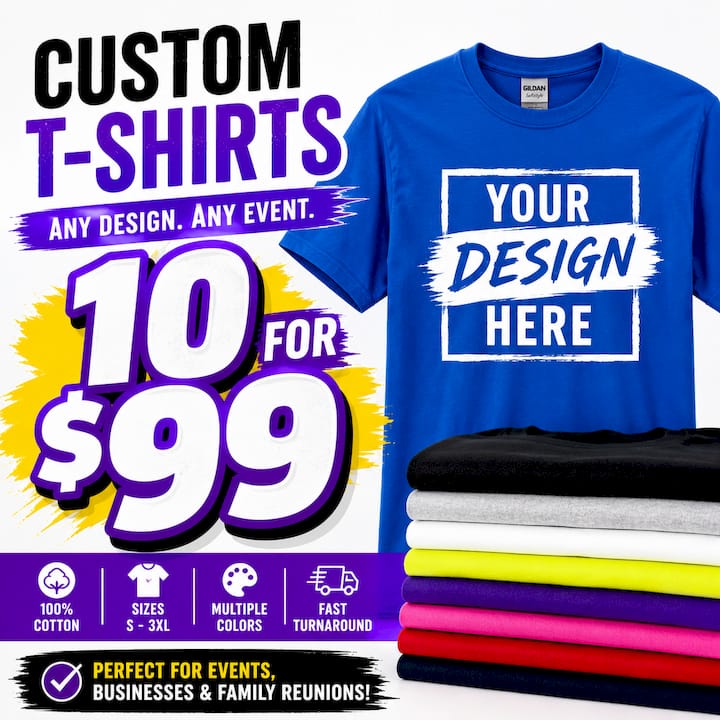
If you’re testing your first design, the 10 for $99 custom t-shirt package gives you a real sample run on 100% cotton without committing to hundreds of units. Planning a reunion, staff order, or event bundle instead? Browse the full custom shirts and apparel collection for size and color options, or add custom photo mugs or a personalized tumbler to round out a gift bundle. Upload your logo or photo, pick your sizes, and place the order today.
Sources
- How to start a clothing brand in 14 steps — Shopify
- Custom Apparel Business Guide: Start & Scale in 2026 | Merch Titans
- Custom T-Shirts That Convert for Small Businesses — POWR blog
0 comments