

Say thank you, name the gift or act, explain why it mattered, add a forward-looking sentence, and sign your name. That five-part structure is the same one the Emily Post Institute recommends, and it works whether you’re thanking a wedding guest or a client. Here are two you can copy right now:
- Formal: “Dear Mrs. Alvarez, Thank you so much for the beautiful serving platter. We can’t wait to use it at our first holiday dinner in the new house. With gratitude, Maya”
- Casual: “Hey Jordan! Thanks for coming to the game and cheering us on, it meant a lot to have you there. Let’s grab tacos soon. Talk soon, Sam”
Pro Tip: Put the specific detail (the gift, the gesture, the moment) in the first two sentences. That’s the part readers and gift-givers actually remember, so don’t bury it under a paragraph of small talk.
If you’re printing cards instead of writing them one by one, Shay’s Print Shop handles custom stationery in bulk, which comes in handy for weddings, business mailers, or team thank-yous.

Key Takeaways
The most effective thank-you notes follow a five-part formula: greeting, explicit thanks, a specific detail, a forward-looking sentence, and a sincere sign-off.
| Point | Details |
|---|---|
| Use the five-part formula | Greeting, thanks, specific detail, forward-looking line, sign-off works for nearly every occasion. |
| Specificity beats length | Naming the exact gift or gesture matters more than writing several extra sentences. |
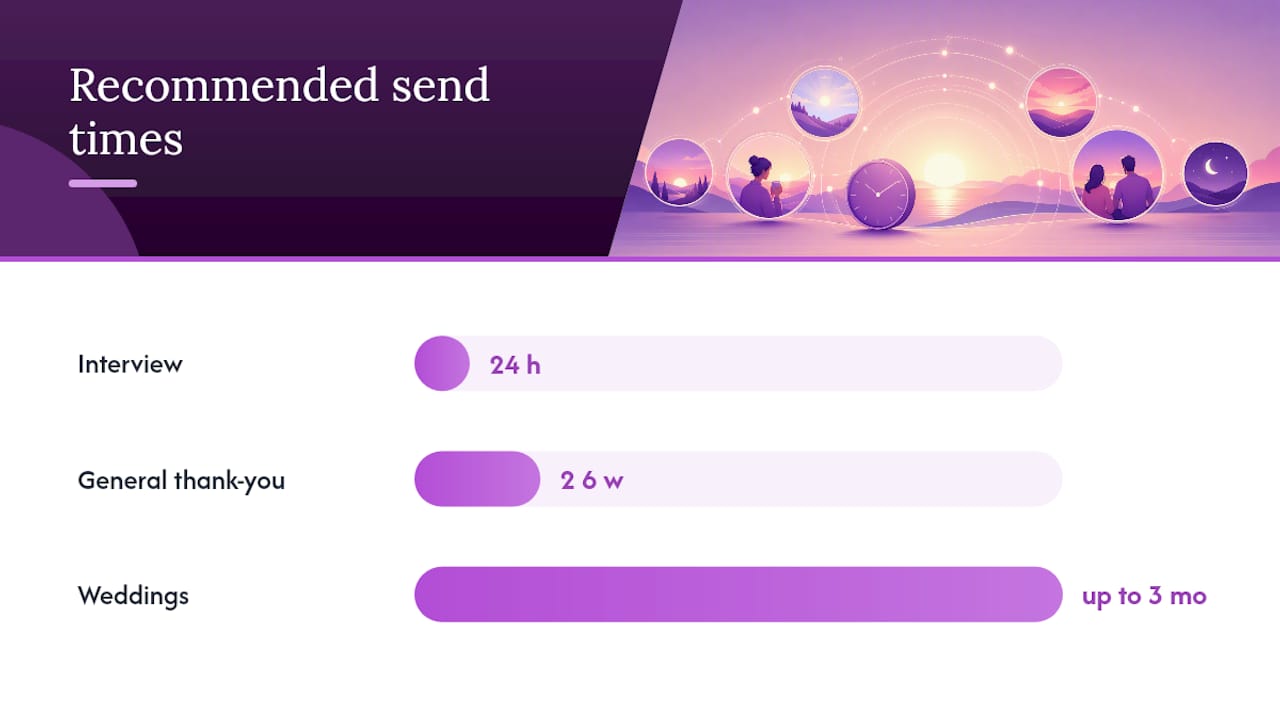
| Match timing to occasion | Send general thanks within two to three weeks, weddings within three months, interviews within 24 hours. |
| Late is still better than never | A brief, honest note beats silence, even weeks after the gift or gesture. |
| Print in bulk when needed | Shay’s Print Shop offers custom stationery for weddings, events, and business thank-yous at scale. |
Table of Contents
- How to Write a Thank-You Note People Actually Remember
- Short Thank-You Lines You Can Use Right Now
- What to Write for Gifts, Gift Cards, and Cash
- Wedding Thank-You Card Wording and Timing
- Thanking Someone for Help, Support, or a Kind Act
- Professional Thank-You Messages for Clients and Colleagues
- Thank-You Wording for Teachers, Coaches, and Mentors
- Thank-You Cards for Hosts and Hospitality
- Thank-You Wording After Sympathy, Flowers, or Support During Loss
- Templates for Birthdays, New Babies, Graduations, and More
- Choosing the Right Closing and Sign-Off
- Timing, Handwritten vs. Digital, and Presentation Tips
- What to Say in a Thank-You Card After a Funeral or Memorial
- Thank-You Messages for Interviews and Professional Networking
- Thank-You Wording for Volunteer Appreciation
- Teacher and Coach Thank-Yous for Different Occasions
- Why Specificity Beats Length Every Time
- Custom Thank-You Cards When Handwriting Every One Isn’t Realistic
- Frequently Asked Questions
- Sources
How to Write a Thank-You Note People Actually Remember
Every strong thank-you note follows the same five moves, in this order:
- Salutation — “Dear Grandma,” “Hi Team,” “To the Ramirez Family.”
- Explicit thanks — Say the words. “Thank you for…” Don’t make the reader guess.
- Specific detail — Name the gift, the favor, or the moment. “The blue scarf” beats “your gift.”
- Forward-looking sentence — What you’ll do with it, or when you’ll see them next.
- Sign-off — A warm closing plus your name.
Annotated example: “Dear Ms. Patel, [salutation] Thank you for the cookbook. [explicit thanks] I’ve already tried the lemon chicken recipe twice this week. [specific detail] I’ll think of you every time I make it. [forward-looking] Warmly, Priya” [sign-off]
The Emily Post Institute puts it plainly: naming a specific detail is the “proof of attention” that separates a genuine note from a generic one. A card that says “thanks for everything” reads like it took ten seconds. A card that mentions the exact gift or gesture reads like it took ten seconds of real thought, which is really all it needs.
Pro Tip: If you’re late sending a note, send it anyway. One honest sentence acknowledging the delay, then straight into your thanks, works better than a long apology that overshadows the gratitude.
Short Thank-You Lines You Can Use Right Now
Sometimes you don’t need five sentences. You need one good line to open a card or stand on its own for a casual note. Here’s a batch grouped by tone.
Warm:
- “Your kindness made my whole week.”
- “I’m so lucky to have you in my corner.”
- “This meant more than you know.”
- “Thank you for thinking of me.”
- “You always know how to make someone feel special.”
Neutral or formal:
- “Thank you for your generosity.”
- “I sincerely appreciate your thoughtfulness.”
- “Please accept my heartfelt thanks.”
- “Your support is truly appreciated.”
- “Thank you for taking the time.”
Playful:
- “You’re officially my favorite person this week.”
- “Warning: I will be bragging about this gift.”
- “You + your generosity = a very happy me.”
- “Consider yourself thanked (repeatedly).”
- “This calls for a happy dance.”
For openings, “Dear [Name]” works for anyone, “Hi [Name]” fits close friends and coworkers, and “To [Name]” suits group cards or slightly more formal notes. To stretch a one-liner into a full note, pair it with a specific detail and a forward-looking sentence, following the same five-part formula from above.
What to Write for Gifts, Gift Cards, and Cash
Name the item, say how you’ll use it or how it made you feel, and close warmly. A few ready templates:
- “Thank you for the sweater, it’s already my favorite thing in my closet.”
- “The candle smells incredible, my whole apartment thanks you too.”
- “I love the framed photo, it’s sitting on my desk right now.”
- “Thanks for the cookbook, dinner just got a lot more interesting.”
- “The plant is thriving, and so am I thanks to your thoughtfulness.”
For gift cards or cash, you don’t need to state the exact amount. “Thank you for the generous gift card, I’m already planning what to buy” works fine, and naming the dollar figure is optional, not required by etiquette.
Quick dos and don’ts:
- Do name the specific item or amount category (a “generous check” rather than “$100”).
- Do send it within a reasonable window rather than waiting for the perfect moment.
- Don’t sound transactional (“thanks for the money”) or treat the note like a receipt.
Wedding Thank-You Card Wording and Timing
Send wedding thank-yous within three months of the wedding, and sooner is always better. If a gift arrives before the big day, a brief note within a couple of weeks is appropriate, even if a longer follow-up comes later.
Templates by guest type:
- In-person guest: “Thank you for celebrating with us and for the beautiful vase. We’re already picturing it full of flowers on our kitchen table.”
- Sent a gift, couldn’t attend: “We missed having you there, but your generous gift made us feel like you were with us in spirit. Thank you.”
- Bridal party: “Thank you for standing beside us and for all the little things you did behind the scenes. We couldn’t have asked for a better crew.”
- Parents: “Thank you for everything you did to make our day possible, from the planning to the toast. We love you both so much.”
- Group gift: “Thank you all for chipping in on the espresso machine. Every cup of coffee we make will remind us of your generosity.”
Keep a simple checklist: gift received, note sent, date mailed. That single spreadsheet column saves you from double thanking or missing someone entirely.
Thanking Someone for Help, Support, or a Kind Act
Acts of service deserve specific, genuine wording, not a generic line. A few examples:
- Babysitting: “Thank you for watching the kids on such short notice. It gave us a much-needed night off.”
- A ride: “Thanks for picking me up from the airport at that ridiculous hour. I owe you one.”
- A meal during a hard week: “Thank you for the lasagna, it was exactly what we needed.”
- Emotional support: “Thank you for just listening. I didn’t need advice, I needed a friend, and you showed up.”
Pro Tip: For crisis or bereavement contexts, keep it brief and sincere. Skip the cliches and name the specific thing they did, whether that was sitting with you at the hospital or handling logistics you couldn’t face.
If it’s been weeks since the favor, a short line like “I know this is overdue, but I’ve been thinking about your kindness ever since” still lands well, per Emily Post’s guidance on late notes.
Professional Thank-You Messages for Clients and Colleagues
Business thank-yous follow a slightly tighter version of the same formula. Innovation in Design recommends five parts: greeting, direct thanks, a specific reference, a helpful closing thought, and a signature. A few templates:
- After an interview: “Thank you for taking the time to speak with me today. I especially enjoyed hearing about the team’s approach to client onboarding.”
- New client: “Thank you for choosing us. We’re excited to get started on your project.”
- After a meeting: “Thanks for the productive conversation, I’ll follow up with the proposal by Friday.”
- Packaging insert: “Thank you for your order. We hope you love it as much as we loved making it.”
Email works fine for fast turnarounds like interviews, while handwritten notes carry more weight for VIP clients or milestone moments. Zendesk’s guidance is clear on one point: never let a thank-you double as an upsell. Keep gratitude separate from any pitch.
Pro Tip: For customer notes, a short, human-sounding message beats a polished template every time. As Eesel, greet by name, name the exact reason, and sign like a real person, not a department.
Thank-You Wording for Teachers, Coaches, and Mentors
Reference a specific lesson or moment rather than a generic “you’re the best.” A few examples:
- “Thank you for helping me finally understand fractions. I actually enjoy math now.”
- “Coach, thank you for pushing me to try out for varsity. I wouldn’t have done it without you.”
- “Thank you for your patience this year, it made all the difference.”
- “Thanks for believing in me even when I doubted myself.”
For younger coaches or after a single event, keep it casual: “Thanks for an awesome season, Coach!” For academic mentors, a slightly more formal version works: “Thank you for your guidance this semester. I’ve learned more than I expected.” Send these at the end of the school year or right after a big event, and a small card paired with a modest gift is always appropriate in a school or club setting.
Thank-You Cards for Hosts and Hospitality
Name the specific meal or moment that made the visit memorable:
- “Thank you for having us, the roast chicken was incredible.”
- “Your guest room made me feel so at home, thank you.”
- “Thanks for such a fun weekend, I’m still laughing about game night.”
- “Thank you for the wonderful dinner and even better conversation.”
Send these within a few days of the visit while the details are still fresh. Close with a return invitation: “Next time you’re in town, dinner’s on us.”
Thank-You Wording After Sympathy, Flowers, or Support During Loss
Keep grief-related thank-yous short, sincere, and specific about what helped:
- “Thank you for the flowers and for sitting with me at the service. Your presence meant everything.”
- “Thank you for the meals you brought over. I didn’t have to think about dinner during the hardest week.”
- “Your card and kind words gave me comfort I didn’t expect. Thank you.”
Pro Tip: Avoid clichés like “everything happens for a reason.” Name the specific action, the flowers, the visit, the casserole, and let that specificity carry the sincerity.
Templates for Birthdays, New Babies, Graduations, and More
- Birthday: “Thank you for making my birthday so special, the surprise cake was perfect.”
- New baby: “Thank you for the onesies, we’ve already put the little dinosaur one to good use.”
- Graduation: “Thank you for the generous gift and for cheering me on through four long years.”
- Volunteer appreciation: “Thank you for giving your Saturday to the food drive, we couldn’t have done it without you.”
- Housewarming: “Thank you for the candle, it’s the first thing that made our new place smell like home.”
- Just because: “Thank you for being exactly who you are.”
Match tone to relationship: close friends get playful or personal lines, acquaintances get warm but brief ones, and distant relatives usually land best with a slightly more formal, appreciative tone.
Choosing the Right Closing and Sign-Off
The closing should match the note’s formality and your relationship with the recipient.
- Formal: “Sincerely,” “With gratitude,” “Warm regards.”
- Friendly: “Take care,” “Thanks again,” “Best.”
- Intimate: “Love,” “Love always,” “XO.”
- Religious: “Blessings,” “In God’s grace,” “With prayers of thanks.”
- Light or funny: “Forever in your debt (literally, if it was cash),” “Your favorite person.”
A rule of thumb: keep professional notes to “Sincerely” or “Best,” save first-name-only sign-offs for close friends, and use “The Johnson Family” or “The Marketing Team” when a note represents a group.
Timing, Handwritten vs. Digital, and Presentation Tips
The general rule is to send a thank-you within two to three weeks. Weddings get up to three months. Interview thank-yous should go out within 24 hours while you’re still top of mind.
Emily Post notes that handwritten notes remain the gold standard for personal connection, though digital notes are acceptable when they stay personal instead of sounding like mass marketing.
| Format | Best for | Effort to scale | Perceived personalness |
|---|---|---|---|
| Handwritten | Weddings, gifts, sympathy, close relationships | Low, one at a time | Highest |
| Digital (email/text) | Interviews, quick business thanks, time-sensitive replies | High, easy to send many | Moderate, depends on personalization |
| Printed custom cards | Large guest lists, business mailers, team thank-yous | High, professionally produced in bulk | High, if personalized per recipient |
A few presentation basics: use a pen that won’t smear, write legibly, and if you’re using a mail merge for larger batches, double check every name and detail before printing. A misspelled name undoes the personal touch instantly.
What to Say in a Thank-You Card After a Funeral or Memorial
Post-funeral thank-yous are usually sent by the family to those who sent flowers, attended the service, brought food, or made a memorial donation. Keep these shorter than you’d think. A grieving family isn’t expected to write paragraphs.
A few templates:
- “Thank you for your kind words and for attending Dad’s service. Your presence meant so much to our family.”
- “We’re grateful for the beautiful flowers and for the meal you brought over during such a hard week.”
- “Thank you for your donation to [organization] in Mom’s memory. It’s a comfort to know she touched so many lives.”
- “Your card arrived at exactly the right moment. Thank you for thinking of us.”
If the family is overwhelmed, printed cards with a handwritten line or two are widely accepted, and many funeral homes offer preprinted acknowledgment cards for exactly this reason. Sending these within a month is reasonable, and there’s no strict deadline the way there is with weddings. A short note that says “we’re still working through this loss” alongside the thanks is honest and appropriate. Group thank-yous, like one card acknowledging an entire office or church group, are also acceptable when individual notes aren’t realistic given the circumstances.
Thank-You Messages for Interviews and Professional Networking
Send interview thank-yous within 24 hours, by email, so timing works in your favor. A short template: “Thank you for taking the time to meet with me today. I enjoyed learning more about the team’s goals for this quarter, and I’m excited about the possibility of contributing.”
For networking contacts, reference the specific conversation: “It was great connecting at the conference. I really enjoyed hearing your take on supply chain shifts, and I’d love to stay in touch.”
If someone makes an introduction on your behalf, thank them separately from the person they introduced you to: “Thank you for connecting me with Dana, I really appreciate you thinking of me.” Keep networking thank-yous under five sentences. Nobody wants a dense paragraph clogging their inbox after a five-minute chat. If the interaction leads somewhere, a follow-up note weeks later (“Just wanted to say thanks again, that advice really helped”) keeps the relationship warm without being pushy.
Thank-You Wording for Volunteer Appreciation
Volunteers give time they didn’t have to give, so specificity matters even more here. A few templates:
- “Thank you for showing up every Saturday this month for the food pantry. Your consistency kept us running.”
- “We couldn’t have pulled off the fundraiser without your help at the registration table. Thank you.”
- “Thank you for mentoring new volunteers this year, your patience made their first weeks so much easier.”
- “Your work behind the scenes doesn’t always get noticed, but it matters. Thank you.”
For volunteer coordinators sending notes at scale, a personalized line referencing the specific event or task, paired with a general thank-you, keeps the message from feeling mass-produced. Nonprofits sending dozens of notes at once might consider a small printed card for consistency, paired with a handwritten line naming the volunteer’s specific contribution.
Teacher and Coach Thank-Yous for Different Occasions
End-of-year notes and after-event notes call for slightly different wording. At the end of a school year: “Thank you for a year full of patience and encouragement. I’ve grown so much as a student because of you.” After a single event or competition: “Thank you for coaching us through the tournament, win or lose, it was the best season yet.”

For a retiring teacher or a coach moving on: “Thank you for years of guidance. The lessons you taught go far beyond the classroom.” For an assistant coach or volunteer parent helper: “Thank you for showing up to every practice and every game. The kids adore you.” A small gift card or handwritten card works well for end-of-year appreciation, while a quick note after a single event can be shorter and more casual, especially for youth sports where parents often coordinate a group card.
Why Specificity Beats Length Every Time
The biggest misconception about thank-you notes is that longer means more thoughtful. It doesn’t. A three-sentence note that names the exact gift and explains why it mattered will always outperform a rambling paragraph that never gets specific. That’s true whether you’re writing to a grandmother, a client, or a volunteer coordinator.
If there’s one habit worth building, it’s this: write the specific detail first, before you worry about the rest of the note. Everything else, the greeting, the closing, the sign-off, is easy once you know what you’re actually thanking someone for. And if the note is late, send it anyway. A short, honest acknowledgment of the delay does far less damage than silence. If you’d rather have printed cards ready to grab and personalize, Shay’s Print Shop keeps that option on hand for busy seasons like weddings or holidays.
Custom Thank-You Cards When Handwriting Every One Isn’t Realistic
Fifty wedding thank-yous, thirty client notes, or a stack of volunteer appreciation cards can turn a nice gesture into a weekend-long chore. That’s where preprinted or custom-designed thank-you cards earn their keep, especially when you still add a personal line to each one.
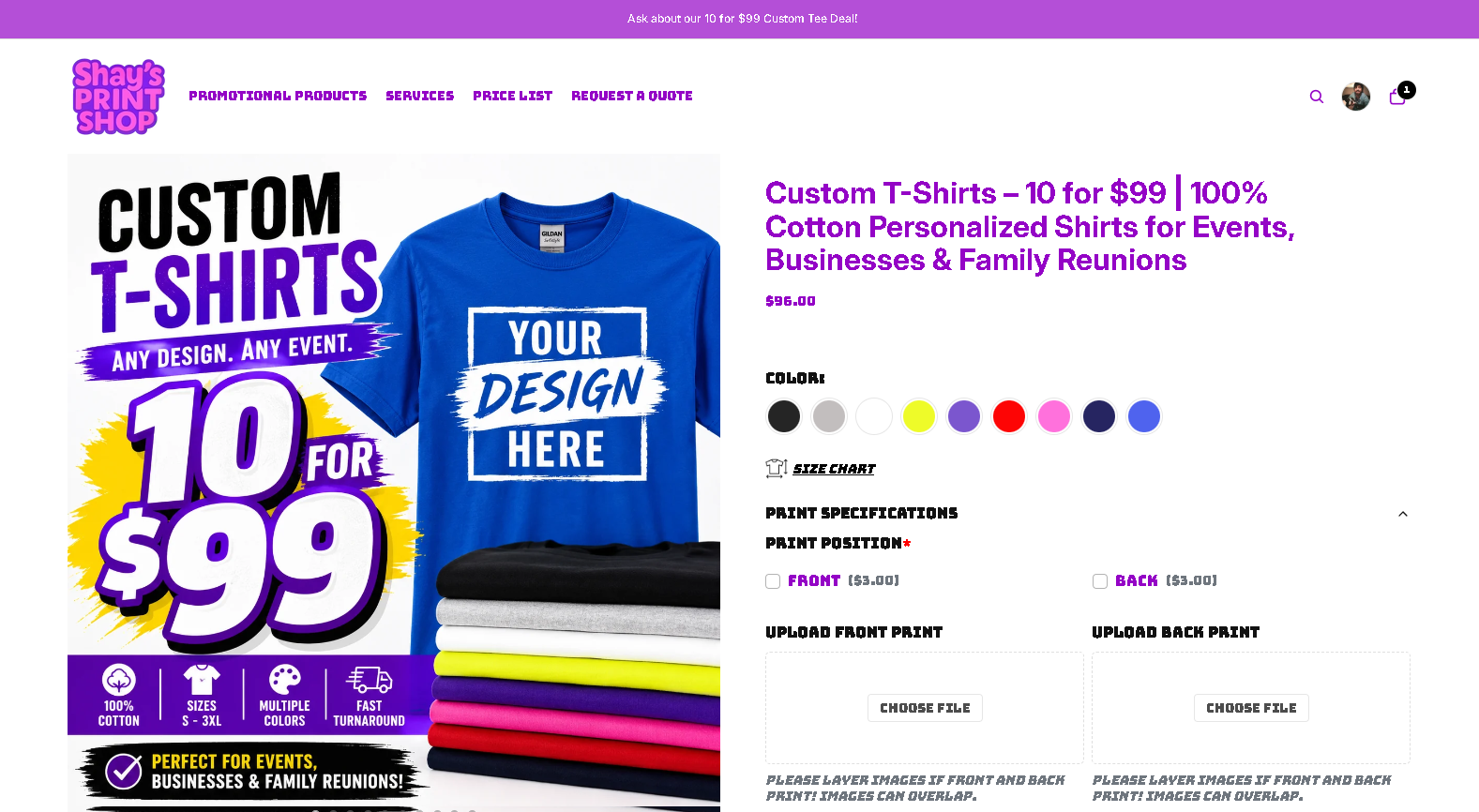
Shay’s Print Shop produces custom stationery and cards with your own design, photo, or logo, so you get a consistent look across every card without sacrificing the personal touch a handwritten line adds. Turnaround is quick, which matters when a wedding, event, or busy sales quarter leaves you with more thank-yous than time. Whether you need a batch of wedding cards, client appreciation notes, or invitations and cards for an upcoming event, you upload the design and let the shop handle production. Ready to stop handwriting fifty envelopes from scratch? Head to the custom apparel and stationery shop to start your order.
Frequently Asked Questions
How long should a thank-you card message be? Two to four sentences works for acquaintances, and four to eight sentences fits close friends or family, according to Hallmark’s guidance. Length matters less than naming the specific gift or gesture.
Is it okay to send a thank-you card by email instead of handwriting one? Yes, especially for interviews or fast-moving business situations. Handwritten notes carry more personal weight, but a personalized email beats no acknowledgment at all.
Do I need to mention the exact dollar amount for a cash gift? No. You can reference “your generous gift” without stating the amount. Naming what you plan to do with it works just as well.
What if I’m sending a thank-you note months late? Send it anyway. A short line acknowledging the delay, followed immediately by genuine thanks, works better than skipping the note or writing a long apology.
What should I write in a thank-you card for a wedding gift? Name the specific gift, explain how you’ll use it, and thank the guest for celebrating with you or for thinking of you if they couldn’t attend. Aim to send these within three months of the wedding.
Sources
- Complete Guide to Writing Thank-You Notes — Emily Post
- What to put in thank-you notes for customers — Innovation in Design
- Eesel
- Customer thank-you note best practices — Zendesk (blog)
- Thank-you messages: what to write in a thank-you card — Hallmark Ideas
0 comments