

Pick the sticker’s job before you pick the design. Packaging seal, merch drop, QR action, or loyalty reward, each job demands its own material, cut, and distribution plan. Start with a logo die-cut for your boxes, a QR reorder sticker on your packing slip, and one collectible design for your best customers. Shaysprintshop can produce all three in glossy or matte finishes, so you’re not stuck choosing between good design and fast turnaround.
TL;DR:
- Stickers should match their job, such as packaging seals, collectible drops, QR codes, or loyalty rewards, with material and finish choices aligned to their shelf life.
- Vinyl is the preferred material for durability and moisture resistance, especially for products that sit in hot or rainy environments, while paper is suitable for inserts and gift tags.
- Placement influences visibility; popular spots include box seals, product tags, event booths, and mailed inserts, with QR codes enabling measurable campaign tracking.
- Design sizes range from 2 inches for seals to 3 inches for merch, but intricate artwork should be tested at the smallest size to ensure readability before mass printing.
- Budgeting should separate evergreen reorders from limited campaign drops, and legal rights for artwork must be secured to avoid copyright or trademark issues.
Table of Contents
- Sticker Ideas for Small Business: The Idea Categories That Actually Work
- Materials, Cuts, and Finishes: Picking the Right Stock for Each Job
- Where to Put Stickers So They Actually Get Seen
- Sticker Ideas by Industry: Retail, Food, Services, and Creators
- Production Checklist: File Specs, Sizes, and Order Tips
- Cost Considerations and Budgeting for Sticker Production
- Legal Considerations for Sticker Designs: Copyright and Trademark Basics
- Publisher Perspective: How Shay’s Print Shop Supports Sticker Campaigns
- Ready to Turn Your Sticker Ideas Into a Real Order?
- Sources
Sticker Ideas for Small Business: The Idea Categories That Actually Work
Every sticker you make should have a job. Skip the “cute logo, no purpose” trap and build from what the sticker needs to accomplish, then let the design follow.
1. Packaging and unboxing seals. A circle or square die-cut with your logo and a short line (“Made with care” or “Thanks for shopping small”) seals a box, bag, or tissue wrap. Keep these under 2 inches so they don’t overwhelm smaller packaging.
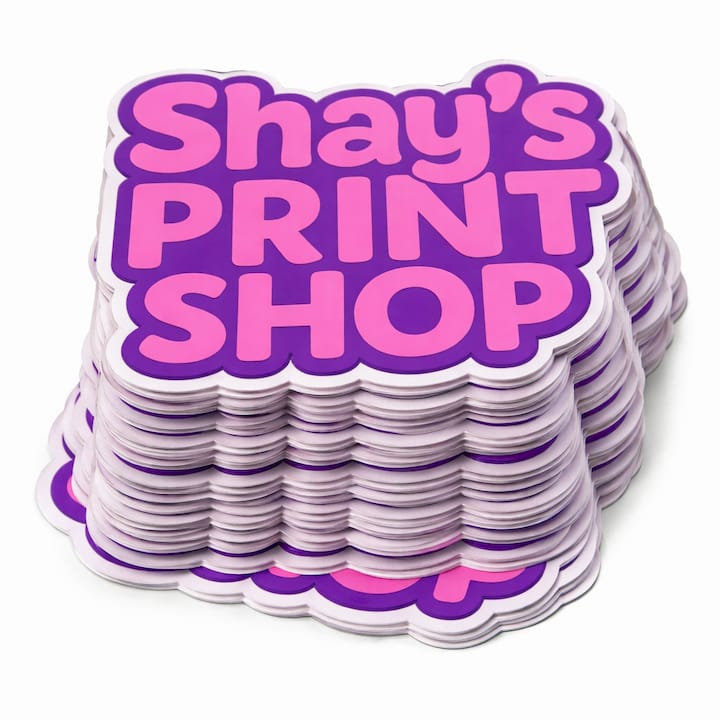
2. Merch and collectible drops. Bigger, bolder designs meant to live on laptops and water bottles. Holographic or foil finishes turn a basic logo into something people actually want to keep, and limited-run collectible stickers with specialty finishes tend to drive trading and user-generated content within niche communities, since a production premium can raise how valuable a design feels.
3. QR and action stickers. Print a QR code linking to a reorder page, a review form, or a loyalty sign-up. Stick it inside the box or on a receipt. This is the easiest sticker job to measure, since every scan tells you the sticker worked.
4. Loyalty and punch stickers. Small, repeatable designs for a physical loyalty card or coffee sleeve. Think consistent shape and size so customers recognize the “tenth one’s free” pattern instantly.
5. Seasonal and limited-edition designs. Rotate a holiday version, a launch-week design, or a collab sticker with a local artist. Treat these as short print runs, not standing inventory.
The job-first framework matters most here: a sticker built to seal a box has different size, adhesive, and cost needs than one built to live on a skateboard for two years. Match the print run size to the sticker’s shelf life, too. A seasonal design doesn’t need 1,000 units sitting in a drawer come February.
Materials, Cuts, and Finishes: Picking the Right Stock for Each Job
Vinyl and paper solve different problems, and picking wrong is the single most common sticker mistake small businesses make.
- White vinyl is your workhorse: durable, waterproof, and good for logos, merch, and anything that touches moisture.
- Clear vinyl looks premium on glass or plastic packaging, but it needs a white underbase printed beneath the design or colors go translucent and washed out.
- Paper or kraft stock fits packaging inserts and gift tags where cost matters more than water resistance. Kraft’s textured surface can absorb ink unevenly, so printers recommend an opaque white underbase or solid color blocks to keep logos legible against the brown background.
- Holographic and foil finishes cost more per unit but do the heaviest lifting for collectibility, since they photograph well and feel special enough to save rather than toss.
Die-cut stickers follow the exact shape of your design, kiss-cut sheets keep multiple designs on one backing for easy peeling, and roll labels feed automated packing lines. Roll formats with core-wound backing can cut manual application labor by as much as 40 percent once your order volume justifies the switch.
Pro Tip: If you’re shipping products that might sit in a hot car or a rained-on porch, always default to vinyl over paper. The few extra cents per sticker beat a smeared logo showing up in a customer’s unboxing photo.
Where to Put Stickers So They Actually Get Seen
A great sticker design still fails if nobody sees it in the right moment. Placement decides whether a sticker builds brand affinity or just gets thrown in the trash with the packing paper.
- Box seals and tissue paper, closing the unboxing experience with a branded touch that costs pennies.
- Register displays and counter jars, letting customers grab one on their way out.
- Event booths and trade show tables, where a free sticker is often the easiest way to get a stranger to stop walking.
- Product tags and hang tags, especially useful for retail where the sticker doubles as a size or care label.
- Mailed inserts, tucked into thank-you cards or invoices as a small surprise.
Distribution should shape your design choices, not the other way around. A sticker headed for a hot car dashboard needs UV-resistant vinyl. One tucked into a paper envelope can be a cheaper matte finish. Shopify’s guidance on sticker distribution points to packaging inserts, event giveaways, and evergreen merchandise as the three highest-leverage placements for small businesses trying to build word-of-mouth without a paid ad budget.
The smartest move is turning placement into a measurable action. Put a QR code on a giveaway sticker that leads to a discount code, then track redemptions by placement. A booth sticker with one code and a packaging sticker with a different code tells you, within a month, which spot actually drives repeat business instead of just goodwill.
Sticker Ideas by Industry: Retail, Food, Services, and Creators
Different business types get different mileage out of the same sticker categories. Here’s how the job-first approach plays out by sector.
1. Retail and ecommerce. A logo seal on every shipped box, plus product-variant labels (color, size, scent) that double as inventory tags. Seasonal sticker packs work well as a low-cost “gift with purchase” during holiday rushes.
2. Food and beverage. Durable, waterproof labels for bottles and jars that survive fridge condensation, plus kraft shipping seals for boxed goods. If you’re shipping baked goods or produce, a partner guide on creative food packaging shows how sticker placement fits into the broader unboxing design.
3. Service businesses. Appointment reminder stickers, review-request QR stickers handed out at checkout, and equipment decals for vans or toolboxes that quietly advertise your brand every time you’re parked on a job site.
4. Creators and artists. Collectible sticker sheets, holographic merch-ready designs, and artist-collab drops that turn a fan into a walking billboard. Idea galleries aggregated from sticker vendors consistently show logo stickers, thank-you seals, and limited-edition drops as the highest-repeat categories across all four sectors.
Production Checklist: File Specs, Sizes, and Order Tips
Get the technical setup wrong and you’ll reprint at your own expense. Set artwork at 300 to 600 DPI in CMYK, outline all fonts, build a clean vector cutline, and leave a 0.125-inch bleed with safe margins around any text, following the same prepress standards packaging designers use for e-commerce stickers.
- 2 inches works well for packaging seals and loyalty stickers.
- 2 to 3 inches suits laptop and water bottle stickers.
- Larger die-cut sizes fit merch drops and collectible sheets.
One detail catches almost everyone off guard: intricate designs that look sharp at full size often lose all legibility once scaled below 2 inches. Test your most detailed artwork at its smallest intended size before you commit to a large print run. Request a physical proof, order a small test batch, and check Shaysprintshop’s sticker size guide before locking in dimensions for your next order.
Cost Considerations and Budgeting for Sticker Production
Sticker costs scale almost entirely with three variables: size, finish, and run size. A small, single-color die-cut costs far less per unit than a large holographic design, and the gap widens once you factor in specialty finishes like foil or gloss lamination.
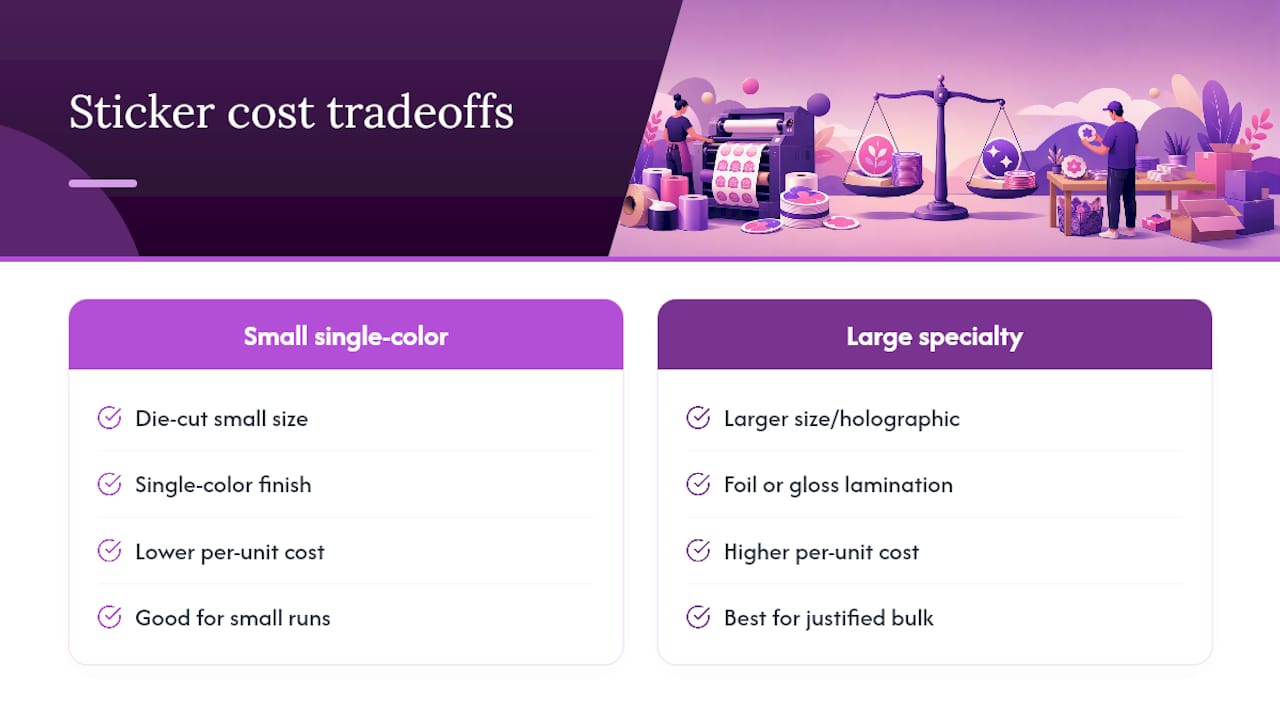
Run size is where most small businesses either overspend or underprepare. Ordering 100 stickers for a one-off event costs more per unit than ordering 500, but ordering 1,000 units of a seasonal design you’ll retire in six weeks just ties up cash in a box in your storage closet. Match your order quantity to the sticker’s actual shelf life. A permanent logo seal used on every shipment can justify a bulk order. A holiday-only design shouldn’t.
Budget in two buckets: evergreen stickers (logo seals, QR reorder stickers) that you reorder regularly at volume discounts, and campaign stickers (seasonal drops, event giveaways, collabs) that you treat as a marketing expense tied to a specific promotion. This split keeps your per-unit costs predictable while still leaving room to experiment with a limited-run design without derailing your packaging budget. Testing a small batch before scaling up is cheaper than reprinting 1,000 units because of one typo or a finish that didn’t photograph the way you expected.
Legal Considerations for Sticker Designs: Copyright and Trademark Basics
Your sticker design needs to be yours, or licensed to be yours, before it goes on a single box. Copyright covers the original artwork itself, meaning a font, illustration, or photo you pulled from the internet without a commercial license can expose you to a takedown notice or worse, even on something as small as a 2 inch packaging seal.
Trademark issues show up most often when small businesses borrow a recognizable character, sports logo, or brand mascot for a “fun” sticker giveaway. That’s a different legal category from copyright, since trademark protects brand identifiers specifically, and using someone else’s mark to promote your own business is one of the fastest ways to get a cease-and-desist letter.
The safest path is original artwork or fully licensed stock assets, with the license terms confirmed for commercial use, not just personal use. If you’re collaborating with an outside artist on a collectible drop, put the usage rights in writing before the run goes to print, covering who owns the final design and whether you can reorder it later without renegotiating. When in doubt on a specific design, a quick consultation with an intellectual property attorney costs far less than pulling a print run after the fact.
Publisher Perspective: How Shay’s Print Shop Supports Sticker Campaigns
Some custom sticker providers produce stickers in multiple sizes and finishes, glossy or matte, die-cut or standard shapes, often with fast turnaround and bulk pricing options. A local coffee shop running a launch event might pair a 2-inch loyalty sticker with a matching batch of custom shirts for staff, ordered together and delivered on the same timeline.
— Jon Will
Ready to Turn Your Sticker Ideas Into a Real Order?
You’ve got the job-first framework, the material tradeoffs, and the production specs. The gap most small businesses hit next isn’t ideas, it’s turning a sticker concept into a matching merch drop without juggling three different vendors and three different shipping timelines.
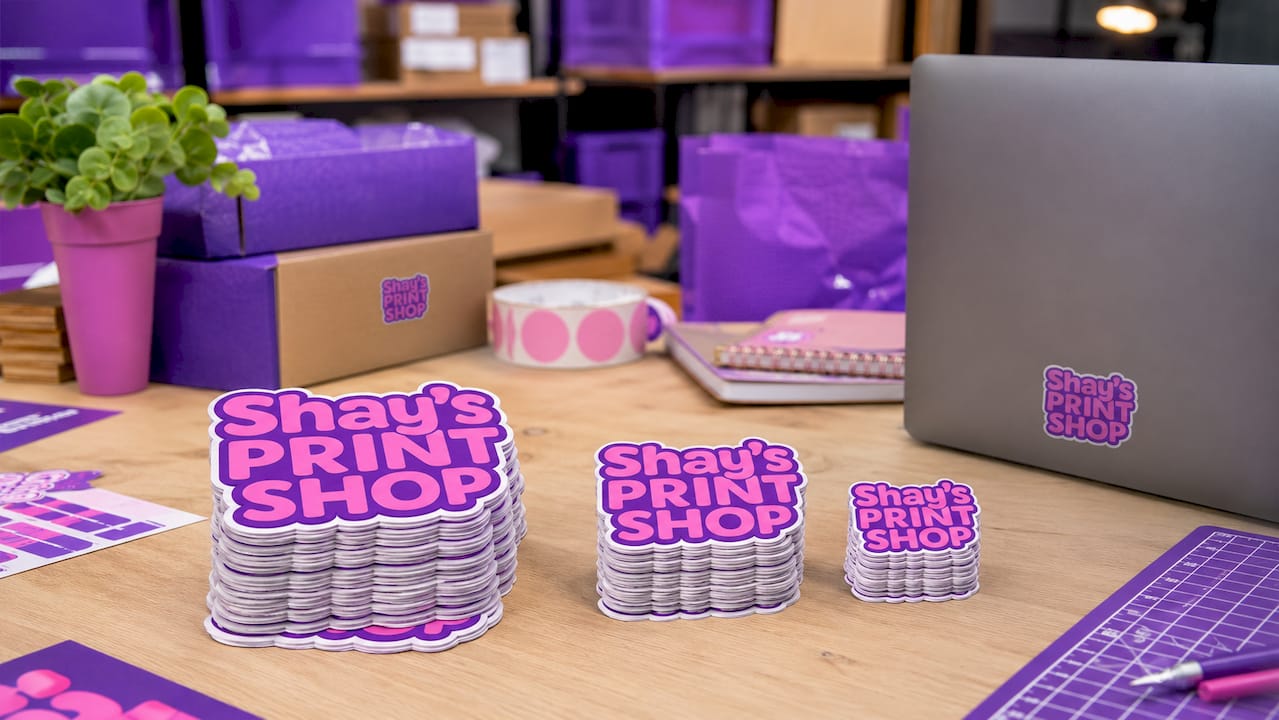
Some custom printing shops fill that gap by producing your stickers alongside the apparel and drinkware that round out a real brand moment. Pair your packaging seal or event sticker with the 10 for $99 custom t-shirt package, built for reunions, staff uniforms, and pop-up events where you need a stack of shirts fast without a per-shirt markup. Running a giveaway or product drop instead? A custom tumbler printed with the same design as your sticker sheet gives customers a second reason to keep your brand on their desk. Start with a small sticker test batch, confirm the finish and size feel right, then scale into a full merch order with fast turnaround.
Sources
- Sticker marketing ideas + tips for small business owners
- Sticker Ideas for 2026: What to Design & What to Order
- Printing white on kraft paper: process challenges and best results
- How to design packaging stickers for e-commerce & retail
0 comments