

Family Olympics, Then & Now photo recreation, Roots & Heritage, Luau, and Family Colors reliably deliver the most fun with the least stress, according to planning data from Reunly, which flags these as the themes that generate the highest engagement and fewest complaints. Add Potluck Passport to that list and you have six themes that work across nearly any group size, budget, or age spread.
Here’s the quick version before you dig into the full list below:
- Family Olympics — best for large groups with kids and teens who want structured competition.
- Then & Now photo recreation — best for multigenerational families with old photo albums and a sense of humor.
- Roots & Heritage — best for families who want storytelling and cultural connection front and center.
- Backyard Luau/Tropical — best for warm-weather reunions where relaxed vibes matter more than schedules.
- Family Colors — best for tight budgets and last-minute planning.
- Potluck Passport — best for food-loving families who want zero decor budget.
Pro Tip: If you’re stuck between two themes, pick the one that requires the least setup. A reunion with 40 people and one weekend to plan rarely benefits from an elaborate theme that needs weeks of prep.
Want more options? The next section breaks down 20 additional themes by category, budget, and who they fit best.
Key Takeaways
The most successful family reunion themes work because they scale across age groups and budgets without requiring elaborate execution.
| Point | Details |
|---|---|
| Pick a proven theme first | Family Olympics, Then & Now, Roots & Heritage, Luau, Family Colors, and Potluck Passport consistently work across ages and budgets. |
| Use a four-question framework | Decide based on who’s attending, your venue, your budget, and guest mobility before voting. |
| Limit your palette to three or four colors | Assign each color a role (base, accent, neutral, contrast) for cohesive decor and photos. |
| Build in accessible, optional activities | Pair high-energy stations with quiet, seated alternatives so elders and less mobile guests stay included. |
| Order matching apparel early | Shay’s Print Shop’s 10-for-$99 cotton shirts and custom tumblers give reunions an affordable, durable way to visualize the theme. |
Table of Contents
- 20 Family Reunion Themes Organized by Category
- How Do You Pick the Right Family Reunion Theme?
- What Does a Family Reunion Theme Cost?
- Which Color Palette Works Best for Your Theme?
- Which Activities Work for Every Age Group?
- Your Theme Execution Checklist and Shopping List
- Why Shay’s Print Shop Understands What Reunions Need
- How Do You Handle Different Preferences Within One Family?
- What Actually Makes a Reunion Theme Successful?
- Get Matching Reunion Shirts Without the Guesswork
- Frequently Asked Questions
- Sources
20 Family Reunion Themes Organized by Category
Picking from a short list is easy. Picking from thirty options without direction is exhausting. Here’s every theme worth considering, grouped so you can scan for what fits your family.
Classic and meaningful themes
- Roots & Heritage — Centers your family’s story, country of origin, or hometown history. Run an activity where elders share stories while younger relatives record them on their phones. Budget: low to medium. Scales well since the “decor” is mostly photos and family artifacts you already own.
- Reunion Royalty — Crowns a family matriarch or patriarch, or lets everyone nominate a “king and queen for the day.” Works especially well for reunions built around honoring an elder relative, and it keeps grandparents at the center of attention rather than on the sidelines.
- Family Cookbook — Everyone brings a dish tied to a family recipe, then compiles the recipes into a printed or digital cookbook afterward. Zero decoration budget needed because the food does the visual work.
Outdoor and active themes
- Family Olympics — Assign “countries” (usually by family branch) and run relay races, tug-of-war, and a mock opening ceremony. This is the theme that scales best for reunions over 50 people, since events can run simultaneously across age brackets.
- Field Day — A lighter version of Family Olympics without the country assignments. Sack races, water balloon tosses, cornhole. Budget: low. Great for a single afternoon rather than a full weekend.
- Camping Reunion — Best when your venue is already a campground or state park. Activities include a scavenger hunt, s’mores station, and flashlight tag for kids once it gets dark.
- National Parks — A theme built around a shared trip or a family’s love of the outdoors. Works well combined with a slideshow of past family trips.
Cultural and seasonal themes
- Backyard Luau/Tropical — Tiki torches, leis, and a menu built around grilled pineapple and coconut drinks. Best for warm climates or indoor venues with a pool.
- Cajun & Southern — Crawfish boils, sweet tea, and a playlist heavy on blues and zydeco. Works well for families with Southern roots wanting a food-forward gathering.
- Around the World — Each family branch represents a different country with a dish, decoration, or activity from that culture. Station-based themes like this work well for mixed-age crowds because guests can move between stations at their own pace.
- Holiday-Themed Reunion — Christmas in July, a mid-year Halloween party, or a “Fourth of July, but in October” theme. Useful if your reunion doesn’t fall near an actual holiday but you still want festive decor cues.
Decades and nostalgia themes
- Then & Now — Guests recreate old family photos in the same poses, outfits, and locations decades later. One of the cheapest themes to execute since it needs no decor beyond the original photographs.
- 1970s or 1980s Throwback — Disco ball, roller skates, or big hair and neon. Fun for photo booths and costume contests.
- Coastal Grandmother — A softer, breezy aesthetic built around linen, neutral tones, and relaxed seating, part of the trending aesthetics for 2026 reunions. Works well for smaller, more intimate gatherings.
Unique and entertainment themes
- Murder Mystery Dinner — A scripted mystery where family members play characters and solve a “crime” together over dinner. Best for teens and adults; can be intimidating for young kids, so pair it with a separate kids’ activity table.
- Game Show Live — Family Feud or Jeopardy style trivia about your own family history. Works as a strong evening activity after outdoor daytime events.
- Talent Show — Open mic for singing, jokes, or skits. Low cost, high engagement, and it gives shy relatives a low-pressure way to participate.
- Family Colors — Each branch gets an assigned color for shirts, balloons, and table settings. One of the fastest and cheapest themes to pull together, and it photographs extremely well in group shots.
- Maximalist Color Pop — Bold, saturated colors across every element instead of a muted palette. Works for families who want the photos to feel loud and joyful rather than coordinated and calm.
- Cottagecore Garden — Wildflowers, mismatched vintage china, and soft pastels. Best suited to garden or backyard venues with good natural light.
How Do You Pick the Right Family Reunion Theme?
Run through four questions before committing to anything.
- Who’s attending? A reunion heavy on toddlers and elders needs a different pace than one full of teenagers and young adults.
- Where will it happen? A backyard supports Luau or Field Day. A rented hall supports Game Show Live or Murder Mystery Dinner far better.
- What’s the budget? Family Colors and Then & Now cost almost nothing. Around the World and Camping Reunion cost more in food and gear.
- How mobile or accessible are your guests? Themes with heavy walking or standing (Field Day, Camping) need a seated alternative area for elders or anyone with mobility limits.
Once you’ve answered those, run a quick family vote instead of deciding alone. Reunly recommends narrowing the field to three to five options and giving the family a two-week window to vote, whether through a Google Form, a text poll, or a show of hands on the family group chat.
Pro Tip: Announce the winning theme with a fun graphic or short video rather than a plain text message. It builds anticipation faster than a bullet-point announcement ever will.
If your family genuinely can’t agree, make the theme optional for attire while keeping it visible in decor and activities. That way nobody feels forced into a costume they hate.
What Does a Family Reunion Theme Cost?
Your budget breaks into six categories: food, rentals, decor, activities, apparel, and printing (invitations, signage, name tags). Apparel and printing are often the line items families forget to plan for until the week before.
Here’s what three budget tiers might look like for a few popular themes:
- Family Colors, low budget ($50 to $150): Colored balloons, paper tablecloths, and coordinated shirts you already own by color.
- Then & Now, low to medium budget ($100 to $300): Printed enlargements of old photos, simple frames, and a designated photo recreation station.
- Luau, medium budget ($300 to $600): Tiki decor, leis, tropical food ingredients, and rented tables if needed.
- Around the World, medium to high budget ($400 to $900): Per-station decor and ingredients for multiple cultural dishes add up fast.
- Family Olympics, scalable ($200 to $1,000+): Cost rises mainly with group size, since medals, team flags, and equipment scale per participant.
Potluck-based themes and color-based themes stay cheap because guests contribute food or already own clothing in the assigned color, cutting your decor spend to nearly zero. Watch per-person costs closely on apparel, name tags, and party favors. They creep up fast once you multiply by 40 or 50 attendees.
Which Color Palette Works Best for Your Theme?
Color does a lot of heavy lifting for very little money. Reunly’s palette guide recommends picking three to four colors total and assigning each one a specific job: a base color, an accent, a neutral, and a contrast color for readability.
Three palettes that work across most themes:
- Sage & Gold: Sage green as the base (tablecloths, balloons), gold as the accent (ribbons, name tags), cream as the neutral, and a deep brown for contrast text on signage.
- Coastal Neutrals: Sandy beige as the base, seafoam blue as the accent, white as the neutral, and navy for contrast, well suited to Luau or Coastal Grandmother themes.
- Tropical Teal & Mango: Teal as the base, mango orange as the accent, white as the neutral, and charcoal for contrast, a strong fit for Backyard Luau or Around the World.
For shirts specifically, a single strong base color photographs far more cohesively in a large group shot than five different shades competing for attention. Mid-to-deep colors like forest green, navy, or maroon tend to hold up better in outdoor photos than pale pastels, which wash out in sunlight.
Pro Tip: Order shirts in one base color with a single-color print rather than a busy multi-color design. It reads better from a distance and photographs cleaner for the group shot everyone actually shares afterward.
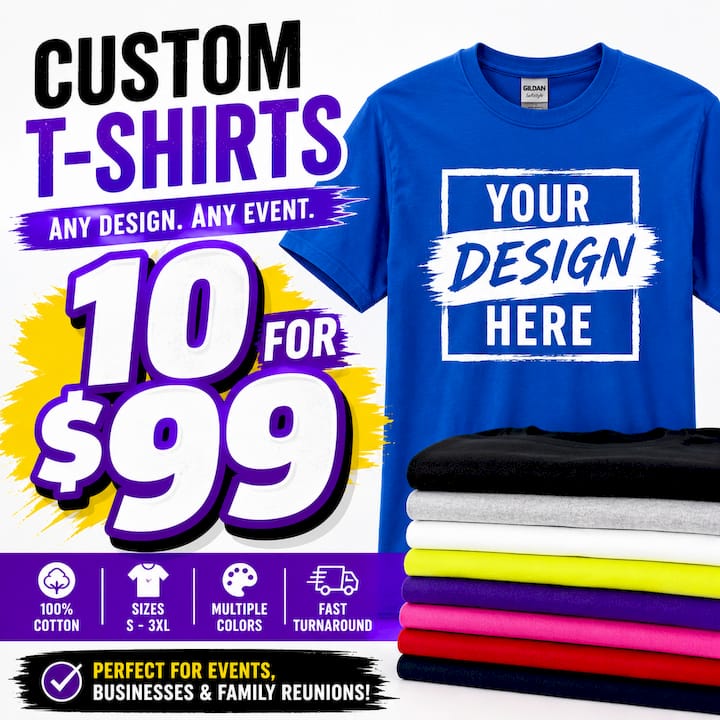
If you want matching shirts without designing anything from scratch, Shay’s Print Shop’s custom t-shirts run 10 for $99 in 100% cotton, and a matching custom tumbler makes a keepsake that outlasts the weekend.
Which Activities Work for Every Age Group?
The station model solves the biggest problem in reunion planning: keeping toddlers, teens, and grandparents all entertained at once without forcing everyone into the same activity.
- Toddlers: Bubble stations, coloring tables, and simple craft kits tied to your theme’s colors.
- Kids: Sack races, scavenger hunts, and a decorate-your-own item station (visors for Luau, medals for Family Olympics).
- Teens: Photo challenge scavenger hunts, a DJ corner for requests, and a talent show slot if your theme includes one.
- Adults: Cooking or grilling contests, trivia about family history, and a designated conversation lounge away from the noise.
- Elders: A story circle for sharing family history, and Then & Now photo recreations, which double as a gentle, low-mobility activity that still gets everyone involved.
Meal times work especially well for themed activities since everyone is already gathered in one place. Pace the day so high-energy activities happen mid-morning or mid-afternoon, leaving meals for the quieter, story-driven moments that pull every generation into the same conversation.
Your Theme Execution Checklist and Shopping List
- 12 months out: Confirm venue and date, announce the theme idea to gauge interest.
- 3 months out: Finalize the theme vote, order apparel, and book any rentals.
- 1 month out: Confirm headcount, print invitations and signage, assign volunteer roles.
- 2 weeks out: Send final reminders, confirm food contributions, pack activity supplies.
- Event day: Set up stations early, brief volunteers, and stage the photo area near natural light.
Shopping list template: decor (balloons, banners, tablecloths), food and serving supplies, activity gear (per station), apparel and name tags, signage, and a small comfort kit (sunscreen, bandages, water).
Volunteer roles to assign: registration desk, activities lead, food lead, and photographer.
Why Shay’s Print Shop Understands What Reunions Need
Shay’s Print Shop prints on 100% cotton using DTF (direct-to-film), a method that holds up to washing far better than cheap vinyl transfers, and the 10-for-$99 bulk pricing removes the guesswork families run into when quoting large orders elsewhere.
- Choose one base shirt color per family branch, not five competing shades.
- Keep the printed logo or design centered and single-color for the cleanest group photo.
- Order a few extra shirts beyond your headcount. Sizes always run short somewhere.
Turnaround stays fast enough to order after your final headcount is locked, which matters when reunion planning always runs behind schedule.
How Do You Handle Different Preferences Within One Family?
Not every relative will love the theme you pick, and that’s normal. The goal isn’t unanimous enthusiasm. It’s making sure nobody feels excluded by the choice.
Dietary restrictions matter more at theme-based potlucks than at a generic buffet, since a Cajun or Luau menu can lean heavily on shellfish, pork, or dairy. Label dishes clearly and ask at least one relative to bring a dish that’s free of common allergens.
Some relatives dislike costumes or dressing up entirely. Make apparel optional rather than mandatory, and let the theme live in decor and activities instead of forcing participation. A shared shirt color works better here than a full costume requirement, since it’s low effort and still creates a unified look in photos.

Mobility and sensory needs deserve the same consideration as dietary ones. If your theme includes loud music, strobe lighting, or a lot of walking between stations, set up a quiet, seated area nearby. Cultural themes like Around the World or Roots & Heritage require extra care too. If your family spans multiple heritages, let each branch represent its own background rather than flattening everyone into one generic version of “cultural.” That single adjustment tends to prevent the most hurt feelings of any theme decision you’ll make.
What Actually Makes a Reunion Theme Successful?
Most reunion advice overemphasizes originality. Families spend weeks hunting for a theme nobody has “done before,” when the data points the other way: a small handful of well-worn themes consistently outperform novelty because they’re flexible enough to fit any age group and any budget. Family Olympics and Family Colors show up on every credible list for a reason. They’re forgiving. They don’t require the entire family to buy into an elaborate concept to have a good time.
The bigger mistake I see in reunion planning isn’t a bad theme choice. It’s treating the theme as decoration instead of structure. A theme should tell you what activities to run, what the menu looks like, and how to organize your day, not just what color balloons to buy. Families that pick a theme and then plan activities around it separately end up with two disconnected events happening at once.
If you take one thing from this list, take this: pick the theme that answers the most planning questions for you, not the one that sounds most impressive on an invitation.
Get Matching Reunion Shirts Without the Guesswork
Once your theme and colors are locked in, the fastest way to make it visible is matching apparel, and that’s exactly where Shay’s Print Shop simplifies the last mile of reunion planning. Instead of juggling per-shirt quotes from a local screen printer, you get a flat bulk price and one straightforward order.
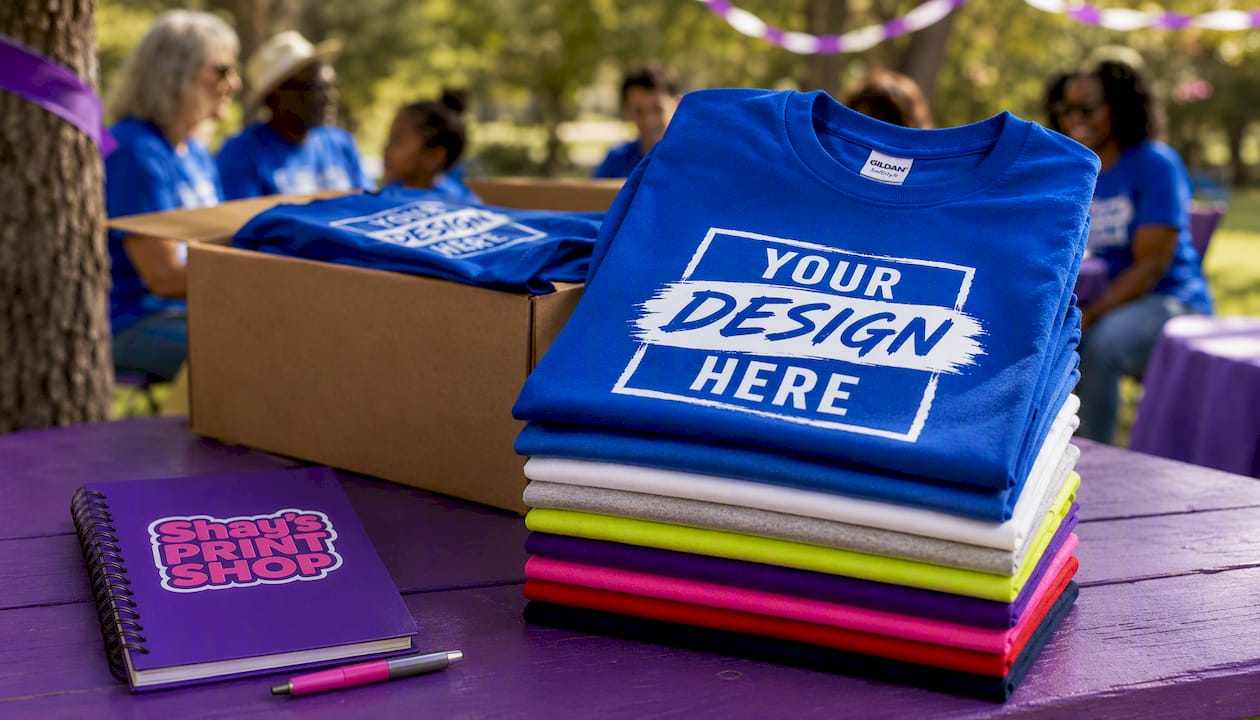
The 10-for-$99 custom t-shirt package covers 100% cotton shirts with DTF printing, sturdy enough to survive a Family Olympics relay race or a beach-side Luau photo session. It works just as well for volunteer or staff shirts if you’re running a large multi-day reunion and need your organizers easy to spot in a crowd. Pair your shirt order with a custom tumbler printed with your reunion year or family name, and you’ve got a keepsake that outlasts the weekend instead of ending up in a donation pile.
Order your shirts as soon as your headcount and theme colors are confirmed. Turnaround moves fast, but reunion planning has a way of running down to the wire regardless.
Frequently Asked Questions
What are the most popular family reunion themes? Family Olympics, Then & Now photo recreation, Roots & Heritage, Luau, and Family Colors top most planning guides because they scale well across group sizes and age ranges.
How do I choose a family reunion theme everyone will like? Narrow it to three to five options based on your venue and budget, then run a two-week family vote through a text poll or group chat rather than deciding alone.
What’s the cheapest family reunion theme to execute? Family Colors and Then & Now photo recreation cost the least since they rely on clothing colors or existing family photos rather than purchased decor.
How do I make a family reunion theme work for both kids and elders? Use a station model with simultaneous activities, sack races and scavenger hunts for kids, story circles and photo recreations for elders, so every age group can self-select.
Should everyone wear matching shirts for the reunion theme? Matching shirts in one base color create the most cohesive group photos and work for nearly any theme, but making them optional keeps relatives who dislike coordinated outfits from feeling pressured.
Sources
Recommended
- Family Reunion T-Shirt Ideas: Florida’s Best for 2026 – Shay’s Print Shop
- Custom T-Shirts – 10 for $99 | 100% Cotton Personalized Shirts for Eve – Shay’s Print Shop
- (Red) Custom T-Shirts – 10 for $99 | 100% Cotton Personalized Shirts f – Shay’s Print Shop
- (Royal) Custom T-Shirts – 10 for $99 | 100% Cotton Personalized Shirts – Shay’s Print Shop
0 comments